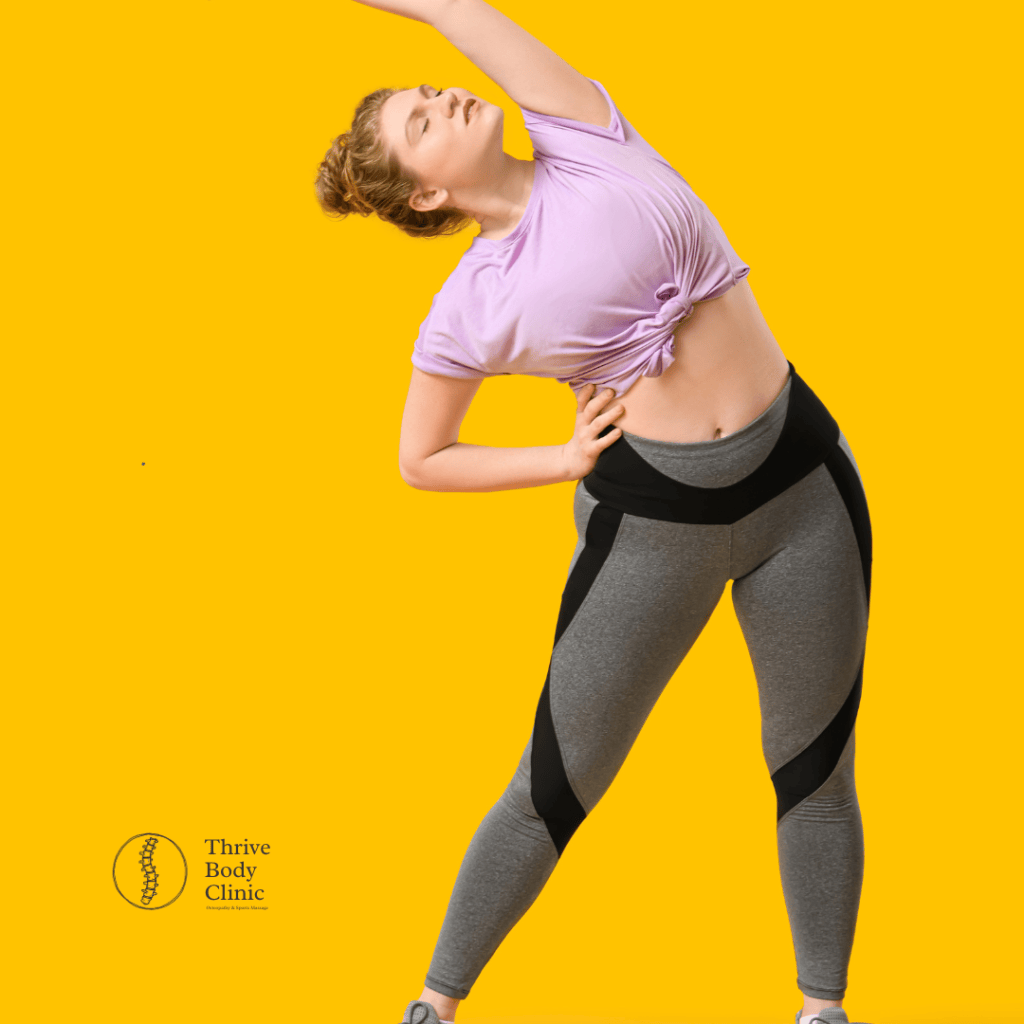
Most people have a side.
The tight hip.
The grumpy shoulder.
The neck that always turns less one way.
The hamstring that feels like an old guitar string.
The lower back that only ever complains on the same side.
And at some point you start wondering:
“Why is it always this side?”
Let’s be honest: it can be bloody annoying. You stretch it, foam roll it, massage it, threaten it, ignore it, and somehow it still feels like the awkward one.
The good news?
Having one side that feels tighter than the other does not automatically mean something is wrong.
Humans are not built perfectly symmetrical. We have dominant hands, preferred legs, old injuries, repeated habits, driving positions, sleeping preferences, work postures, sport patterns, and years of moving slightly differently from left to right.
The useful question is not:
“How do I make both sides perfectly equal?”
The useful question is:
“Is this asymmetry causing pain, limiting movement, or stopping me doing normal things?”
That’s where it gets practical.
Asymmetry is normal
Your body is not a freshly printed diagram from an anatomy textbook.
You probably write with one hand.
Carry bags on one side.
Stand with more weight through one leg.
Sleep more on one side.
Drive with the same leg positions.
Use a mouse with the same hand.
Turn the same way to look at a second monitor.
Always hold your phone like a tired goblin on the sofa.
Over time, your body adapts.
One side may become stronger.
One side may become more coordinated.
One side may feel more restricted.
One side may do more stabilising.
One side may protect more after an old injury.
That doesn’t mean you’re broken.
It means your body has a history.
And your movement reflects that history.
Tightness is not always about a short muscle
This is the big one.
People often assume that if something feels tight, it must need stretching.
Sometimes that’s true.
But “tightness” can also mean:
- the area is tired
- the area is guarding
- the area feels unsafe
- the muscle is working too hard
- the joint nearby is irritated
- the nerve is sensitive
- the body wants more strength or control, not more stretch
Think of tightness like a warning light, not a full diagnosis.
If your right hip always feels tight, that doesn’t automatically mean your right hip flexor is physically short and needs to be yanked into submission.
It might mean your hip lacks strength.
Or your back is protective.
Or your glute is underperforming.
Or you sit in a way that loads that side all day.
Or your nervous system has decided that area needs extra guarding.
This is why some people stretch the same area for months and nothing really changes.
They’re treating the feeling, not the cause.
Why one side often feels tighter
There are a few common reasons.
1. Dominance and habit
If you’re right-handed, you probably use your right side differently to your left.
You may reach, lift, carry, twist, drive, push and pull more naturally on one side.
That repeated use can create differences.
Not bad. Just different.
2. Old injuries
Even a small old injury can change how you move.
An ankle sprain years ago may subtly change walking mechanics.
A shoulder injury may make you avoid certain ranges.
A back flare-up may make you shift weight to one side.
Your body remembers patterns, especially protective ones.
3. Work and lifestyle positions
Desk work, driving, manual work, childcare, gym habits, sleeping positions — they all shape the body.
If your chair setup, car position or job repeatedly loads one side, don’t be shocked when one side has more opinions than the other.
4. Strength and control differences
Sometimes the “tight side” is not too tight.
It is underpowered.
A muscle that doesn’t feel confident can create tension to feel stable.
That is why strengthening often helps tightness more than stretching does.
Bit of a wake-up call, but useful.
3 Practical Tips for One-Sided Tightness
Tip 1: Stop chasing perfect symmetry
Perfect symmetry is not the goal.
Useful movement is the goal.
If one hamstring feels slightly tighter but you have no pain, no loss of function, and it doesn’t affect your life, you probably don’t need to turn it into a full-time project.
You are allowed to be a bit wonky.
The question is whether it matters.
Ask:
- Is it painful?
- Is it getting worse?
- Does it limit normal movement?
- Does it affect sport, gym, walking or sleep?
- Does it keep coming back despite stretching?
- Is there weakness, numbness or tingling?
If it’s just a mild difference, relax.
If it’s limiting you, then it’s worth assessing properly.
Tip 2: Look for the repeated pattern
Instead of stretching the tight side automatically, ask what might be feeding it.
For one week, notice:
- which side you carry bags on
- how you sit at work
- how you sit in the car
- whether you always sleep on one side
- whether you stand with weight shifted to one leg
- whether your gym technique feels different side to side
- whether stress makes that area tighten
- whether it gets worse after specific tasks
You’re not trying to become obsessive.
You’re looking for the obvious stuff you’ve stopped noticing.
For example:
“My right neck is always tight after laptop days.”
“My left hip feels tight after long drives.”
“My right shoulder flares after carrying my bag.”
“My left low back complains after gardening.”
That’s useful.
Because if the trigger is repeated daily, no amount of stretching will fully solve it.
Tip 3: Strengthen the tight side — gently and intelligently
This is the bit people often miss.
If a muscle feels tight because it’s under-confident, weak, or doing too much stabilising, stretching may give short-term relief but not much change.
Strength can help the area feel safer.
Examples:
For a tight hip:
- glute bridges
- step-ups
- side-lying hip abduction
- split squat holds
For a tight neck/shoulder:
- rows
- wall slides
- light carries
- controlled shoulder blade work
For one-sided low back tightness:
- dead bugs
- side planks
- bird dogs
- hip hinge practice
- walking
Keep it simple.
Start light.
Focus on control, not smashing yourself.
The goal is to give your body more options, not punish the tight side into behaving.
Use the 24-hour rule:
If it feels better or no worse the next day, you’re probably in the right zone.
If it flares and stays angry, scale it down.
When should you get it checked?
Get assessed if one-sided tightness comes with:
- pain that is worsening
- symptoms travelling down an arm or leg
- numbness, tingling or weakness
- significant loss of movement
- night pain that is severe or persistent
- symptoms after trauma
- repeated flare-ups that don’t settle
- a clear difference in strength or coordination
- difficulty walking, lifting, reaching or sleeping
Seek urgent medical help for sudden weakness, facial droop, speech changes, bowel or bladder changes, numbness around the saddle area, severe chest pain, severe breathlessness, major trauma, fever, unexplained weight loss or severe constant night pain.
Most one-sided tightness is not dangerous.
But persistent one-sided symptoms deserve a proper explanation rather than endless guesswork.
How osteopathy can help
At Thrive Body Clinic, the useful question is not simply:
“Which muscle is tight?”
It is:
Why does this side keep feeling tight, and what is the body trying to achieve with that tension?
That might involve:
- joint stiffness
- muscle guarding
- old injury patterns
- nerve sensitivity
- weakness
- poor control
- repetitive work positions
- hip, back, rib or shoulder mechanics
- stress and recovery issues
Hands-on treatment may help reduce protective tension and improve movement.
But the plan matters just as much.
You may need strength work.
You may need better movement variety.
You may need to change how you load that side.
You may need to stop stretching the same irritated tissue again and again.
The goal is not perfect symmetry.
The goal is a body that feels more comfortable, more capable, and less likely to keep throwing the same complaint at you.
Final thought
One side feeling tighter than the other is usually not a crisis.
It is often a sign of habit, dominance, old injury, workload, stress, or a strength/control difference.
So don’t panic.
And don’t spend the next six months aggressively stretching one hamstring because it once failed a test you saw on Instagram.
Ask better questions:
What keeps loading this side?
Is it painful?
Is it limiting me?
Does it need strength more than stretching?
Is there a pattern I’m missing?
If one-sided tightness is persistent, painful or stopping you doing normal things, book an appointment at Thrive Body Clinic, based in Worthing Leisure Centre and we’ll work out what’s actually going on.


Leave a Reply