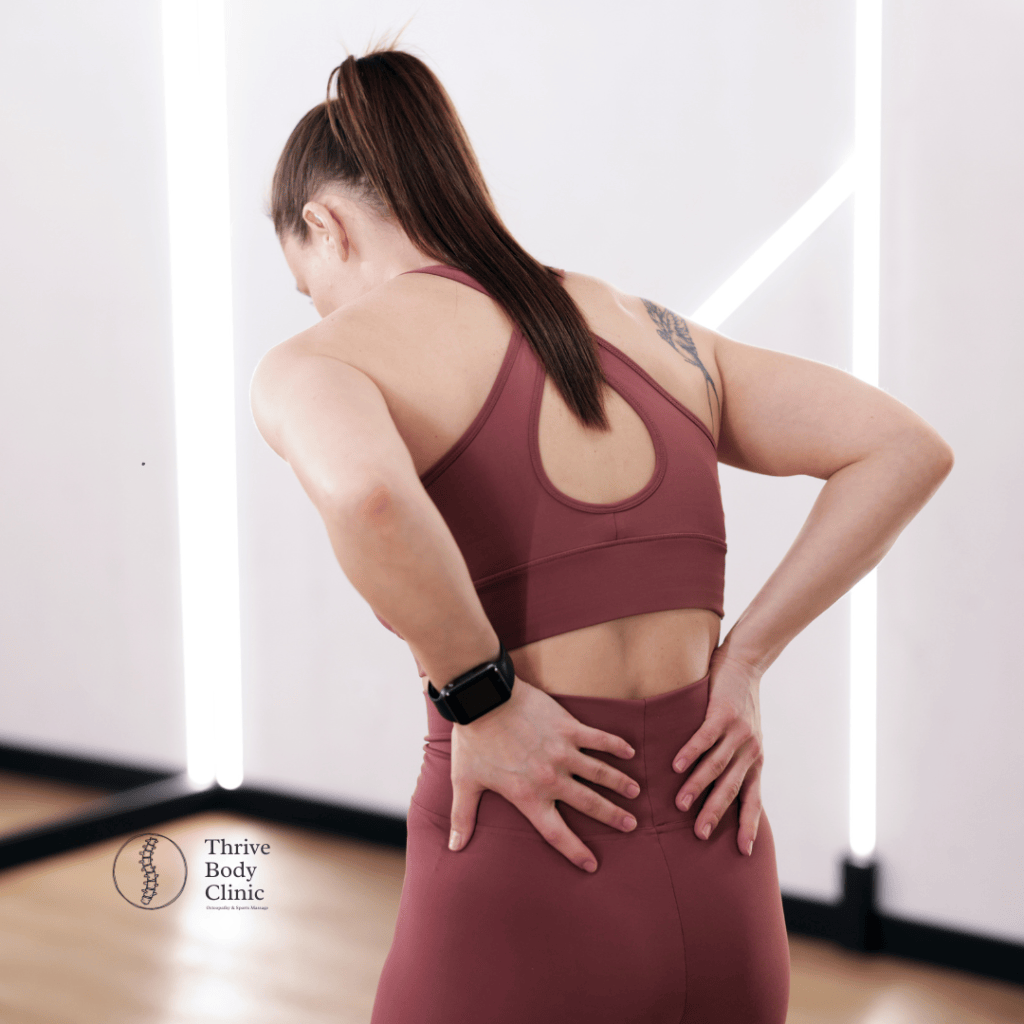
You bend down to pick up a sock.
You reach into the boot of the car.
You twist slightly while carrying a bag.
Or you do absolutely nothing heroic at all.
Then suddenly your back grabs.
Everything locks up. You can’t stand properly. You move like a cautious robot. Every small movement feels like your back is about to have a full-blown argument with you.
Let’s be honest: back spasm can be bloody uncomfortable. It can also feel dramatic, because it often comes on quickly and makes normal movement feel impossible.
But here’s the first useful point:
A back spasm does not automatically mean something has “gone out,” slipped, trapped, or broken.
Most of the time, spasm is your body’s protective response.
Annoying? Yes.
Painful? Often.
Usually catastrophic? No.
So let’s break down what’s actually happening and what to do about it.
What is a back spasm?
A muscle spasm is when muscles tighten or contract involuntarily.
In the back, this often feels like:
- sudden gripping or locking
- sharp pain with movement
- difficulty standing upright
- protective stiffness
- pain when rolling, bending, twisting or getting up from a chair
- the feeling that your back might “go” again if you move wrong
The spasm itself is usually not the main injury.
It is often the body trying to protect an irritated area.
Think of it like a security system.
Something triggers the alarm — a sudden movement, fatigue, irritation, overload, poor sleep, stress, or an awkward lift — and your nervous system decides the area needs protecting.
So the muscles tighten.
The problem is, the security system can be a bit dramatic.
Instead of calmly locking one door, it shuts the whole building down.
That’s spasm.
Why does it happen?
Back spasm often happens when your body feels underprepared for what it has been asked to do.
That might mean:
- you sat for hours, then bent awkwardly
- you were tired and lifted badly
- you did too much gardening or DIY
- you trained harder than usual
- you had a stressful week and slept poorly
- you have an irritated joint, disc, muscle or nerve
- you’ve been moving cautiously for days and everything has become guarded
Sometimes the trigger is tiny.
That’s the bit that winds people up.
“I only picked up a towel.”
Yes. But the towel probably wasn’t the whole story.
It was just the final straw.
Your back may already have been tired, stiff, sensitised or overloaded. The small movement simply tipped it over the edge.
That’s why saying “I didn’t even do anything” isn’t always accurate.
You may not have done one big thing.
But you may have had a week of small things building up.
Has something gone out?
This phrase needs to die quietly.
Your spine is not a stack of plates waiting to pop out because you reached for a shoe.
Back spasm can feel like something is out of place because the muscles clamp down so hard that movement becomes restricted and wonky.
But that doesn’t mean your bones have shifted out of alignment.
More often, your body is protecting.
The area feels stuck because the muscles are guarding, movement is painful, and your nervous system has turned up the threat level.
That matters because if you believe something is “out,” you’ll often become more frightened and move less.
And if you move less, the spasm often hangs around longer.
3 Practical Tips for Back Spasm
Tip 1: Calm it down — don’t fight it
When your back goes into spasm, the first instinct is often to stretch aggressively, crack it, force it straight, or get someone to pull you around like a reluctant deckchair.
Don’t.
In the early stage, the goal is not to win a fight with your back.
The goal is to reduce threat.
Try:
- slow breathing with a longer exhale
- heat on the area if it feels relieving
- short, gentle walks around the house
- lying in a comfortable position with knees supported
- small pelvic tilts or knee rolls if tolerated
- changing position little and often
You’re aiming for “less guarded,” not “fixed in five minutes.”
Easy rule:
Don’t force range from a back that is trying to protect itself.
Coax it.
Tip 2: Keep moving, but shrink the movement
Complete bed rest is rarely helpful for ordinary back pain and spasm.
But smashing through it isn’t clever either.
The sweet spot is small, tolerable movement.
That might mean:
- walking to the kitchen and back
- standing up every 20–30 minutes
- gentle hip shifts
- rolling carefully from side to side
- sitting for shorter periods
- avoiding long static positions
If bending hurts, don’t keep repeatedly testing bending.
If twisting hurts, don’t keep checking whether twisting still hurts.
That’s not assessment. That’s poking the bear.
Instead, move in ways that feel tolerable and gradually expand from there.
For example:
Day one might be short walks and comfortable positions.
Day two might be a little more walking and gentle mobility.
Day three might be basic sit-to-stands or light movement.
You don’t need to be heroic.
You need to keep the system reassured.
Tip 3: After it settles, rebuild the capacity that was missing
This is the bit most people skip.
The spasm calms down.
They feel 80% better.
They stop thinking about it.
Then two months later, it happens again.
Why?
Because the underlying capacity problem was never addressed.
If your back spasmed because it didn’t tolerate sitting, bending, lifting, gardening, gym work, stress, poor sleep, or sudden loading, then you need to rebuild tolerance to those things.
That might involve:
- regular walking
- hip mobility
- glute bridges
- sit-to-stands
- dead bugs
- side planks
- basic hip hinge practice
- gradually returning to lifting
- better pacing with DIY and gardening
- movement breaks during work
Nothing fancy.
The boring basics are usually the useful ones.
The aim is not to make your back “perfect.”
The aim is to make it less easy to trigger.
When should you seek help?
Most back spasms are not dangerous, but some symptoms need assessment.
Book an appointment if:
- spasm keeps recurring
- symptoms are not improving after a few days
- pain is spreading into the leg
- you have numbness, tingling or weakness
- you’re struggling to move normally
- pain is affecting sleep or work
- you’re worried and not sure what is safe
Seek urgent medical help if you have:
- bowel or bladder changes
- numbness around the saddle area
- rapidly worsening leg weakness
- fever, unexplained weight loss or night sweats
- severe constant night pain
- major trauma
- chest pain or severe breathlessness
Most back spasms are mechanical and settle well.
But red flags deserve proper medical attention.
How osteopathy can help
At Thrive Body Clinic, the job is not just to “release the spasm” and send you on your way.
Yes, hands-on treatment may help reduce protective muscle tension, improve movement and calm the area down.
But the bigger question is:
Why did your back feel the need to protect itself in the first place?
An assessment can help work out whether the spasm is linked to:
- joint irritation
- disc irritation
- muscle strain
- nerve sensitivity
- hip or pelvic stiffness
- poor movement tolerance
- stress and guarding
- sudden load increase
- repeated sitting or lifting patterns
Then you need a plan.
What should you avoid briefly?
What should you keep doing?
What movement is safe?
When do you start strengthening?
How do you stop it becoming a recurring pattern?
That’s the useful bit.
Final thought
A back spasm can feel dramatic, but it doesn’t automatically mean your back is damaged or out of place.
Most of the time, it is protection.
Overprotective, painful, inconvenient protection — but protection.
So remember:
Calm it.
Move gently.
Rebuild capacity.
Don’t panic.
Don’t force it.
Don’t lie still for a week hoping it magically disappears.
If your back has gone into spasm and you’re not sure what to do, or if it keeps happening, book an appointment at Thrive Body Clinic, based in Worthing Leisure Centre and we’ll work out what’s going on properly.


Leave a Reply