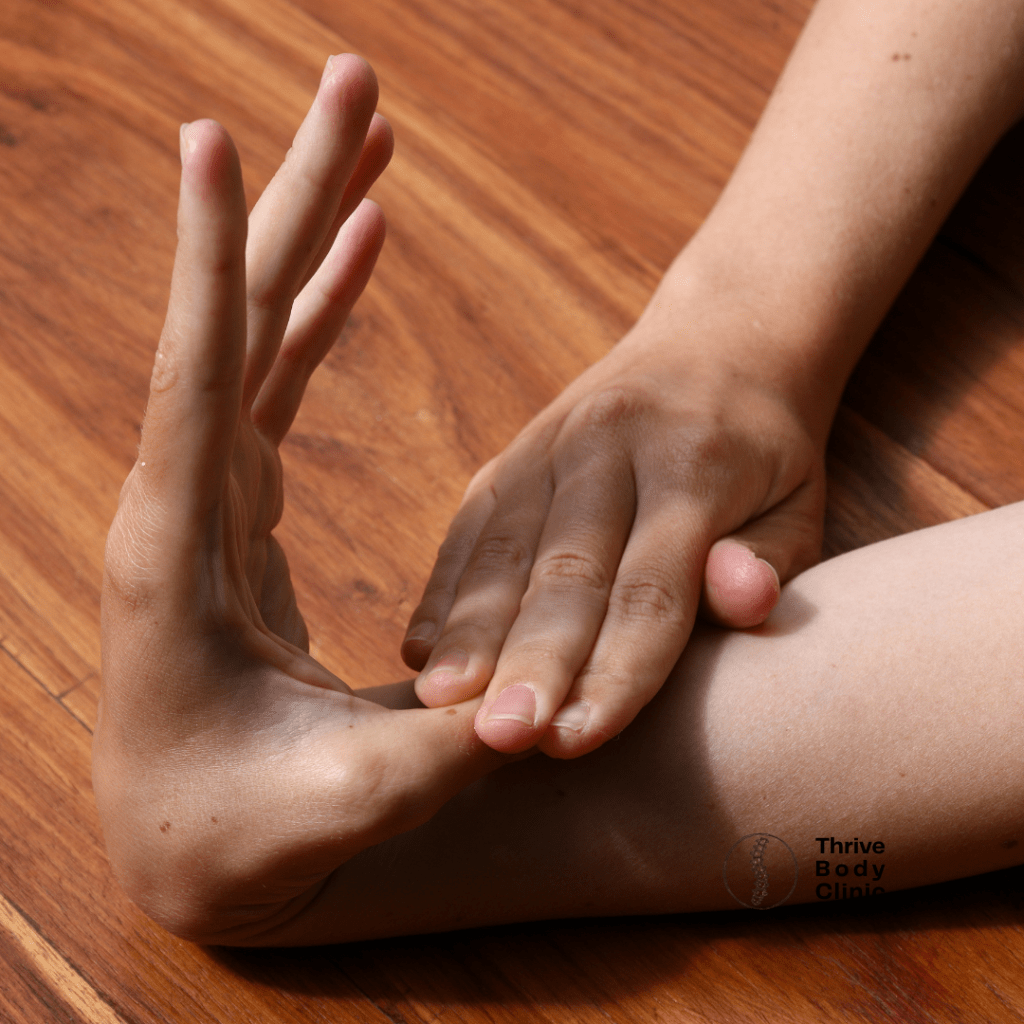
If you’ve been diagnosed with hypermobile Ehlers-Danlos Syndrome (hEDS) — or you strongly suspect you’re hypermobile — you’ve probably lived some version of this:
- You get told you’re “fine” because scans don’t show much.
- Or you get told you’re “too flexible” like it’s a party trick, while you’re dealing with pain, fatigue, and joints that feel unreliable.
- You’ve tried stretching because that’s what everyone does… and it made you worse.
- And you’re sick of feeling like your body is a bit of a loose shopping trolley wheel: technically functional, but unpredictable.
Let’s be honest: that’s exhausting.
This blog is tells you what hEDS is, why it can hurt even without big injuries, and how osteopathy can help — not by “fixing” you (we can’t), but by helping your body feel more stable, less reactive, and easier to live in.
What is hEDS?
hEDS is a connective tissue condition. Connective tissue is basically the body’s scaffolding — the stuff that gives structure and support to joints, tendons, ligaments, skin, blood vessels, and more.
In hEDS, that scaffolding is more stretchy and less robust. The result is often:
- joints that move beyond the “normal” range (hypermobility)
- tissues that irritate more easily
- slower recovery after seemingly minor strains
- a nervous system that can get stuck in “high alert”
Important point: being flexible doesn’t automatically mean hEDS. Plenty of people are hypermobile without the wider symptom pattern. But if your hypermobility comes with persistent pain, fatigue, frequent “niggles,” instability, or recurring injuries — it’s a different conversation.
Why does it hurt so much if nothing is “broken”?
Because pain isn’t just about damage. It’s about:
- load (what you ask tissues to do)
- capacity (what they can currently tolerate)
- sensitivity (how your nervous system interprets signals)
With hEDS, a few things stack the odds:
- micro-strain: small tissues get repeatedly irritated because joints move more than they should
- instability: your muscles have to work harder to keep you together — which creates fatigue and soreness
- proprioception issues: your body’s “where am I in space?” sense can be fuzzier, so you overcorrect or move awkwardly
- stress + sleep: fatigue and poor sleep amplify pain and reduce recovery
So you’re not imagining it. And you’re not weak. You’re often doing more work just to feel normal.
What osteopathy can and can’t do
Let’s be very clear.
Osteopathy cannot change your collagen.
I’m not “tightening ligaments” with my hands.
What osteopathy can do is:
- reduce pain and protective muscle spasm
- improve movement options in stiff areas (because hypermobile people often have stiff patches too)
- calm an overprotective nervous system
- help you find the right exercises and loads so you build stability without flare-ups
- help you pace, plan, and stop swinging between “doing everything” and “doing nothing”
Think of osteopathy as supportive care — it works best alongside strength-based rehab, good medical input, and sensible lifestyle changes.
3 practical tips that help
Tip 1: Stop stretching like it’s the answer to everything — build strength and control instead
This is a big one. Many hypermobile people stretch because they feel tight. But often the “tightness” is your nervous system trying to create stability.
If you stretch the areas that already move too much, you can make symptoms worse.
What to do instead:
- Focus on strength in the mid-range (where you want control), not end-range flexibility.
- Use slower tempo, good alignment, and moderate effort.
Examples that work well:
- glute bridges, sit-to-stands, step-ups
- rows and wall push-ups
- dead bugs, side planks (modified)
- gentle carries (shopping bags done properly count)
Rule: if an exercise makes you feel more stable afterwards, it’s a keeper.
Tip 2: Train your “body GPS” (proprioception) — because stability isn’t just strength
A lot of hEDS issues come from the body not sensing joint position clearly, especially when tired.
So you want to train control, balance, and coordination — boring, yes, but powerful.
Try:
- single-leg balance near a wall (30–60 seconds each side)
- heel-to-toe walking down a hallway
- slow controlled step-downs from a low step
- controlled shoulder movements (wall slides, light band work)
Key idea: stability is a skill. You practise it. You don’t “think” your way into it.
Tip 3: Pace your life like you’re managing energy, not just pain
hEDS often comes with fatigue. If you go too hard on good days, you pay for it later.
This is where people get stuck in the boom–bust cycle:
- “I feel okay today, I’ll do everything.”
- then 48 hours later: flare, pain, wiped out, cancelled plans, guilt, repeat.
Instead, aim for predictable effort:
- do slightly less than you think you can on good days
- keep some gentle movement on bad days
- spread tasks across the week
- build routines that don’t rely on motivation
It’s not glamorous. It’s effective.
When to seek medical help
If you have new or worsening symptoms like:
- fainting, significant palpitations, chest pain, or breathlessness
- sudden neurological symptoms (weakness, numbness, bladder/bowel changes)
- unexplained weight loss, fever, night sweats
…get checked medically. hEDS can overlap with things like autonomic symptoms (e.g. POTS) and it’s worth having the right support team.
How I approach hEDS at Thrive Body Clinic
If you book in with me, we’ll focus on:
- a clear assessment: what’s unstable, what’s stiff, what’s sensitised
- calming flared tissues without “over-mobilising” you
- building a simple stability plan you can stick to (not 17 exercises you hate)
- helping you understand triggers: sleep, stress, workload, hormonal cycles, training load
- communicating with your GP/physio when needed
The goal isn’t perfection. It’s a body you trust more.
 Thrive Body Clinic Osteopathy & Sports Massage
Leave a comment