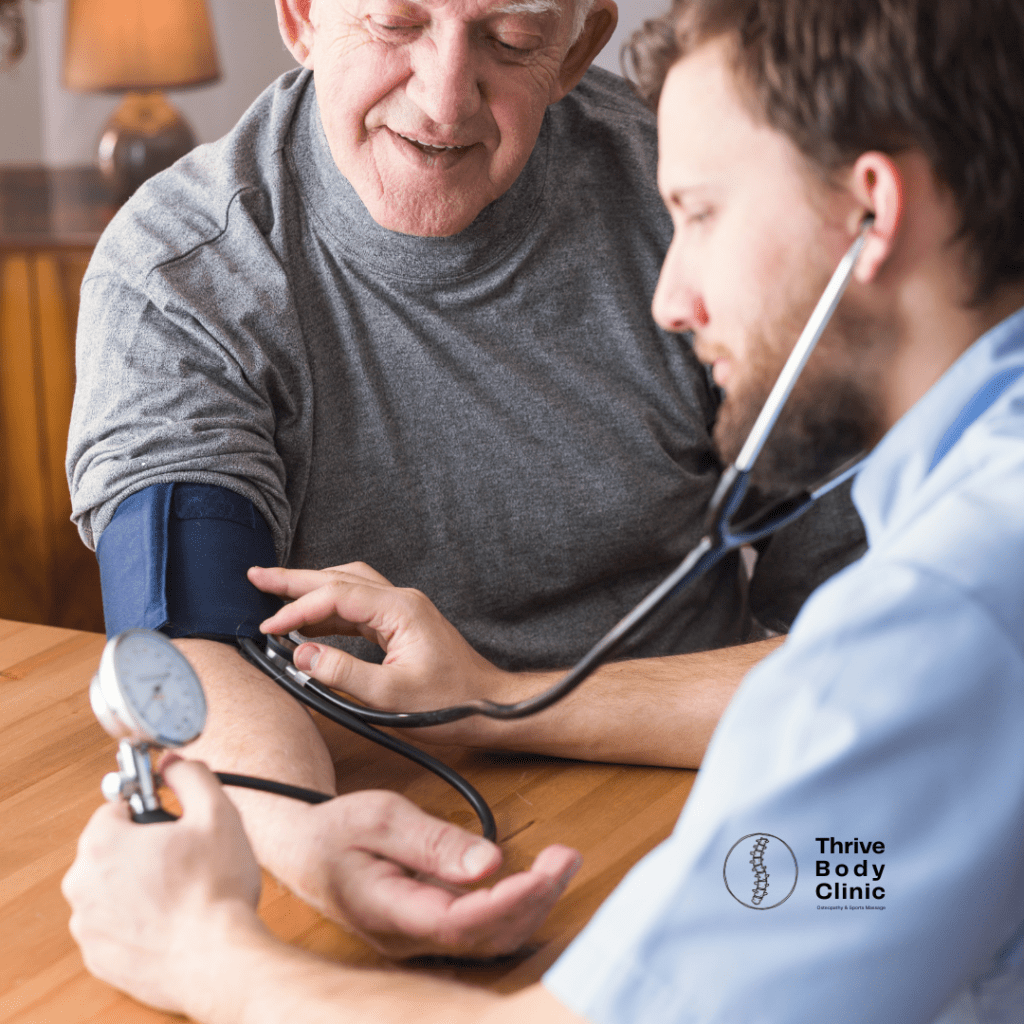
Hypertension. High blood pressure. Two words that usually trigger one of two reactions:
- “Oh yeah… I’ve been told mine’s a bit high.” (Then nothing changes.)
- “I feel fine, so it can’t be a big deal.”
Here’s the honest truth: high blood pressure is often silent… until it’s not. And when it finally makes itself known, it’s sometimes through something you really don’t want—stroke, heart attack, kidney issues, vision problems.
So let’s strip away the drama and the misinformation and talk about what hypertension actually is, what causes it, the signs people miss, and where osteopathy fits in (to be clear: it’s supportive, not a replacement for medical care).
What is blood pressure, in plain English?
Blood pressure is the force of blood pushing against the walls of your arteries. It’s measured with two numbers:
- Systolic (top number): pressure when the heart pumps
- Diastolic (bottom number): pressure when the heart relaxes
Analogy: imagine your arteries are like a garden hose. Blood pressure is basically the water pressure. Too low and flow can be poor. Too high for too long and you start damaging the hose from the inside.
That damage is why hypertension matters even when you feel okay.
Primary vs secondary hypertension (the key difference)
Primary (essential) hypertension
This is the common one. It creeps up over years and usually has no single obvious cause. It’s more like a “perfect storm” of factors:
- genetics / family history
- age-related artery stiffness
- chronic stress and poor sleep
- excess body weight (especially around the middle)
- high salt diet (for some people more than others)
- low activity levels
- alcohol intake
- smoking/vaping
- metabolic factors (insulin resistance, high cholesterol)
Secondary hypertension
This is high blood pressure caused by another condition or medication. It’s less common, but important because addressing the cause can significantly improve things. Examples include:
- kidney disease
- hormonal issues (thyroid problems, adrenal issues like primary aldosteronism)
- obstructive sleep apnoea
- certain medications (some anti-inflammatories, steroids, decongestants, some contraceptives)
- excess alcohol, recreational drugs, stimulants
Signs and symptoms (and the annoying reality)
Most people with hypertension feel… normal.
That’s why it’s called a “silent” risk factor. When symptoms do happen, they’re often non-specific:
- headaches (especially morning headaches)
- dizziness or light-headedness
- nosebleeds (not reliable, but can occur)
- blurred vision
- breathlessness with exertion
- chest tightness
- palpitations
- fatigue
But listen: those symptoms can come from loads of things—stress, dehydration, anxiety, poor sleep, posture, neck tension, medication side effects.
The only reliable way to know is to measure it.
If you’re 35–65 and you haven’t had a proper blood pressure check in a while, that’s not “being chilled.” That’s being avoidant. Sort it out.
Why high blood pressure is a big deal
High pressure over time damages the lining of arteries. That increases risk of:
- heart disease / heart attack
- stroke
- kidney disease
- vascular dementia
- eye problems (retinopathy)
- peripheral artery disease
And yes, hypertension often travels with other things like high cholesterol, Type 2 diabetes, and stress overload. It’s rarely a solo act.
What people commonly get wrong
Mistake 1: “I’m stressed, that’s why it was high.”
Maybe. But “stress” becomes a convenient excuse to ignore a pattern. One high reading doesn’t diagnose hypertension—but repeated high readings should be taken seriously.
Mistake 2: “I don’t feel unwell so it’s fine.”
High blood pressure isn’t about how you feel today. It’s about what it quietly does over years.
Mistake 3: “Medication is failure.”
No. Medication is a tool. Lifestyle changes are a tool. Often you need both—at least for a while.
Mistake 4: “I’ll just cut salt and it’ll fix it.”
Salt matters for some people, but it’s rarely the only factor. If your sleep is awful, your steps are low, you’re living on caffeine, and you’re permanently wired—salt isn’t the main character.
What actually helps
You don’t need a perfect life. You need consistent basics.
- Measure properly: home BP monitor, seated, relaxed, arm supported, take 2–3 readings and track for a week.
- Move daily: walking, cycling, swimming, resistance training—anything consistent.
- Sleep like it matters: because it does. Snoring + daytime fatigue? Consider sleep apnoea.
- Strength train: improves vascular health, insulin sensitivity, and stress resilience.
- Reduce alcohol: most people underestimate its impact.
- Sort your stress: not by “thinking positive,” but by changing inputs—workload, boundaries, recovery time.
- Improve diet quality: more fibre, protein, fruit/veg; less ultra-processed food; salt awareness.
Where osteopathy fits
Let’s be clear: osteopathy does not “treat” hypertension in the medical sense and it shouldn’t be seen as a replacement for GP care or medication.
But osteopathy can be genuinely helpful in the supportive stuff that affects blood pressure:
- stress load and nervous system tone (people live in “fight or flight” and don’t even realise)
- sleep quality (pain, discomfort, rib/neck tension can sabotage sleep)
- headaches, neck pain, upper back tightness that often sit alongside stress and poor recovery
- breathing mechanics (stiff ribcage, shallow breathing patterns)
- supporting lifestyle change: if you’re in pain, you’ll avoid movement; if we reduce pain and improve confidence, you’ll move more
Think of it like this: if your body is constantly running “hot” (pain, tension, poor sleep, stress), your blood pressure control usually gets harder. Helping you move, sleep and recover better is a meaningful part of the wider picture.
Red flags — when to seek urgent help
Call 999 / go to A&E if you have:
- chest pain, severe shortness of breath, or collapse
- stroke signs (facial droop, arm weakness, speech problems)
- severe headache with confusion, weakness, vision changes (especially if sudden)
Speak to your GP promptly if:
- you’re getting repeated high readings at home
- you have symptoms like palpitations, chest tightness, breathlessness, or new headaches
- you suspect sleep apnoea (snoring + unrefreshing sleep + daytime fatigue)
Conclusion
Hypertension isn’t exciting. It’s not trendy. It doesn’t get Instagram likes.
But it’s one of the biggest “small hinges that swing big doors” health issues there is.
If you’re worried about blood pressure, start by getting accurate readings and speaking to your GP. And if stress, pain, headaches, neck or shoulder tension are part of the mess – book in at Thrive Body Clinic. As an osteopath in Worthing, I’ll help you get your body calmer, moving better, and recovering properly so you can actually follow through on the lifestyle changes that make the difference.
 Thrive Body Clinic Osteopathy & Sports Massage
Leave a comment