You’re out for a walk. Five minutes in, your legs start to feel heavy, achy, maybe even a bit “dead.” You stop, lean forward on a wall or a shopping trolley… and weirdly, you feel better. Then you set off again and it creeps back.
If that’s you, I’ll say this upfront: you’re not broken. You’re dealing with a common, very human “wear-and-tear plus time” problem called lumbar spinal stenosis. It can be scary, frustrating, and limiting — but for most people it’s manageable, and you can still build strength and confidence in your back again.
Let’s demystify what’s going on, what people get wrong, and what actually helps.
What’s happening (simple anatomy + analogy)
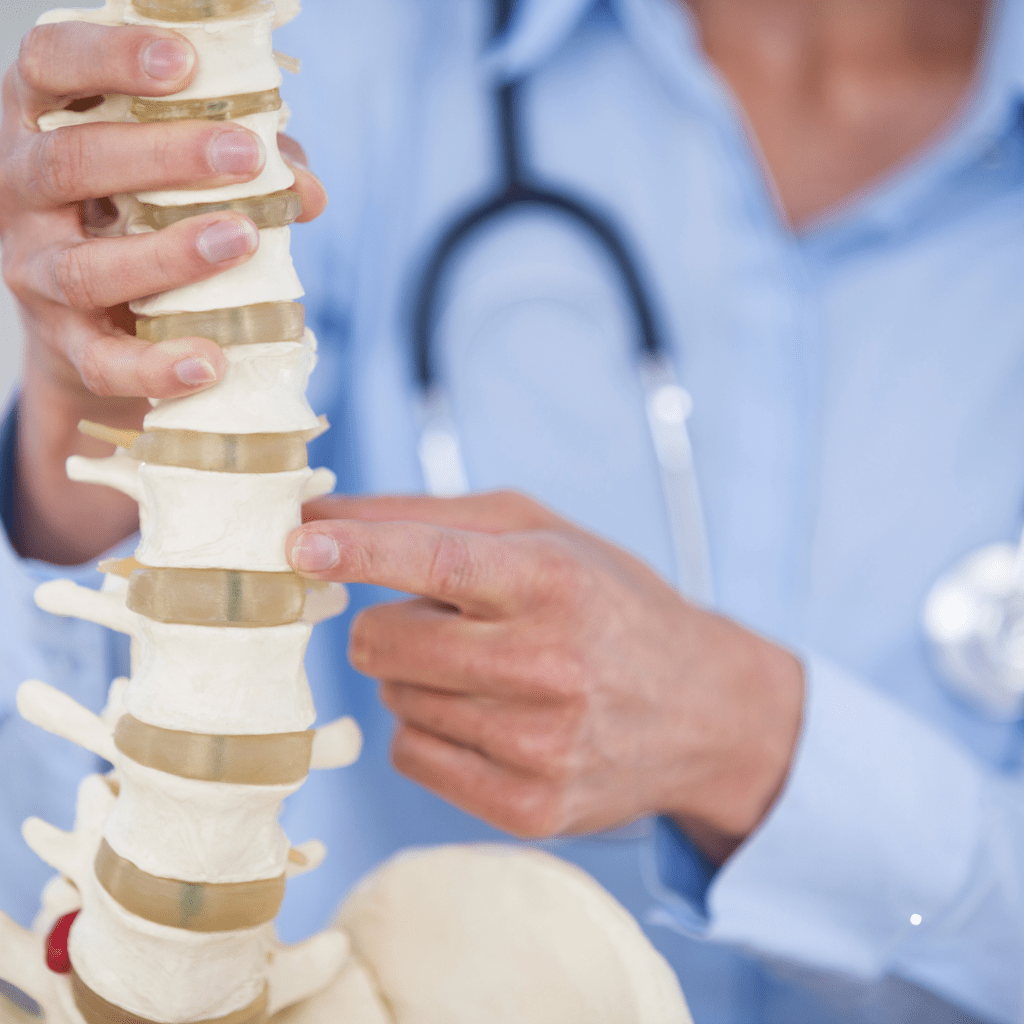
Your spine is a stack of bones (vertebrae) with discs between them, and a tunnel running through the middle that houses the spinal nerves. In the lower back (lumbar spine), those nerves head out to your hips, legs and feet.
Spinal stenosis just means narrowing.
Over time, a mix of things can reduce space in that tunnel or the side openings (where nerves exit):
- disc bulges
- arthritic facet joints
- thickening ligaments
- bony changes (“spurs”)
Analogy: imagine the nerves are like cables running through a hallway. If the hallway gets cluttered and tighter, the cables can get irritated — especially when you stand tall or walk for a while.
This is why many people get:
- leg pain, cramping, tingling or numbness (often more than back pain)
- symptoms worse with walking/standing
- relief with sitting, bending forward, or leaning on a trolley (the classic “shopping trolley sign”)
This pattern is often called neurogenic claudication. It’s different from circulation issues (more on that later).
Common myths and mistakes (that keep people stuck)
Myth 1: “If it’s stenosis, I must avoid movement.”
No. Avoiding movement makes you stiffer, weaker, and more sensitive to symptoms. Your spine loves sensible loading.
Myth 2: “My scan says it’s bad, so I’m doomed.”
Scans show structure, not your future. Plenty of people have stenosis on imaging and function fine. Pain and limitation are more than a picture.
Myth 3: “I just need to stretch more.”
Sometimes stretching helps. Sometimes it winds things up. Stenosis often prefers smart movement + strength + pacing, not endless stretching.
Myth 4: “Extension exercises will fix everyone.”
Some backs love extension. Many stenosis cases do better with flexion-biased positions (a little bend forward). One-size-fits-all rehab is lazy, I like to work with you to find something that works and you’ll feel better about.
Myth 5: “Surgery is the only answer.”
Surgery can be brilliant for the right person, at the right time. But many people do well with conservative care: education, lifestyle changes, graded exercise, and symptom control.
What helps (self-care + movement + when to seek help)
You’re aiming for two things:
- calm the irritation
- build capacity so your legs and back tolerate more.
1) Self-care that often helps stenosis
- Micro-breaks when walking: walk to mild symptoms, pause/lean forward 20–60 seconds, repeat. This is training, not failure.
- Try cycling or incline treadmill walking: many people tolerate these better than flat walking.
- Flexion-friendly resets (little and often): knees-to-chest, child’s pose, or seated forward bend — 30–60 seconds, 2–4 times/day if it eases symptoms.
- Heat to settle protective muscle tone.
- Sleep and stress management: pain sensitivity rises when you’re sleep-deprived and stressed (yes, it matters).
2) Strength and resilience (the long game)
Pick the boring stuff that works:
- Hip strength: sit-to-stands, step-ups, glute bridges
- Core endurance: dead bug, side plank (modified)
- Leg capacity: supported split squat holds, calf raises
- General activity: 10–20 minutes most days beats one heroic weekend walk
If you also get neck pain, shoulder pain, or general tension from changing how you move (very common), address that too — it’s part of the same “system.”
3) Three red flags (see GP/A&E)
Don’t mess around if you have:
- Bowel/bladder changes, numbness in the saddle area (groin), or sudden leg weakness → urgent assessment for possible cauda equina syndrome.
- Progressive weakness, worsening numbness, or foot drop (tripping, slapping foot) → GP/urgent referral.
- Fever, unexplained weight loss, history of cancer, or night pain that’s severe and unrelenting → GP same day/urgent.
Also: if leg symptoms are brought on by walking and do not improve when you sit/bend forward, or you have risk factors for vascular disease, it’s worth a GP discussion to rule out circulation-related claudication.
How osteopathy helps (supports NHS care, doesn’t replace it)
Osteopathy isn’t “magic hands that widen your spine.”
What I can do as an osteopath in Worthing is:
- Take a proper history and exam to confirm if your symptoms fit stenosis (and screen red flags)
- Help you find your best positions and movements to reduce symptoms
- Work on surrounding stiffness and protective muscle tone to make movement easier
- Build you a graded plan for walking tolerance, strength and confidence
Think of osteopathy as hands-on support + clear coaching + a plan you can actually follow.
What to do next
If you suspect lumbar spinal stenosis:
- Stop treating walking pain as a personal failure — it’s a predictable pattern.
- Start pacing walks and using short rests as training.
- Strengthen hips/legs and build tolerance gradually.
- Get assessed if symptoms are worsening, confusing, or limiting your life.
If you want help, book an appointment at Thrive Body Clinic. We’ll work out what’s driving your symptoms, what’s safe, and how to get you moving again without fear — whether your main issue is back pain, leg symptoms, or all the knock-on tension that comes with it.
 Thrive Body Clinic Osteopathy & Sports Massage
Leave a comment