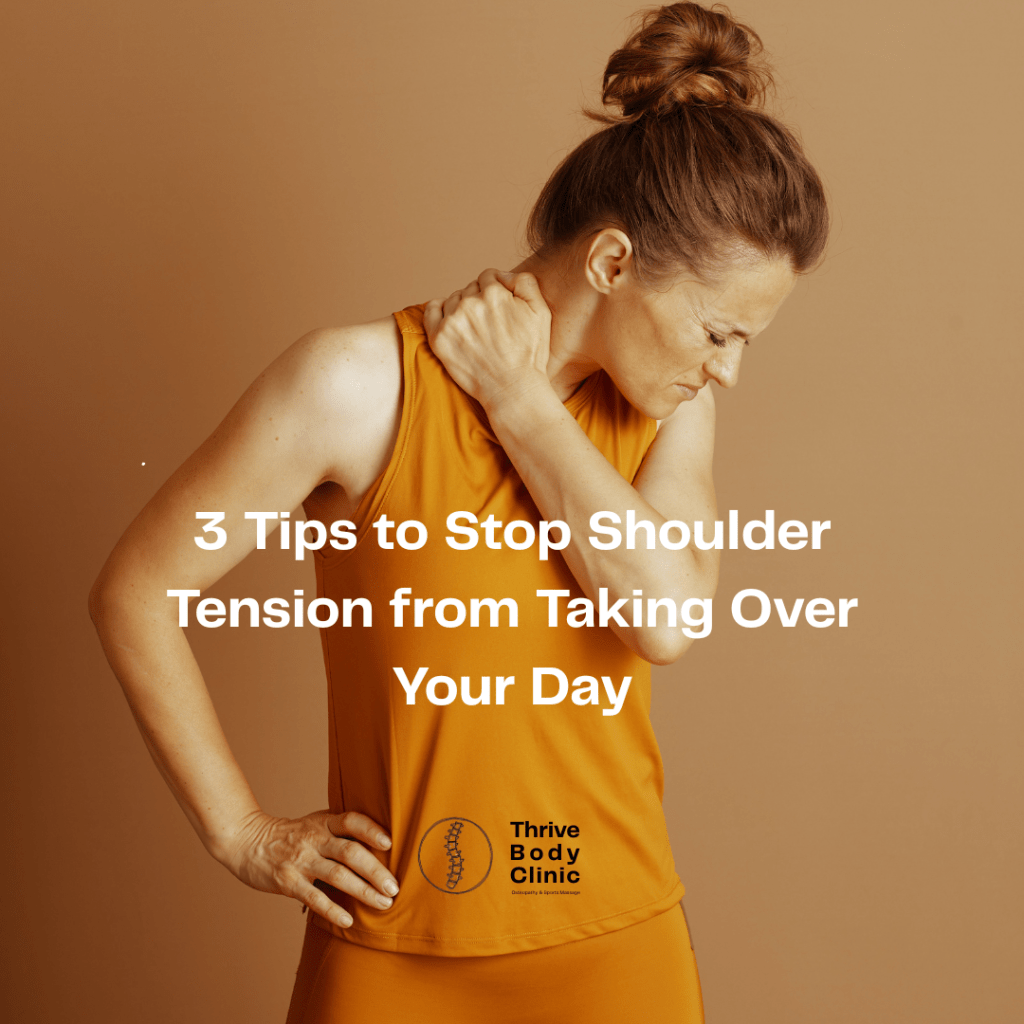
Let’s be honest — shoulder tension is the modern badge of honour for stressed, busy adults.
We hunch over laptops, clench our jaws through emails, and somehow expect our neck and shoulders to cope. Then by mid-afternoon, we’re stiff, sore, and snapping at everyone because it feels like someone’s parked a brick between our shoulder blades.
If that sounds familiar, you’re not broken — you’re human. But that doesn’t mean you have to live like this. Shoulder tension is one of the most common complaints I see at Thrive Body Clinic in Worthing, and it’s rarely just about “bad posture.” It’s about how we move (or don’t), how we breathe, and how much pressure we put on ourselves day-to-day.
So, here are three practical ways to stop that tension from hijacking your day and get you feeling freer, looser, and more in control.
Tip 1: Move Before You Seize Up
Most people wait until their shoulders hurt before doing anything. By then, it’s like trying to unstick a rusty hinge — you’ll get movement, but it’ll take effort. Prevention’s easier.
The trick? Micro-movements — tiny, frequent resets throughout the day.
Every hour or so, roll your shoulders forward and back a few times. Turn your head left and right, gently look up and down. Pull your shoulder blades down and back — not military posture, just awareness.
You’re not aiming for a workout here; you’re just reminding your body it’s allowed to move.
Think of it like stirring your coffee — you wouldn’t let it settle into sludge, so don’t let your muscles do the same.
If you’re desk-based, set a phone reminder or tie it to a habit — every time you check your emails or finish a call, do your quick shoulder reset.
Tip 2: Breathe Like You Mean It
This one catches nearly everyone out. Most people breathe shallowly into their chest, especially when they’re stressed. That means the neck, chest, and shoulder muscles end up doing jobs they were never designed for — no wonder they tighten up.
A better way? Diaphragmatic breathing — in through your nose, let your ribs expand sideways, and your belly rise a little. Exhale slowly through your mouth and actually let go.
Try it right now — 3 deep, slow breaths. Feel your ribs move. Feel your shoulders drop.
That’s your built-in stress release button.
Do that a few times a day and your nervous system will calm down, your oxygen flow improves, and your shoulders won’t feel like steel cables by lunchtime.
And yes, I know it sounds simple. But simple is what actually works — it’s about consistency, not complexity.
Tip 3: Fix Your Setup, Not Just Your Posture
You can’t “hold good posture” for eight hours straight — you’re not a statue. So instead of fighting your body all day, adjust your environment so it supports you.
Here’s what I tell my patients:
- Laptop too low? Prop it up on books or get a stand so the screen’s at eye level.
- Chair too high or low? Adjust it so your feet touch the ground, hips slightly above knees.
- Mouse too far away? Bring it closer so you’re not reaching forward all day.
Tiny tweaks make a big difference. The goal isn’t perfect posture — it’s comfortable variety. Your body likes movement, so alternate sitting and standing if you can.
Even if you just shift how you’re sitting every 20–30 minutes, your shoulders will thank you.
Bottom Line: Tension Is a Message, Not a Mystery
Your body’s not punishing you; it’s communicating. Shoulder tension is your early warning light — a sign that something needs a tweak. Whether it’s movement, breathing, or setup, these small changes add up fast.
At Thrive Body Clinic, I help patients get to the root of what’s actually causing their pain — not just treat the symptoms. If your shoulders have been tight for weeks, months, or years, book in and let’s get you moving freely again.
 Thrive Body Clinic Osteopathy & Sports Massage
Leave a comment