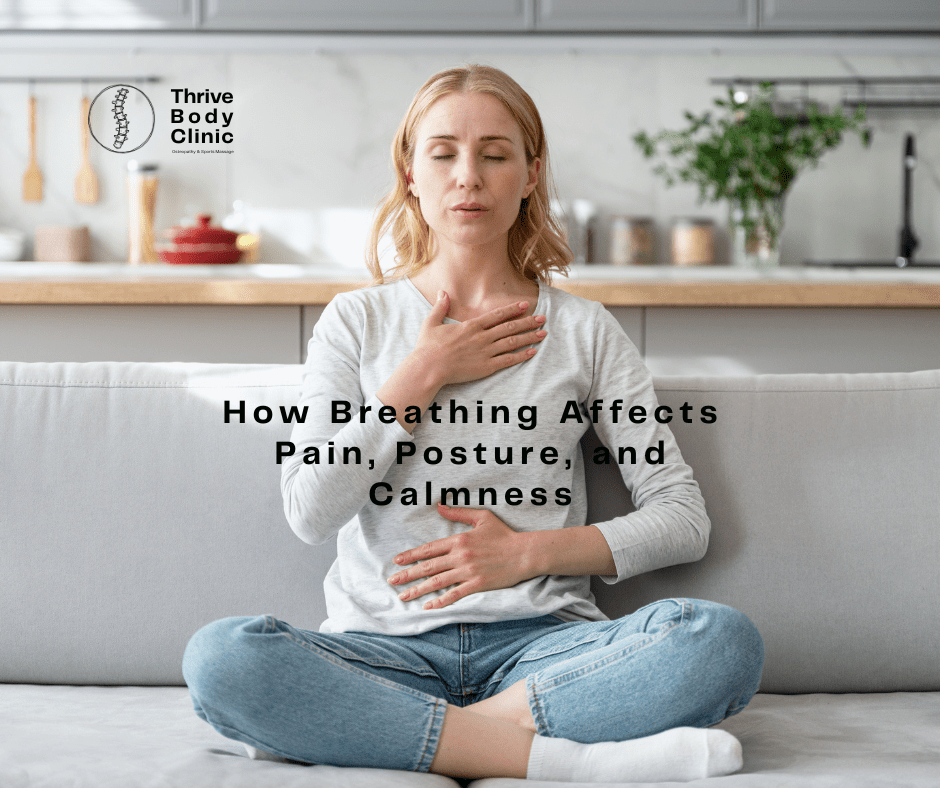
We all breathe — around 20,000 times a day — but how often do we think about it?
Most of the time, breathing happens quietly in the background, keeping us alive without much attention. Yet the way you breathe can have a huge impact on your pain levels, posture, and even your sense of calm.
For many of the patients I see at Thrive Body Clinic, their breathing patterns have changed without them realising. Stress, injury, long hours at a desk, or simply rushing through life can turn natural breathing into shallow, chest-based breathing — which can quietly feed into tension, aches, and fatigue.
If you’ve ever noticed your shoulders creeping up to your ears, your neck feeling tight, or your chest feeling restricted, your breathing might be part of the picture. The good news? Small changes can make a big difference.
Let’s explore how breathing connects to your body, and how you can use it to ease pain, improve posture, and feel calmer in daily life.
1. Breathing and Pain: Why the Two Are Linked
When you’re in pain, your body naturally becomes more guarded. Muscles tighten, movement becomes restricted, and you start breathing faster and shallower.
It’s your body’s protective response — but over time, this can actually increase pain.
Shallow breathing (also called “apical breathing”) relies heavily on the upper chest and neck muscles, rather than the diaphragm. These smaller muscles aren’t designed to do that job all day, so they fatigue quickly, creating tension in the neck, shoulders, and upper back. It’s a cycle — pain changes how you breathe, and how you breathe can make pain worse.
On the other hand, diaphragmatic breathing (using the large muscle beneath your lungs) helps relax those accessory muscles and reduces strain. It also increases oxygen delivery to your tissues and triggers the body’s “rest and digest” response, which can lower pain perception.
In practice:
If you’re dealing with chronic pain — whether it’s back, neck, or joint discomfort — spending just a few minutes each day focusing on deep, relaxed breathing can help calm your nervous system and reduce muscle tension.
2. Breathing and Posture: A Two-Way Street
Your breathing and posture are closely connected. Poor posture limits your ability to breathe deeply, while poor breathing patterns can reinforce postural imbalances.
When you slouch forward — something many of us do when we’re tired or at a computer — your ribcage compresses and your diaphragm has less room to move. The result is more shallow breathing, tighter chest muscles, and weaker support from your core.
From an osteopathic point of view, this creates a cascade:
- Tight chest and neck muscles pull the shoulders forward
- The upper back becomes rounded
- The lower back may compensate, leading to stiffness or discomfort
Learning to breathe more effectively can actually improve posture from the inside out.
When the diaphragm moves properly, it engages your deep core muscles and helps stabilise your spine. It’s like giving your posture a natural reset.
Try this:
Sit upright with your feet flat on the floor. Place one hand on your chest and one on your abdomen.
Take a slow breath in through your nose, feeling your abdomen rise (not your chest).
Exhale slowly through your mouth.
Repeat for one minute — you might be surprised at how much easier it feels to sit tall and relaxed afterwards.
3. Breathing and Calmness: Resetting the Nervous System
Modern life keeps us switched “on” — emails, deadlines, family responsibilities — and the body often lives in a low-grade state of stress.
Your breathing pattern mirrors your emotional state: when you’re anxious, it becomes faster and shallower; when you’re calm, it’s slower and deeper.
The act of slowing down your breath can literally tell your brain that you’re safe. This activates the parasympathetic nervous system — your built-in recovery system — which helps reduce muscle tension, lower heart rate, and improve digestion and sleep.
From an osteopathic perspective, this balance between the body and nervous system is key to recovery. Pain isn’t just physical; it’s also influenced by how “switched on” your nervous system is. Breathing is one of the simplest, most effective tools to help restore that balance.
Try this quick reset:
Inhale for 4 seconds → Hold for 2 seconds → Exhale for 6 seconds.
Repeat 5–10 times.
It’s a simple rhythm that helps calm the body and mind, ideal before bed or in moments of stress.
4. How Osteopathy Supports Better Breathing
When your ribs, spine, or diaphragm don’t move freely, your breathing can become restricted. Over time, that stiffness can feed into pain or fatigue elsewhere in the body.
At Thrive Body Clinic, osteopathic treatment often includes gentle techniques to restore movement through the ribcage, spine, and diaphragm. By improving how these structures work together, you can breathe more efficiently — and that often translates into less tension, better posture, and a greater sense of calm.
It’s not about forcing big changes, but guiding your body back to a more natural, balanced rhythm.
5. Simple Daily Breathing Habits
To get the most out of your breath, try weaving small moments of awareness into your day:
- 🌅 Morning reset: Before you get out of bed, take three slow, deep breaths into your abdomen.
- 💻 Midday posture check: Every hour, sit tall and do 3–5 deep breaths, relaxing your shoulders.
- 🌙 Evening wind-down: Try slow, rhythmic breathing before bed to help your body switch off.
These tiny adjustments can make a real difference to how your body feels — and how your mind copes with the demands of daily life.
Small Changes, Big Difference
Breathing well is one of the simplest, most effective ways to support your body’s natural balance. It influences pain, posture, energy, and emotional wellbeing — and it’s something you can start improving right now.
If you’ve been feeling tight, tense, or just not quite “yourself,” it may be time to take a closer look at your breathing and how your body’s moving. Osteopathic treatment can help free up restrictions, restore balance, and guide you back to feeling comfortable in your own body again.
If you’re struggling with tension, pain, or feeling “stuck” in your body, book an appointment at Thrive Body Clinic today.
Let’s get you breathing — and moving — freely again.
👉 http://www.thrivebodyclinic.co.uk
 Thrive Body Clinic Osteopathy & Sports Massage
Leave a comment