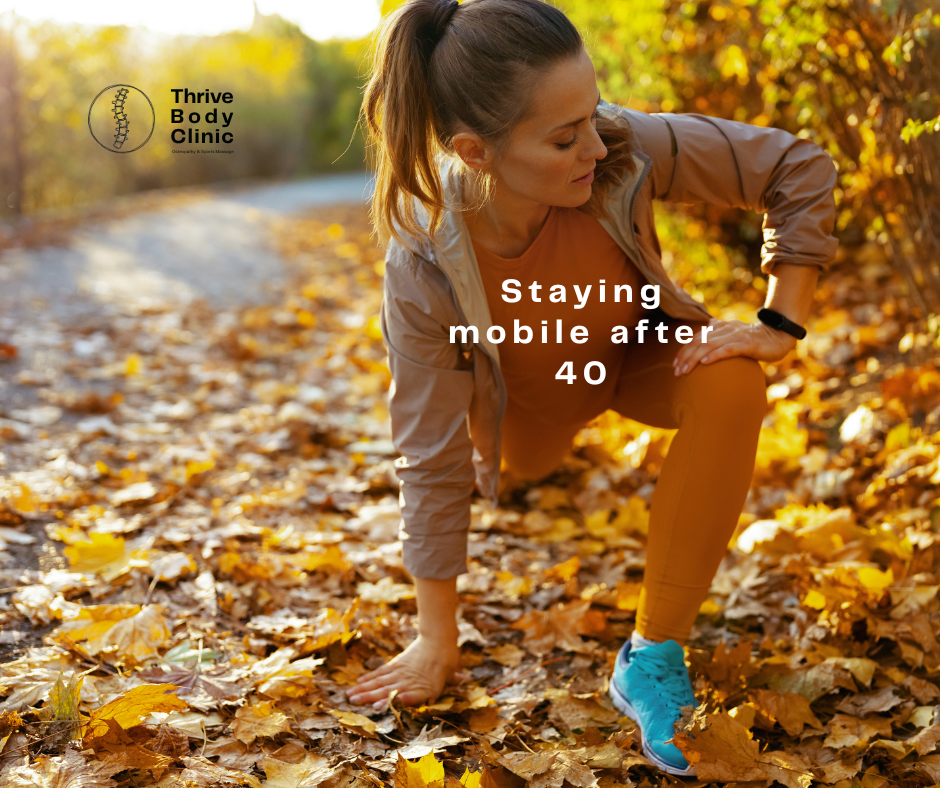
There’s a moment many of us notice in our 40s.
We get up from the sofa and realise it takes a little more effort. Our knees creak, our shoulders feel tighter, and that “quick stretch” doesn’t quite loosen things the way it used to.
Sound familiar?
It’s not that you’re getting old — it’s that your body’s recovery, muscle tone, and joint mobility start to need a bit more care. Between work, family, and everyday stresses, it’s easy to push your own health to the bottom of the list… until something starts to hurt.
But here’s the good news: staying mobile after 40 isn’t about avoiding ageing — it’s about working with your body. With the right approach, you can stay strong, flexible, and active for decades to come.
At Thrive Body Clinic, we see it all the time — patients who come in frustrated by stiffness or pain, but leave feeling empowered by how much they can improve once they start giving their body what it needs.
So here are 3 simple, effective tips to keep you mobile after 40 — whether you’re dealing with niggling aches or just want to stay ahead of the curve.
1️⃣ Move Every Day — Even When You Don’t Feel Like It
One of the biggest myths about mobility is that it disappears overnight. In reality, it fades slowly — often because we simply stop moving as much.
Modern life encourages stillness. We sit at desks, in cars, on sofas… and our joints adapt to what we do most. If we sit for long hours, our hips tighten, our spine stiffens, and our knees don’t move through their full range.
The best antidote? Daily movement — in small, realistic doses.
You don’t have to run marathons or take up CrossFit. Even 10 minutes of gentle stretching, walking, or mobility exercises can make a huge difference.
Try:
- Standing up every 30 minutes during work.
- Doing simple hip circles, shoulder rolls, or spine twists while waiting for the kettle to boil.
- Taking short walks instead of scrolling social media during breaks.
Movement keeps the fluid inside your joints circulating — like oil in an engine — and helps prevent stiffness from setting in.
👉 “The more you move, the more your body remembers how to move.”
2️⃣ Build Strength to Support Your Joints
Strength training isn’t just for bodybuilders — it’s one of the most powerful tools for long-term mobility and joint health.
After 40, we naturally start to lose muscle mass and bone density. That’s why it’s so important to include strength work as part of your week. Strong muscles act like scaffolding for your joints — they absorb shock, stabilise movement, and reduce the risk of injury.
The good news is, you don’t need fancy equipment. Start with your bodyweight:
- Sit-to-stands (from a chair) build leg and hip strength.
- Wall push-ups strengthen the upper body and shoulders.
- Glute bridges protect your hips and lower back.
If you already enjoy exercise, consider adding light resistance bands or weights to keep your muscles challenged.
Remember — strength training is about consistency, not intensity. Two or three short sessions a week can dramatically improve balance, confidence, and energy levels.
👉 “Strong muscles make flexible joints possible.”
3️⃣ Don’t Ignore Stiffness — It’s a Message, Not a Life Sentence
A little stiffness here and there might seem harmless, but it’s often the first sign your body’s asking for attention. Many people brush it off until pain appears — but by then, the problem has usually been building for months.
This is where osteopathy can make a real difference.
At Thrive Body Clinic, we take the time to look at how your whole body moves. Tight hips might be linked to a stiff lower back. Shoulder tension could be driven by how you sit at your desk. Everything’s connected.
Gentle osteopathic treatment helps restore movement to restricted areas, reduce muscle tension, and improve circulation. We then combine that with practical advice and simple home exercises — because the best progress happens when you stay involved in your own recovery.
You don’t have to just “put up with it.” With the right guidance, even long-standing stiffness or pain can improve.
👉 “Your body’s designed to move — sometimes it just needs a little help remembering how.”
Bonus Tip: Prioritise Recovery as Much as Movement
After 40, recovery matters more than ever. Sleep, hydration, and stress all impact how your body heals and performs.
If you’re constantly pushing through fatigue or tension, your muscles never get the chance to rebuild properly.
Simple habits can make a big difference:
- Stretch before bed to unwind muscles and calm your mind.
- Drink enough water — dehydration makes joints feel stiff and sore.
- Take time for proper rest days or active recovery like gentle walks or yoga.
Remember: recovery isn’t laziness — it’s where progress happens.
The Takeaway: You’re Not Slowing Down — You’re Rebalancing
Your 40s can actually be a brilliant decade for your health. You know your body better, you understand your limits, and you have the experience to make smarter choices.
Staying mobile after 40 isn’t about chasing youth — it’s about building resilience. Every small change you make now sets you up for decades of active living ahead.
At Thrive Body Clinic in Worthing, we’re here to help you move well, feel strong, and stay flexible — without pain holding you back.
If stiffness, aches, or mobility issues are getting in your way, don’t wait for them to “just go away.” Let’s get you moving confidently again.
📲 Book your appointment today at Thrive Body Clinic and take the first step towards a stronger, more mobile you.
 Thrive Body Clinic Osteopathy & Sports Massage
Leave a comment