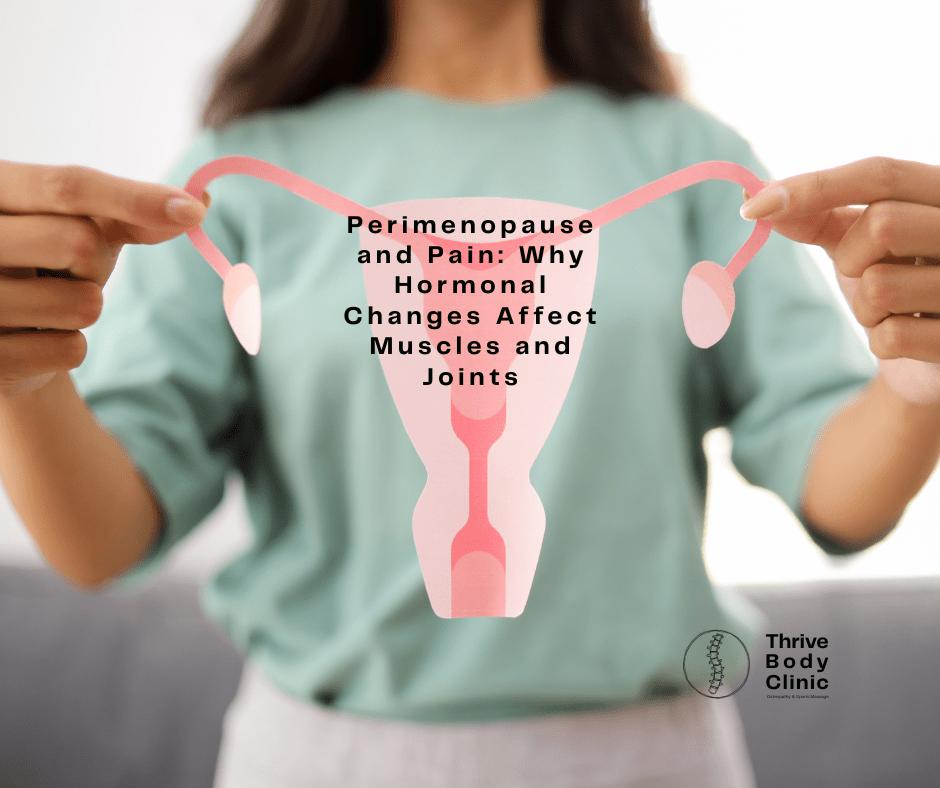
Perimenopause can feel like your body’s shifting under your feet. You may have expected hot flushes or changes in mood, but the achy joints, stiff muscles, or unexplained pain? Those often come as an unwelcome surprise.
Many women in their 40s and 50s find themselves waking up sore, feeling tighter after rest, or noticing that their usual exercise routine suddenly feels harder. It’s frustrating — especially when you’re doing everything “right.”
At Thrive Body Clinic, we often hear patients say, “I thought I’d injured myself, but it just never went away.” What’s really happening for many is the natural but powerful shift in hormones that affects how your body manages inflammation, muscle tone, and recovery. Let’s explore why that happens — and what can help.
1. Understanding What’s Going On: The Hormone–Pain Connection
Perimenopause — the years leading up to menopause — brings a gradual decline in oestrogen and progesterone. These hormones don’t just regulate your cycle; they play a crucial role in how your body manages pain, maintains joint lubrication, and repairs soft tissues.
When oestrogen levels drop:
- Collagen production decreases, making tendons and ligaments less elastic.
- Joint tissues can become drier and less cushioned.
- Muscles recover more slowly from exercise or daily strain.
- Inflammation can increase, leading to soreness or stiffness that feels like arthritis.
This change doesn’t happen overnight — which is why pain or stiffness can creep in slowly, often mistaken for simple overuse or aging.
Common areas affected include:
- The neck and shoulders, often linked to tension or posture changes.
- The hips and lower back, which bear more load as movement patterns subtly shift.
- The hands and wrists, where stiffness or swelling can make daily tasks uncomfortable.
Understanding that these changes are hormonal — not just “wear and tear” — is key to addressing them effectively.
2. The Emotional Load: Stress, Sleep, and Sensitivity
Perimenopause doesn’t affect the body in isolation — it influences the nervous system too. Fluctuating hormones can make the body’s pain system more sensitive, meaning discomfort that might have gone unnoticed before now feels amplified.
Add in disrupted sleep, work and family pressures, and emotional changes, and it’s no surprise that pain can feel overwhelming. Chronic stress elevates cortisol, which in turn can heighten inflammation and make muscles feel constantly tight.
You might notice:
- Increased neck or jaw tension
- Headaches that feel stress-related
- A sense that your body’s “on edge”
At Thrive Body Clinic, we look at these patterns holistically. Pain is never just physical — it’s shaped by your body’s chemistry, your emotional load, and how you move through daily life.
3. How Osteopathy Can Help
Osteopathic treatment during perimenopause focuses on supporting the whole system — calming the nervous system, improving circulation, and reducing mechanical strain on joints and muscles.
Here’s how we help:
- Gentle hands-on techniques ease tight muscles and improve joint mobility, helping reduce that morning stiffness.
- Circulatory work encourages blood flow and lymphatic drainage, supporting tissue repair and reducing inflammation.
- Breathing and postural guidance help reset how your body carries stress, particularly across the shoulders and back.
- Movement and exercise advice ensures you’re keeping active in ways that support joint health rather than aggravate symptoms.
Many patients find that regular osteopathic sessions not only ease physical pain but also help them feel calmer and more connected to their bodies again — something that’s often lost during hormonal change.
4. What You Can Do for Yourself
While treatment in the clinic makes a difference, the real progress often comes from small, consistent habits at home. Here’s what you can do:
💧 Stay Hydrated
Joint and tissue health rely on hydration. Dehydration can make stiffness worse, especially as oestrogen levels fall and tissues become less supple.
🧘 Keep Moving (Gently)
Movement nourishes joints and prevents muscles from becoming reactive or tense. Walking, swimming, and yoga are ideal — low-impact but effective. Avoid long periods of sitting, and change posture often.
😴 Prioritise Restorative Sleep
Easier said than done, but a regular bedtime routine and reduced caffeine can help calm the nervous system. Gentle stretching before bed can also ease nighttime stiffness.
🍎 Anti-Inflammatory Nutrition
A diet rich in colourful vegetables, oily fish, and whole grains supports hormone balance and reduces inflammation. Cutting back on processed foods and refined sugar can also help.
💆 Listen to Your Body
Pain is information, not an instruction to stop. If something feels sore, change how you do it — don’t give up entirely. Gradual, supported movement builds resilience.
5. You’re Not Alone — and You Don’t Have to “Put Up With It”
One of the most common things women say during perimenopause is, “I thought this was just something I had to live with.”
It’s not.
You deserve to feel strong, supported, and capable in your own body — no matter your age or stage of life. With the right combination of understanding, movement, and hands-on care, it’s absolutely possible to reduce pain and feel more in control again.
At Thrive Body Clinic, we help women reconnect with their bodies and move through this stage with confidence and comfort. Whether you’re struggling with stiffness, unexplained pain, or a sense that your body doesn’t feel quite like “you” anymore, we’re here to help you get back on track — one gentle step at a time.
✨ Call to Action
If you’ve noticed new aches, stiffness, or discomfort during perimenopause, don’t wait for it to “just pass.”
Book an appointment at Thrive Body Clinic today — and take the first step towards feeling more comfortable, mobile, and confident in your own skin.
 Thrive Body Clinic Osteopathy & Sports Massage
Leave a comment