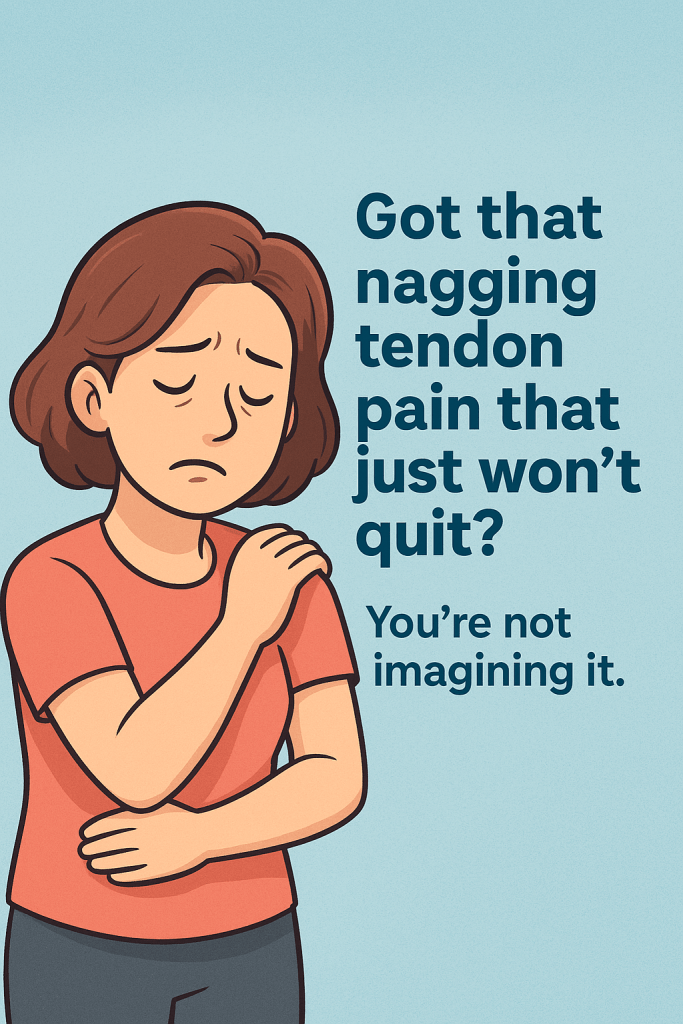
The nagging pain that won’t quit
You stretch it, rest it, ice it, and even promise to “take it easy for a while”… yet that familiar ache returns the moment you lift something or go for a run. Sound familiar?
Tendinopathy — commonly affecting the biceps or Achilles tendons — is one of those frustrating conditions that can sneak up on anyone. It’s not just for athletes; it’s equally common in busy mid-life adults juggling work, family, and staying active.
Whether it’s a dull ache in your upper arm when lifting your shopping or a sharp twinge in your heel during your morning walk, tendinopathy can make even simple movements feel uncomfortable. But here’s the good news: with the right care, understanding, and consistency, recovery is absolutely possible.
What is tendinopathy?
Tendinopathy is a general term for irritation, inflammation, or degeneration of a tendon — the strong connective tissue that attaches muscle to bone. It’s often caused by overload, which doesn’t necessarily mean lifting heavy weights; it could just be doing a little too much, too soon, or repeating the same motion without enough rest.
Over time, this repetitive stress can cause microscopic changes within the tendon, making it less elastic and more prone to pain.
The classic culprits: Biceps and Achilles tendinopathy
Let’s look at two of the most common trouble spots.
1. Biceps Tendinopathy
This usually affects the tendon of the long head of the biceps, which runs from the shoulder down the upper arm.
You might notice:
- A deep ache at the front of your shoulder.
- Pain when lifting your arm overhead or reaching behind you.
- Tenderness when pressing on the front of your shoulder.
Common causes include:
- Repetitive overhead activity (like reaching or lifting).
- Poor shoulder or upper back posture.
- Muscle imbalance between the chest, shoulder, and back muscles.
How it’s maintained:
Once irritated, the biceps tendon can become trapped in a cycle — small tears or friction lead to inflammation, which leads to more irritation, and so on. Without addressing why it’s happening (often posture or movement patterns), the pain can persist for months.
2. Achilles Tendinopathy
This affects the large tendon connecting your calf muscles to your heel — the strongest tendon in the body, but also one of the most prone to overuse.
You might notice:
- Pain or stiffness in your heel or lower calf, especially first thing in the morning.
- Discomfort when walking uphill or running.
- Tenderness when squeezing the tendon between your fingers.
Common causes include:
- A sudden increase in walking, running, or exercise intensity.
- Poor footwear or hard surfaces.
- Tight calf muscles or limited ankle mobility.
How it’s maintained:
Many people try to “rest it out” completely — which can make things worse. Tendons need load to heal; total rest can weaken the tissue further. On the other hand, doing too much, too soon can flare things up again. It’s all about finding that sweet spot of controlled movement.
How osteopathy can help
At Thrive Body Clinic, we take a whole-body approach to treating tendinopathy. Pain rarely happens in isolation — it’s usually part of a wider movement pattern or postural issue.
Your osteopathic treatment might include:
- Gentle hands-on therapy to release tension in the surrounding muscles and joints.
- Improving biomechanics, ensuring your shoulder, back, hip, and ankle are working together efficiently.
- Guided movement and strengthening, helping the tendon gradually tolerate load again.
- Education and reassurance, so you understand what’s happening and how to manage it confidently.
The goal isn’t just to calm the pain — it’s to restore your tendon’s resilience and your trust in movement.
What you can do outside the clinic
Tendinopathy recovery is a team effort. What you do between treatments can make a huge difference.
Here are a few practical steps:
1. Load it wisely
Tendons love gradual loading. This might mean simple strengthening exercises prescribed by your osteopath — small, slow, and controlled movements that rebuild tendon capacity. Avoid the temptation to “push through pain,” but don’t stop moving altogether either.
2. Warm up and cool down
Gentle mobility and light stretching before and after activity can reduce stiffness. For Achilles issues, heel raises or gentle calf stretches often help. For biceps pain, shoulder rolls and posture checks are your friend.
3. Check your posture and ergonomics
If you spend long hours at a desk or driving, poor posture can keep tension on certain tendons. Simple changes to your setup — or regular movement breaks — can go a long way.
4. Be patient
Tendons take time to heal — often several weeks to a few months. But steady, consistent effort pays off. Remember, improvement is rarely linear; good and bad days are part of the process.
Beyond pain relief: rebuilding confidence
Living with tendinopathy can be mentally draining. The worry that “it’ll come back” or the fear of movement can hold people back long after the pain settles.
That’s why osteopathic care focuses not only on physical recovery but also on confidence. Through understanding your body, moving gradually, and feeling supported, you start to rebuild trust — both in your tendons and yourself.
Your next step
If you’ve been living with stubborn shoulder or heel pain that just won’t shift, it might be time to look deeper. Tendinopathy responds best to early, consistent treatment — and we’re here to help.
At Thrive Body Clinic, we’ll work with you to find the cause, ease the irritation, and guide you through recovery in a way that fits your life.
👉 Book your appointment today and take the first step towards feeling strong, capable, and pain-free again.
 Thrive Body Clinic Osteopathy & Sports Massage
Leave a comment