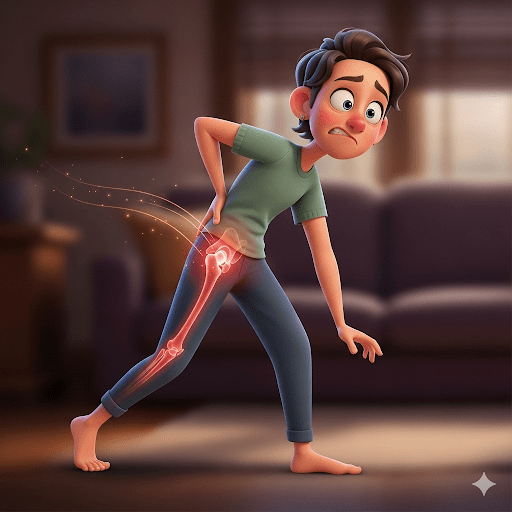
If you’ve ever had pain running down the back of your leg, you may have been told — or assumed — that it’s sciatica. The term gets used a lot, but it’s not always accurate. At Thrive Body Clinic, I often meet people who come in worried they’ve got sciatica when, in fact, their pain is caused by something else entirely.
So, let’s cut through the myths and confusion. In this blog, we’ll look at:
- What sciatica actually is
- Common myths (and why they’re unhelpful)
- Other conditions that can mimic sciatica
- How osteopathy can support you through both flare-ups and long-term management
What Sciatica Really Is
Sciatica isn’t just any leg pain. True sciatica happens when the sciatic nerve — the largest nerve in your body, running from your lower back down through your hips, buttocks, and into the legs — becomes irritated or compressed.
This usually happens because of:
- A disc issue (like a herniated or slipped disc pressing on the nerve)
- Spinal changes (such as arthritis or bone spurs narrowing the nerve space)
- Muscular tension (tight gluteal muscles or piriformis syndrome affecting the nerve)
The pain typically:
- Starts in the lower back or buttock
- Radiates down the back of the thigh, sometimes into the calf or foot
- May feel sharp, burning, or electric
- Can be accompanied by tingling, numbness, or weakness
If you’ve ever felt that “zapping” pain that seems to shoot down your leg — that’s closer to what true sciatica feels like.
Common Myths About Sciatica
Because the word gets thrown around so often, myths about sciatica are everywhere. Here are a few I hear in clinic regularly:
Myth 1: All leg pain is sciatica.
Not true. Pain at the front or side of the thigh, for example, is usually caused by different nerves. Muscular strains, hip issues, and even circulation problems can mimic “sciatica” but aren’t the same thing.
Myth 2: Sciatica means you’ll always be in pain.
Absolutely not. For many people, sciatica is a temporary condition that can improve significantly with the right care, movement, and self-management.
Myth 3: The only fix is surgery.
Surgery is only needed in a very small number of cases (for example, if the nerve is severely compressed and causing lasting weakness). The majority of people improve with conservative care, including osteopathy, exercise, and lifestyle support.
When It Isn’t Sciatica
If it’s not sciatica, what could leg pain be? Here are some common culprits:
- Muscle strain: Overworked muscles in the buttock, hamstring, or hip can refer pain down the leg.
- Joint irritation: Stiffness or inflammation in the hip or sacroiliac joint can mimic nerve pain.
- Circulatory issues: Poor circulation can cause heaviness, cramps, or aching in the legs.
- Other nerve issues: Sometimes nerves in the upper spine or pelvis, not the sciatic nerve, are the root cause.
That’s why a proper assessment matters. Pinning everything down as “sciatica” can miss the real issue — and delay you getting the right help.
How Osteopathy Helps
At Thrive Body Clinic, I see many people with sciatica or sciatica-like pain. Osteopathy can help in several ways:
1. Relieving Pressure on the Nerve
Gentle hands-on techniques can ease tension in the muscles around the lower back, hips, and buttocks. This helps reduce irritation on the sciatic nerve and improve mobility.
2. Improving Circulation and Healing
By working with both the muscles and the joints, osteopathy supports better blood flow to the affected area — encouraging natural healing and reducing inflammation.
3. Restoring Movement
When you’re in pain, your body naturally stiffens up. Osteopathic treatment helps restore smoother, easier movement in your back and hips, which in turn reduces nerve irritation.
4. Guiding You Through Self-Management
Treatment is just one piece of the puzzle. I’ll always guide you on how to move, stretch, and strengthen safely so that you don’t just feel better after a session, but also know how to manage flare-ups at home.
5. Supporting Long-Term Change
Recurring sciatica often comes down to postural strain, stress, or lack of mobility. By addressing these underlying factors, osteopathy doesn’t just treat the flare-up — it helps reduce the chances of it coming back.
When to Seek Help
If you have:
- Severe leg pain that isn’t easing
- Numbness or weakness in the leg
- Changes in bladder or bowel control
…then it’s important to get checked urgently by your GP or A&E, as these can be signs of a more serious nerve issue.
For most people, however, sciatica and sciatica-like symptoms are very treatable — and you don’t have to “just live with it.”
Reframing Sciatica
The big takeaway is this: sciatica isn’t a life sentence, and it isn’t the cause of all leg pain. Understanding what’s really happening is the first step toward recovery.
At Thrive Body Clinic, my aim is always to give you clarity, reassurance, and practical support. Whether your pain is caused by true sciatica or something else, you don’t need to keep struggling or guessing. With the right approach, you can get back to moving confidently and living without that constant worry.
✅ If leg pain has been slowing you down, let’s find out what’s really behind it. Book an appointment today at Thrive Body Clinic and take the first step toward moving easier again.
 Thrive Body Clinic Osteopathy & Sports Massage
Leave a comment