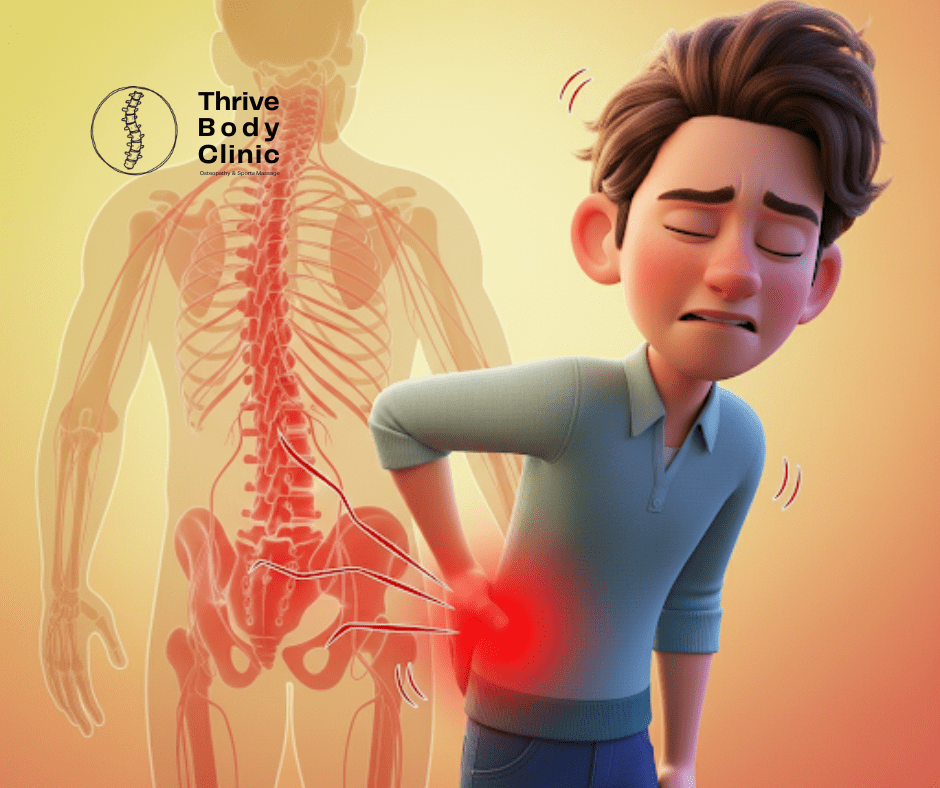
One of the most confusing and frustrating experiences for patients is when pain appears in one part of the body but doesn’t seem to match the real cause. Perhaps you feel pain in your hip, but the scans come back clear. Or you have an ache in your thigh or knee, but your GP says nothing is “wrong” in that area.
This phenomenon is called referred pain – and it’s more common than you might think. At Thrive Body Clinic, we see this regularly. Understanding referred pain can be a game-changer for patients who’ve been stuck chasing symptoms without ever addressing the real issue.
What Is Referred Pain?
Referred pain happens when discomfort is felt in one part of the body, but the true source lies elsewhere.
A classic example is the way pain in the left arm can signal heart trouble. The arm itself isn’t the problem, but the nerves carrying signals from the heart and arm share pathways into the spinal cord and brain, which can confuse the body’s messaging system.
For musculoskeletal issues, the same principle applies. Pain felt in the hip might actually be referred from the lower back or sacroiliac joint. Likewise, pain in the shoulder blade can often be traced back to the neck.
Why Does This Happen?
Your nervous system is both remarkable and complex. Nerves from different areas of the body feed into the spinal cord and then up to the brain. Sometimes, when pain signals converge on the same pathway, the brain struggles to distinguish exactly where the problem originates.
Imagine receiving two phone calls at once on the same line – the messages overlap, and it’s not always clear who’s speaking. That’s essentially what happens with referred pain.
For you as a patient, this can be disorientating. You might spend weeks trying to “treat” the painful spot (with ice, massage, or exercises) without success, because the real driver of the pain lies elsewhere.
Common Examples of Referred Pain
Here are a few patterns we frequently see in clinic:
- Hip pain from the lower back
People often think their hip joint is the culprit, but the pain is actually referred from the lumbar spine or sacroiliac joint. - Knee pain from the hip
Sometimes what feels like a knee problem actually stems from stiffness or imbalance higher up in the chain. - Shoulder blade pain from the neck
Tension and irritation around the cervical spine often show up as nagging pain between the shoulder blades. - Arm pain from the neck
Compressed or irritated nerves in the neck can cause aching, tingling, or numbness further down the arm.
Recognising these patterns helps us look beyond the obvious and track down the true cause of your discomfort.
Why It Matters
If you’ve been living with persistent pain that hasn’t improved despite stretching, strengthening, or even medical investigations, referred pain might be the missing piece of the puzzle.
The danger is that if treatment only targets the painful area, it can provide temporary relief at best. For long-term improvement, we need to identify and address the root cause.
This is where osteopathy comes in.
How Osteopathy Can Help
At Thrive Body Clinic, our role is to assess the whole body, not just the painful spot. Through hands-on examination and movement testing, we can often identify when pain is referred and where it’s really coming from.
For example:
- If you come in with hip pain, we’ll check your lumbar spine, sacroiliac joints, and pelvis as well as the hip itself.
- If you’re struggling with shoulder blade pain, we’ll explore your neck mobility and posture.
- If you have recurring knee pain, we’ll investigate how your hips and feet are moving.
Osteopathic treatment may involve gentle joint mobilisation, soft tissue release, and exercises tailored to restore healthy movement. Just as importantly, we’ll explain what’s happening in clear terms, so you leave with both less pain and a better understanding of your body.
Taking an Active Role
Many of our patients are motivated to take control of their recovery. Understanding referred pain empowers you to stop chasing symptoms and start addressing causes.
A few things you can do:
- Pay attention to patterns. Does the pain flare up after sitting, standing, or exercising?
- Notice linked areas. Sometimes stiffness or discomfort in one region coincides with pain elsewhere.
- Be open to a whole-body approach. Even if your pain feels very localised, be willing to explore how other parts of your body may be contributing.
Final Thoughts
Referred pain can be puzzling, but it’s not a mystery once you understand how the nervous system works. Pain in your hip might actually be coming from your back. Shoulder pain may originate from your neck. The key is not to get stuck treating the wrong area.
At Thrive Body Clinic, we specialise in helping patients unravel these kinds of problems. If you’ve been living with stubborn pain that doesn’t make sense, chances are referred pain could be part of the picture – and osteopathy may offer the clarity and relief you’ve been searching for.
If this sounds like you, don’t keep chasing symptoms. Book an appointment today and let’s find the real source of your pain so you can get back to living the life you want.
 Thrive Body Clinic Osteopathy & Sports Massage
Leave a comment