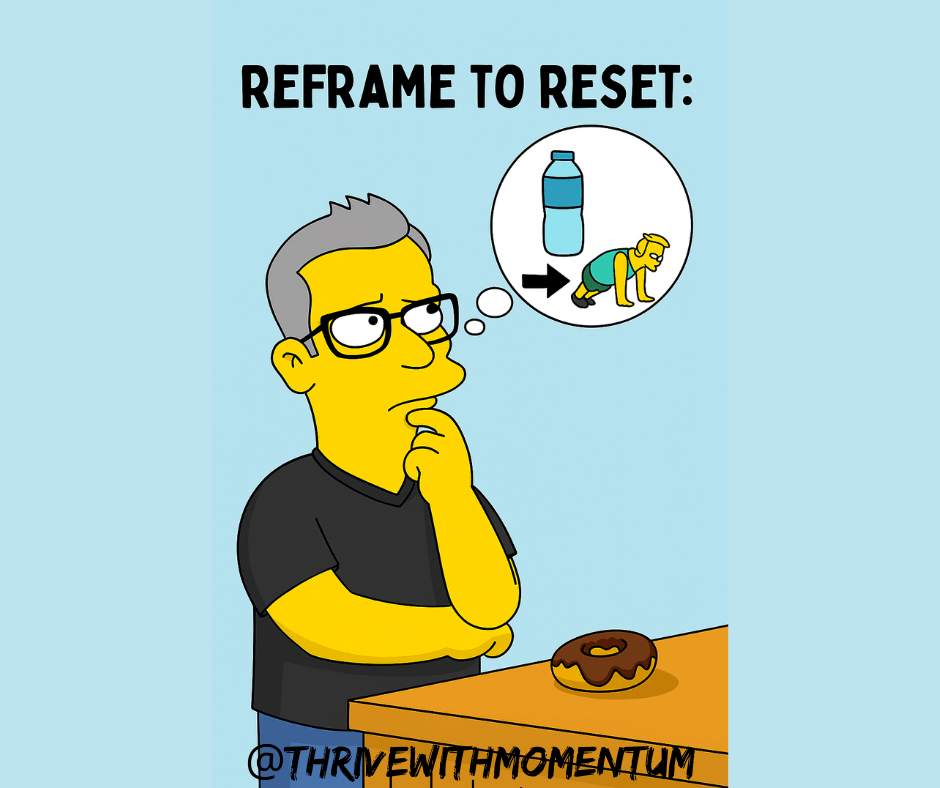
In last week’s post, I wrote about some of the mental shortcuts I’ve been exploring to stay calm and focused under pressure. One tool in particular keeps coming up—reframing.
At first, I was using reframing mostly to manage stress: turning overwhelm into action, or shifting my focus from what I couldn’t control to what I could. But as I’ve continued learning and applying these ideas in my own life, I’ve realised reframing has another hidden power: it helps us break old habits.
Not through willpower. Not through guilt.
But through small, consistent shifts in how we interpret our thoughts, triggers, and actions.
And that shift? It changes everything.
Why We Get Stuck in Habit Loops
We often treat habits like they’re just bad decisions or lack of discipline. But that’s rarely the full picture.
Habits are patterns—reinforced by repetition, comfort, and subconscious beliefs. They’re often responses to discomfort, boredom, uncertainty, or fatigue. When pressure hits or emotions rise, we reach for something familiar, something automatic.
That might be:
- Scrolling instead of sleeping
- Snacking when you’re not hungry
- Avoiding a task until the last minute
- Overcommitting because “you can’t say no”
These aren’t failures of character—they’re coping mechanisms we’ve practiced so often they’ve become reflexes.
And they often come with their own inner dialogue. You might catch yourself thinking:
- “I always do this.”
- “I’m just lazy.”
- “It’s too late now.”
- “I’ll start fresh next week.”
That’s where reframing comes in.
What Reframing Actually Is
Reframing is the simple act of changing the way you look at a situation—and choosing a more helpful interpretation.
It doesn’t mean lying to yourself or pretending everything’s fine. It means stepping out of automatic, often harsh thinking and asking: Is there another way to see this?
With habits, reframing helps us interrupt the guilt spiral and shift our mindset from criticism to curiosity—and from defeat to possibility.
3 Habit-Reframing Phrases I’ve Been Using
Here are a few small reframes I’ve been practicing recently in moments when I catch myself slipping into old patterns:
1. “This urge is temporary—not urgent.”
Sometimes the habit feels like it’s shouting at you: scroll, snack, snooze, avoid. But naming the urge as temporary (and not an emergency) creates a bit of space. It reminds you that the feeling will pass—even if you don’t act on it.
This phrase helps me pause and ride the wave, rather than reacting instantly.
2. “This isn’t punishment—it’s care.”
Changing habits can trigger all sorts of resistance. It can feel like restriction or discipline or pressure. But when I reframe my new choices—whether that’s going for a walk instead of collapsing on the sofa, or saying “no” to something that would stretch me too thin—as acts of care, everything softens.
It’s not about being strict. It’s about being kind to my future self.
3. “The goal isn’t perfection—it’s momentum.”
This one has been huge. Missing a day, slipping up, or reverting to an old habit doesn’t mean I’ve failed. Reframing those moments as part of the process rather than the end of it helps me keep moving.
I’m learning to focus less on streaks and more on recovery time—how quickly I come back to what matters.
Replace Criticism with Curiosity
One of the most powerful reframes of all? Turning “What’s wrong with me?” into “What was I needing just now?”
Instead of beating yourself up for grabbing your phone again or skipping a workout, you can ask:
- Was I tired?
- Was I avoiding something uncomfortable?
- Was I craving connection, not distraction?
Curiosity opens the door to compassion. And when you treat yourself like someone worth understanding, it becomes easier to change—because you’re not layering shame on top of the struggle.
Why Reframing Works
Reframing works because it interrupts the old thought patterns that fuel habits. It gives your brain something new to chew on—a different explanation, a different emotion, a different next step.
And the more you practice it, the more natural it becomes. Your inner script begins to shift. And that’s when habits really start to change—not because you’re forcing it, but because the story has changed.
Final Thoughts
Breaking habits doesn’t have to be about going to war with yourself. It can be about listening, softening, and shifting the way you interpret your own experience.
You won’t rewire everything overnight—but you don’t need to. One reframe at a time is enough.
I’m still learning this myself. I still catch myself slipping into old habits, and some days go better than others. But the reframes are helping. They’re keeping me grounded, curious, and kind. And they’re creating space for real, lasting change.
If you’re working on breaking a habit or shifting a pattern in your own life, maybe try this question today:
“What would this moment look like if I gave myself a new story?”
You might be surprised what opens up.
Keep Going With Me
I’m not offering coaching yet—just sharing what I’m learning each week as I build out Thrive With Momentum. These posts are part of my own growth as much as they are meant to support yours.
Thanks for reading—and feel free to share what reframes you’ve been trying lately. Let’s keep learning together.


Leave a Reply