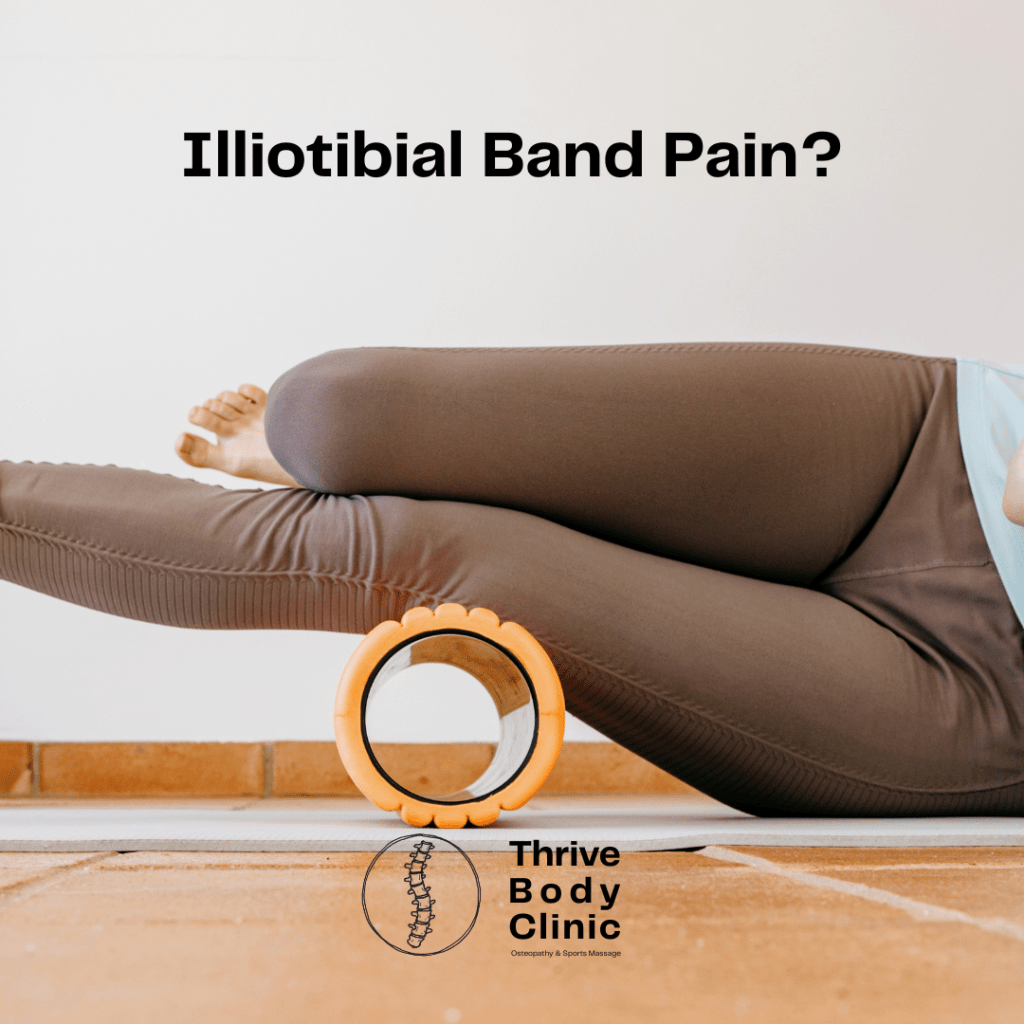
If you’ve ever experienced a persistent ache on the outside of your knee or thigh, especially during or after running, cycling, or walking downhill, there’s a good chance you’ve encountered something called IT Band Syndrome. This common overuse injury can be frustrating, painful, and limiting. But the good news is that with the right treatment approach, including osteopathy, recovery is not only possible — it’s often quicker and more complete than people expect.
In this blog, we’ll explore what IT Band Syndrome is, what causes it, who it affects, and how osteopathy can play a key role in recovery and prevention.
What is IT Band Syndrome?
The Iliotibial Band, commonly known as the IT band, is a thick band of connective tissue that runs along the outside of the thigh — from the hip (specifically the iliac crest) down to just below the knee (at the tibia). Its job is to stabilise the knee and hip during movement.
IT Band Syndrome (ITBS) occurs when this band becomes tight or inflamed, causing friction as it rubs against the outside of the femur (thigh bone), particularly around the lateral knee. This irritation leads to pain, often sharp and located on the outside of the knee, though it can also be felt higher up along the thigh.
What Causes IT Band Syndrome?
ITBS is typically caused by repetitive stress or overuse. It’s especially common in runners, cyclists, hikers, and gym-goers who increase training intensity too quickly or don’t vary their movement patterns.
Here are some of the most common contributing factors:
1. Muscle Imbalances or Weakness
Weak hip abductors (especially the gluteus medius), tight quadriceps, or an underactive core can all place increased strain on the IT band. When these muscles don’t do their job effectively, the IT band takes on more stress.
2. Poor Movement Mechanics
Overpronation (rolling inwards) of the feet, leg length discrepancies, or altered gait mechanics can increase lateral stress on the knee and hip, irritating the IT band.
3. Training Errors
- Sudden increases in mileage or intensity
- Running on cambered roads or always in the same direction around a track
- Wearing unsupportive or worn-out footwear
All of these can overload the IT band and surrounding structures.
4. Postural and Lifestyle Factors
Many people spend long hours sitting, which leads to tight hip flexors and reduced glute activation. When you then ask your body to go for a run or train hard, those imbalances can quickly become injuries.
What Are the Symptoms?
The hallmark symptom of ITBS is sharp or burning pain on the outside of the knee, particularly when the heel strikes the ground. Other symptoms may include:
- Pain that worsens with activity, especially running, squatting, or going down stairs
- Tenderness along the outer thigh
- Swelling or thickening around the knee area
- Feeling like the outside of the knee is “snapping” or “grinding”
Left unaddressed, ITBS can linger for weeks or months — becoming a chronic issue that interferes with everyday life, not just sport.
How Can Osteopathy Help?
At Thrive Body Clinic, we see IT Band Syndrome regularly — and the good news is that osteopathic treatment can make a big difference, both in relieving symptoms and in correcting the underlying cause.
Here’s how we can help:
1. Comprehensive Assessment
Osteopathy starts with understanding why your IT band is under strain in the first place.
We’ll assess:
- The mobility of your hips, knees, ankles, and pelvis
- The function and strength of your glutes and core
- Your posture and gait
- Your training history and daily habits
This allows us to treat you as a whole person — not just the site of pain.
2. Hands-On Treatment
Osteopaths use a range of techniques to reduce pain and promote healing:
- Soft tissue release: to ease tight muscles (such as the TFL, glutes, quads and hamstrings) and reduce IT band tension
- Myofascial release: working directly on the fascia that contributes to IT band tightness
- Joint mobilisation: improving movement in restricted areas like the hips, lumbar spine or ankles
- Stretching and muscle energy techniques: to rebalance muscular tension and reduce strain on the knee
We never work in isolation — even if your pain is in your knee, the root cause may lie in your hip or lower back.
3. Exercise Prescription
Treatment doesn’t end on the couch.
We’ll design a tailored exercise plan that might include:
- Glute activation drills
- Hip stability work
- Stretching for the quads, hamstrings, and TFL
- Core strengthening
- Guidance on foam rolling — including what to roll (and what not to)
These exercises help support long-term recovery and prevent recurrence.
4. Training Advice and Prevention Strategies
We’ll also help you understand:
- How to adapt your training to avoid overload
- Why warm-ups and cool-downs matter
- When it’s safe to return to running or sport
- Footwear choices and whether you might benefit from a gait assessment
Preventing ITBS is about addressing the small issues before they become bigger ones.
When to Seek Help
If you’ve had lateral knee pain that:
- Comes on with activity and eases with rest
- Has lasted more than a week or two
- Is limiting your training or daily life
… then it’s worth getting it properly assessed.
The sooner ITBS is addressed, the quicker and easier it is to resolve. Ignoring the pain or pushing through often makes things worse — turning a minor irritation into a chronic injury.
The Thrive Body Clinic Approach
At Thrive Body Clinic, we believe in a whole-body, personalised approach. We don’t just treat your symptoms — we help you understand your body, build resilience, and move more freely.
Whether you’re a seasoned runner, a weekend walker, or just starting out on a new fitness journey, our team is here to help you recover, rebuild, and thrive.
Struggling with IT Band pain?
Book an appointment with our osteopaths today and take the first step toward pain-free movement.
👉 www.thrivebodyclinic.com
📍 Conveniently located | Friendly, professional care | Movement-focused solutions
Let us help you get back to doing what you love — without the pain.
 Thrive Body Clinic Osteopathy & Sports Massage
Leave a comment