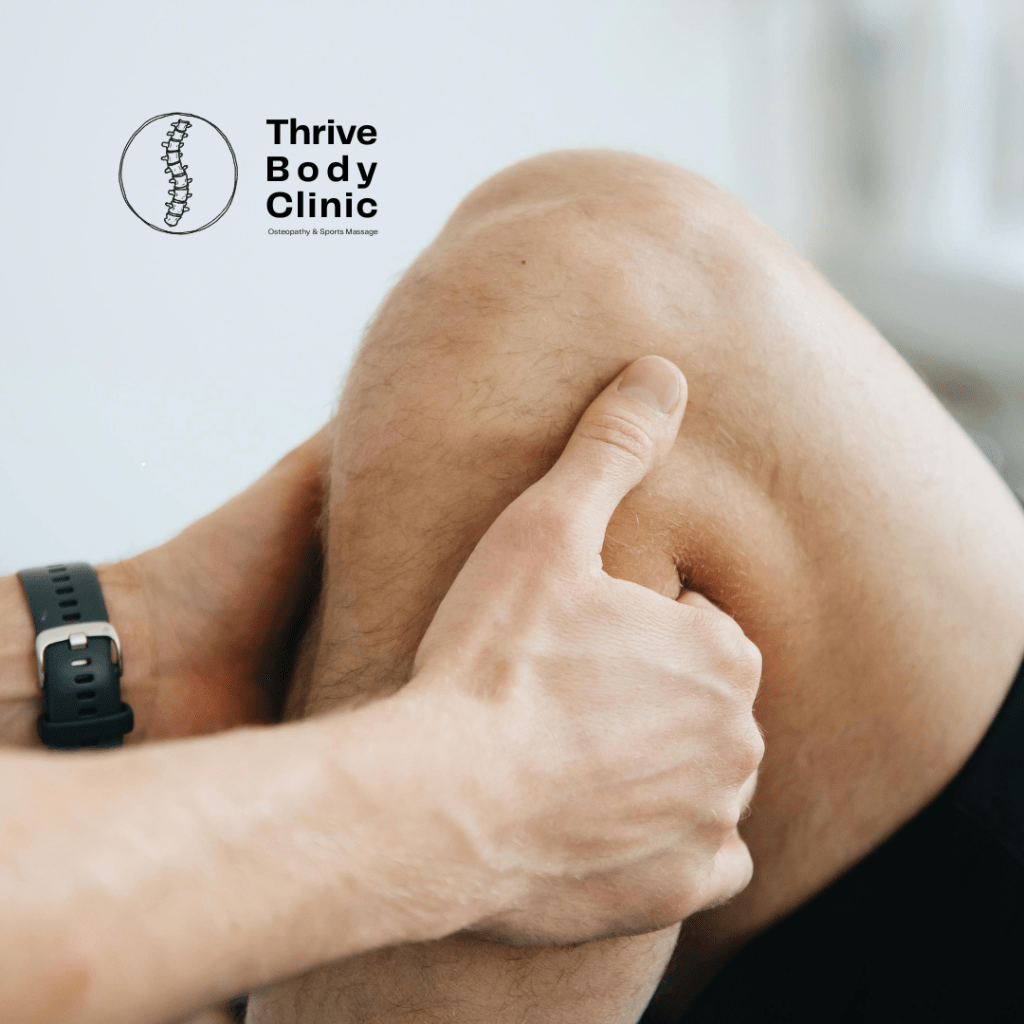
At Thrive Body Clinic, we often see patients with knee pain that seems to come and go, often swelling up after exercise or long days on their feet. One common cause of this discomfort is a Baker’s cyst, also known as a popliteal cyst. It’s a condition that might sound more serious than it is — but it can cause significant pain and restriction if left untreated. The good news is that osteopathy offers a natural, hands-on approach to supporting your body’s healing and reducing symptoms.
In this blog, we’ll explain what a Baker’s cyst is, why it develops, common symptoms to look out for, and how osteopathic treatment can play a key role in your recovery.
What Is a Baker’s Cyst?
A Baker’s cyst is a fluid-filled swelling that develops at the back of the knee, in the popliteal space. It’s usually the result of excess synovial fluid — the lubricating fluid in your knee joint — being pushed into a small sac at the back of the joint, where it forms a cyst.
This happens when the knee joint is under stress, often due to underlying issues like arthritis, a meniscus tear, or general wear and tear. The body produces more synovial fluid in response to inflammation or joint damage, and when it can’t be absorbed quickly enough, it accumulates in a pocket behind the knee.
Although it’s called a “cyst,” it’s not harmful or cancerous, but it can cause pain, tightness, and limit your movement — especially if it bursts or presses on surrounding tissues.
Symptoms of a Baker’s Cyst
The most common signs of a Baker’s cyst include:
- A visible swelling or lump behind the knee
- A feeling of tightness or fullness, especially when straightening the knee
- Stiffness or reduced range of motion in the knee joint
- Pain, particularly during or after physical activity
- Occasionally, the cyst can rupture, causing swelling, redness, and pain in the calf — symptoms that can mimic a blood clot (deep vein thrombosis), so this should always be checked by a medical professional.
Symptoms often worsen after standing for long periods, climbing stairs, or following intense activity like running or hiking.
What Causes a Baker’s Cyst?
Baker’s cysts are usually a secondary issue, meaning they develop because of another problem within the knee joint. Common causes include:
- Osteoarthritis – age-related joint degeneration leading to inflammation
- Rheumatoid arthritis – an autoimmune form of arthritis
- Meniscal tears – cartilage damage can increase fluid production
- Gout – uric acid crystals can irritate the joint lining
- Knee injuries – sprains, overuse, or repetitive strain
While anyone can develop a Baker’s cyst, it’s more common in people aged 35 and above, athletes, and those with chronic joint problems.
How Is a Baker’s Cyst Diagnosed?
If you notice swelling or tightness behind your knee, it’s important to get it assessed. At Thrive Body Clinic, we perform a thorough case history and physical assessment to determine the likely cause of your symptoms.
If needed, we may refer you for imaging (such as an ultrasound or MRI) to rule out other causes of swelling and confirm the presence of a cyst.
Can Osteopathy Help with a Baker’s Cyst?
Absolutely. While osteopaths do not remove cysts, we can help address the underlying joint dysfunction and muscular imbalances that may be contributing to the problem. Our aim is to reduce pain, improve joint mobility, and support the body’s natural drainage and healing processes.
Here’s how osteopathy can help:
1. Improving Knee Joint Function
Osteopaths are trained to assess how your knee is functioning mechanically. If there’s misalignment, tightness, or abnormal movement patterns, this can contribute to joint irritation and inflammation. By using hands-on techniques to mobilise the knee joint, we help improve its range of motion and reduce the internal pressure that may be aggravating the cyst.
2. Addressing Contributing Areas: Hips, Ankles and Lower Back
The knee doesn’t work in isolation. Stiffness or dysfunction in the hip, ankle, or lower back can lead to abnormal strain on the knee. For example, a stiff ankle might alter your walking pattern, increasing stress on the knee joint.
At Thrive Body Clinic, we take a whole-body approach. By improving how the surrounding joints and muscles function, we reduce excess load on the knee and help prevent the recurrence of cysts.
3. Soft Tissue Release and Swelling Management
Using soft tissue techniques, we can ease tension in the muscles around the knee — such as the hamstrings, gastrocnemius (calf muscle), and popliteus — which often become tight in response to a Baker’s cyst.
We may also work on improving lymphatic and venous drainage from the leg, encouraging fluid movement and helping the body reabsorb the excess synovial fluid that’s built up in the cyst.
4. Advice on Activity and Rehabilitation
Movement is important — but it must be the right kind of movement. If you’re dealing with a Baker’s cyst, you may need to modify your activity levels temporarily. We can provide personalised advice on how to stay active safely, including:
- Exercises to gently strengthen and stabilise the knee joint
- Stretching routines for tight muscles that could be contributing to imbalance
- Tips on footwear, posture, and gait to reduce pressure on the joint
In some cases, we may work alongside your GP or refer you to other professionals such as physiotherapists or orthopaedic specialists if injection or surgical options need to be considered.
5. Preventing Recurrence
Osteopathy doesn’t just treat the symptoms — it aims to correct the root cause. By improving biomechanics, posture, and muscular balance, we can help reduce the risk of the cyst returning.
For patients with chronic knee issues, regular osteopathic maintenance and supportive exercises can be a proactive way to keep your joints healthy for the long term.
Final Thoughts
A Baker’s cyst can be a frustrating and uncomfortable condition, especially when it interferes with your ability to walk, exercise, or carry out daily activities. The key is understanding that the cyst is often a symptom of a deeper issue within the knee joint.
At Thrive Body Clinic, we offer a gentle, holistic approach to managing Baker’s cysts — supporting your body’s healing, easing pain, and helping you move freely again.
If you’ve been struggling with swelling or discomfort behind the knee, don’t ignore it. Book an appointment with one of our experienced osteopaths today, and let us help you get back to thriving.
 Thrive Body Clinic Osteopathy & Sports Massage
Leave a comment