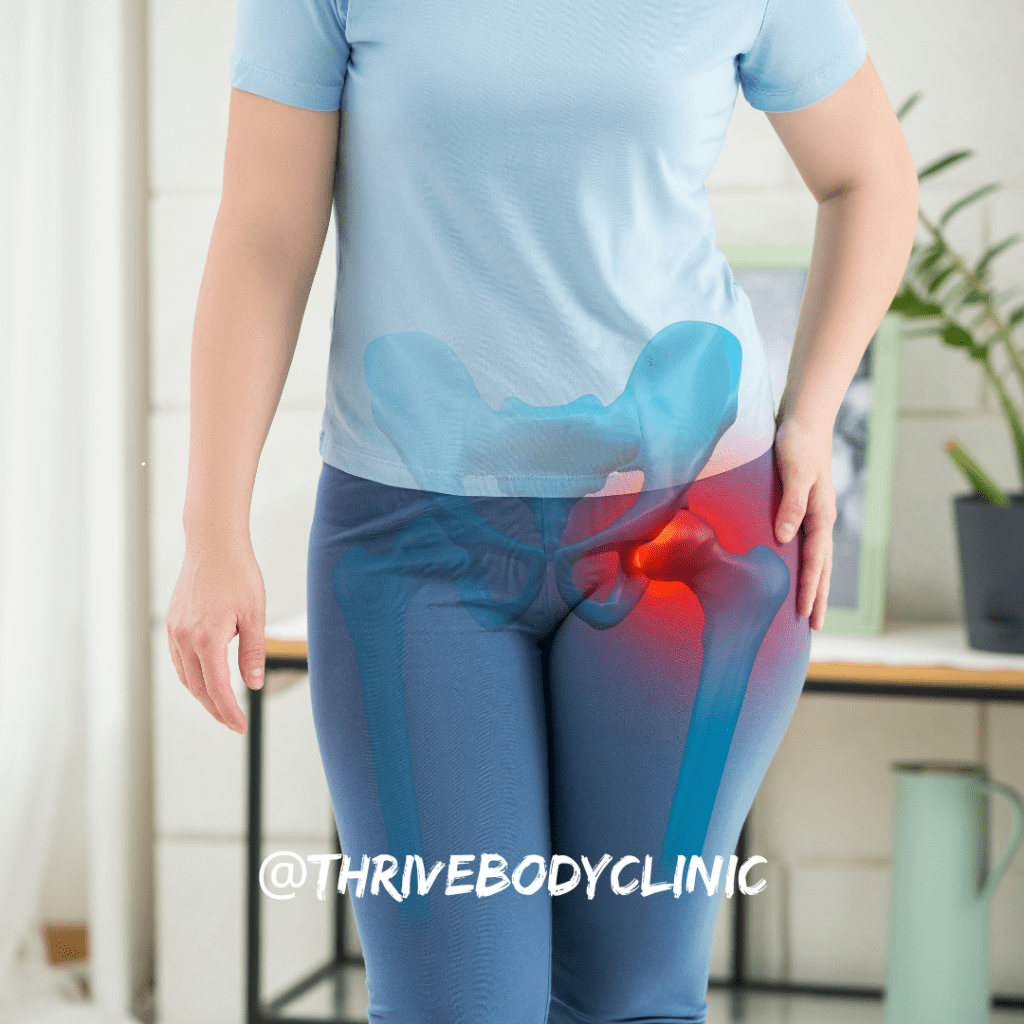
Hip pain can be a frustrating and limiting condition, affecting everything from walking and exercise to sleeping comfortably. As an osteopath, I frequently see patients at Thrive Body Clinic struggling with hip discomfort, whether due to arthritis, muscle imbalances, injuries, or postural issues. Fortunately, there are effective ways to alleviate hip pain and improve mobility. In this post, we’ll explore three key tips for managing hip pain, helping you stay active and pain-free.
1. Strengthen and Stretch Key Muscles
One of the primary causes of hip pain is muscle imbalances. When certain muscles around the hip become tight while others weaken, the joint can be pulled out of alignment, leading to discomfort and stiffness. Strengthening and stretching the right muscle groups can help restore balance and alleviate pain.
Key Muscles to Strengthen:
- Gluteus Medius & Maximus: These muscles provide stability to the hip and pelvis. Weak glutes can lead to increased strain on the hip joint.
- Core Muscles: A strong core helps support the lower body and prevents excessive strain on the hips.
- Hip Flexors & Adductors: These muscles play a key role in movement and need to be strong yet flexible.
Key Muscles to Stretch:
- Hip Flexors: Sitting for long periods can tighten the hip flexors, leading to pain and discomfort. Stretching these muscles can help relieve pressure on the hip joint.
- Piriformis: This deep muscle in the buttock can become tight and cause pain that radiates into the hip and leg.
- Hamstrings & Quadriceps: Keeping these muscles flexible can prevent excessive pulling on the hip joint.
Effective Exercises and Stretches:
- Glute Bridges: Lie on your back, knees bent, and lift your hips towards the ceiling, engaging your glutes.
- Clamshells: Lie on your side with knees bent, then lift your top knee while keeping your feet together to strengthen the glutes.
- Hip Flexor Stretch: Step one foot forward into a lunge position, keeping your back leg straight and feeling the stretch in the hip.
- Piriformis Stretch: Lie on your back, cross one ankle over the opposite knee, and gently pull the supporting leg towards your chest.
A combination of strength and flexibility training will help stabilize your hips, reduce pain, and prevent further issues.
2. Improve Posture and Movement Patterns
Poor posture and incorrect movement habits can place unnecessary stress on the hips. Addressing how you sit, stand, and move can make a big difference in reducing hip pain.
Posture Adjustments:
- Avoid Sitting for Too Long: Sitting for extended periods can cause hip flexors to tighten and lead to pain. Take breaks to stand and move every 30–45 minutes.
- Sit with Proper Alignment: Keep your feet flat on the floor, hips level, and avoid crossing your legs for extended periods.
- Engage Your Core When Standing: Standing with your weight evenly distributed and your core slightly engaged helps relieve pressure on the hips.
Correcting Movement Patterns:
- Walking Mechanics: If you tend to shift your weight unevenly or overuse one side, it can contribute to hip pain. Focus on walking with even strides and engaging your glutes as you step.
- Lifting Techniques: When lifting objects, bend from your hips and knees rather than rounding your back. Engage your legs and core to reduce strain on the hips.
- Sleeping Position Adjustments: Sleeping on your side with a pillow between your knees can help keep the hips aligned and reduce discomfort.
An osteopath can assess your posture and movement patterns to identify any habits that may be contributing to your hip pain and provide tailored advice.
3. Seek Osteopathic Treatment for Long-Term Relief
While exercises and posture adjustments can significantly improve hip pain, sometimes professional treatment is necessary to address underlying issues. Osteopathy is a hands-on approach that can help relieve hip pain by improving joint mobility, reducing muscle tension, and enhancing circulation.
How Osteopathy Helps Hip Pain:
- Joint Mobilization: Gentle techniques help improve the movement of the hip joint and surrounding areas, reducing stiffness.
- Soft Tissue Techniques: Massage and myofascial release help relax tight muscles and improve blood flow to the affected area.
- Alignment Correction: Osteopaths can assess and correct imbalances in the pelvis, lower back, and legs that may be contributing to hip pain.
- Lifestyle and Exercise Guidance: A tailored treatment plan includes advice on exercises, posture, and daily habits to prevent recurring pain.
When to See an Osteopath:
- If your hip pain has persisted for more than a few weeks.
- If you experience sharp or radiating pain into the thigh or lower back.
- If your mobility is limited due to stiffness or discomfort.
- If you suspect an underlying condition like arthritis or bursitis.
At Thrive Body Clinic, we take a holistic approach to hip pain, considering how your entire body moves and functions. Osteopathic treatment can complement your exercise routine and postural adjustments, leading to long-term pain relief and improved quality of life.
Final Thoughts
Hip pain doesn’t have to be a constant struggle. By strengthening and stretching key muscles, improving posture and movement habits, and seeking osteopathic care when needed, you can significantly reduce discomfort and improve mobility. If you’re struggling with persistent hip pain, don’t hesitate to book a consultation at Thrive Body Clinic—our goal is to help you move and feel better every day.
 Thrive Body Clinic Osteopathy & Sports Massage
Leave a comment