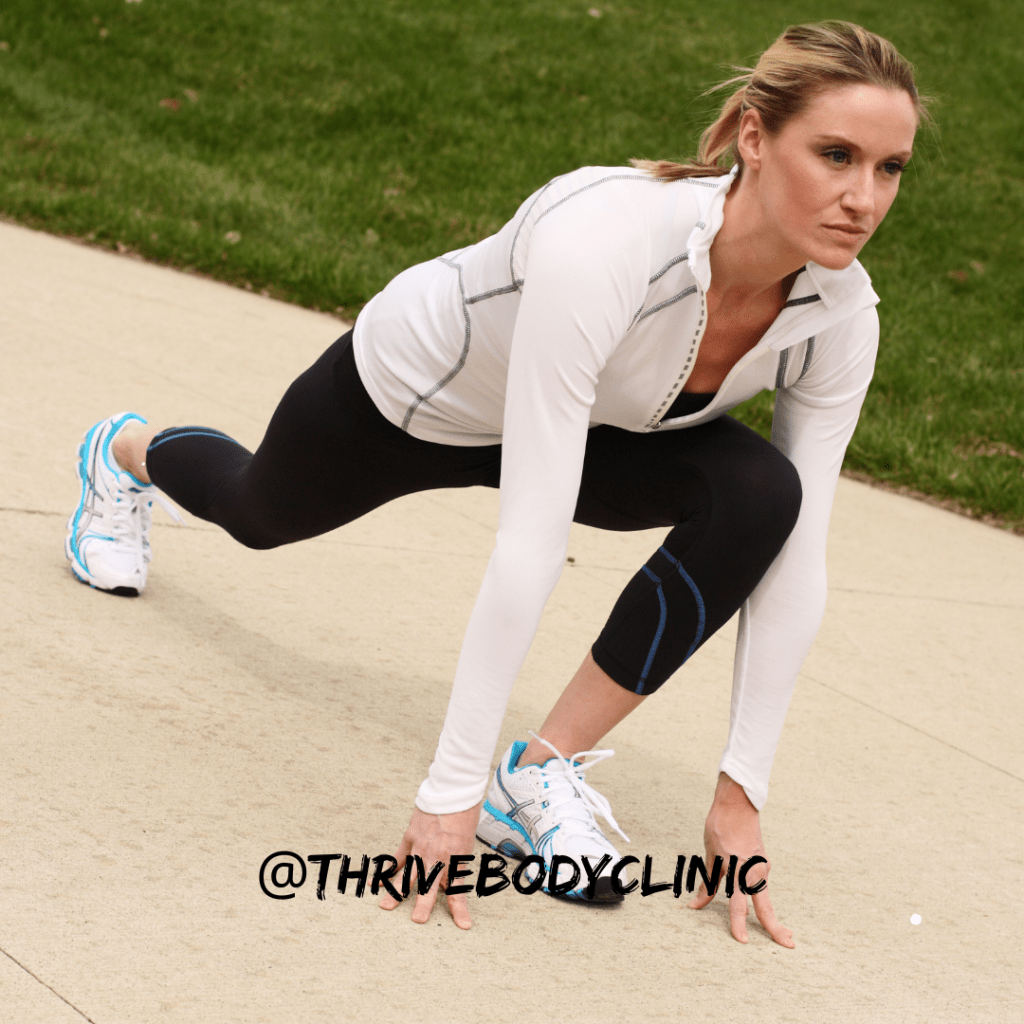
The hip flexors are one of the most important yet often neglected muscle groups in the body. These muscles, including the iliopsoas, rectus femoris, and sartorius, play a crucial role in posture, stability, and mobility. Whether you’re an athlete, an office worker, or someone who enjoys casual walks, tight or weak hip flexors can contribute to pain, poor movement, and even chronic discomfort in the lower back and hips.
At Thrive Body Clinic, we see many patients struggling with hip flexor issues. Weak or overly tight hip flexors can contribute to poor movement patterns, lower back pain, and even knee problems. Fortunately, with the right approach, you can improve your hip flexor health and enhance overall mobility. Here are three essential tips for keeping your hip flexors strong and flexible.
1. Stretch and Mobilise Regularly
One of the main issues people face with hip flexors is tightness. This often results from prolonged sitting, which shortens the hip flexor muscles and reduces their ability to function optimally. Regular stretching and mobility exercises can counteract these effects, improving flexibility and reducing discomfort.
Key Stretches for Hip Flexors:
- Lunge Stretch (Hip Flexor Stretch):
- Step one foot forward into a lunge position.
- Lower your back knee to the floor, keeping your chest upright.
- Push your hips forward slightly until you feel a stretch in the front of your hip.
- Hold for 20-30 seconds on each side.
- Pigeon Pose:
- Start in a push-up position and bring one knee forward, placing it near your opposite hand.
- Keep your back leg extended and sink your hips towards the ground.
- Hold for 20-30 seconds before switching sides.
- Butterfly Stretch:
- Sit on the floor with the soles of your feet together.
- Gently press your knees towards the floor while keeping your back straight.
- Hold for 20-30 seconds.
Performing these stretches daily can help maintain hip flexor flexibility and prevent tightness from affecting your movement.
2. Strengthen the Hip Flexors and Surrounding Muscles
While stretching is important, strengthening the hip flexors is equally essential. Weak hip flexors can lead to instability, poor posture, and compensatory movement patterns that increase stress on other areas like the lower back and knees.
Effective Hip Flexor Strengthening Exercises:
- Seated Knee Raises:
- Sit on the edge of a chair with both feet flat on the ground.
- Lift one knee towards your chest without leaning back.
- Lower it back down and repeat 10-15 times on each side.
- Hanging Leg Raises:
- Hang from a pull-up bar and engage your core.
- Lift your knees towards your chest in a controlled motion.
- Lower them back down slowly and repeat 8-12 times.
- Step-Ups:
- Step onto a sturdy bench or step with one foot.
- Drive through your heel to lift yourself up fully.
- Slowly lower back down and repeat 10-12 times per leg.
By incorporating these exercises into your routine, you can build stronger, more resilient hip flexors that support better movement and posture.
3. Improve Your Posture and Movement Habits
Poor posture and movement patterns can put excessive strain on the hip flexors, leading to discomfort and dysfunction. Making small adjustments to how you sit, stand, and move can help reduce stress on these muscles and improve overall function.
Posture and Movement Tips:
- Limit Prolonged Sitting:
- Stand up and move around every 30-45 minutes if you have a desk job.
- Use a standing desk or an ergonomic chair to promote better alignment.
- Engage Your Core:
- A strong core supports the hips and helps maintain proper posture.
- Incorporate core-strengthening exercises like planks and dead bugs into your routine.
- Walk with Awareness:
- Avoid shuffling or taking overly short steps.
- Engage your glutes and maintain an upright posture when walking.
- Check Your Sleeping Position:
- If you sleep on your side, place a pillow between your knees to keep your hips aligned.
- Avoid curling up too tightly, as this can shorten the hip flexors overnight.
Conclusion
Taking care of your hip flexors is essential for maintaining mobility, reducing pain, and preventing injury. By incorporating regular stretching, strengthening exercises, and mindful movement habits into your routine, you can keep your hip flexors in top condition.
At Thrive Body Clinic, we offer expert osteopathic care to help you address any hip flexor issues and improve your overall movement quality. If you’re experiencing tightness, discomfort, or mobility limitations, book a consultation with us today and take the first step towards better hip health!
 Thrive Body Clinic Osteopathy & Sports Massage
Leave a comment