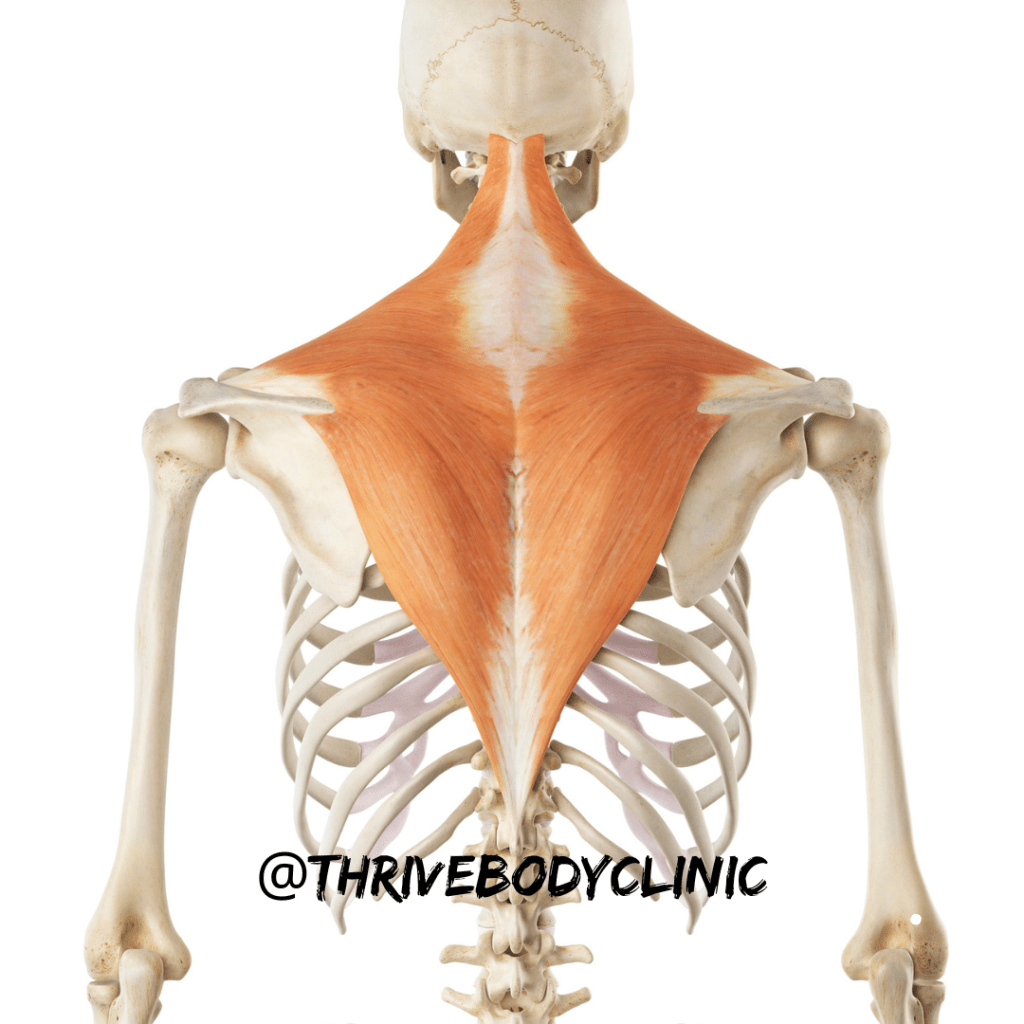
The trapezius muscle, a large, triangular muscle that spans the back and shoulders, plays a pivotal role in everyday movement and posture. It’s a key player in various activities, from shrugging your shoulders to lifting heavy objects. At Thrive Body Clinic, we often encounter patients whose trapezius muscles are a source of discomfort, tension, or even chronic pain. Understanding this muscle, its function, and how it reacts to stress is vital for maintaining musculoskeletal health.
Anatomy of the Trapezius Muscle
The trapezius muscle is a broad, flat muscle that stretches across the upper back and neck, extending from the base of the skull to the mid-back. It has three main regions:
- Upper Trapezius: This portion starts at the base of the skull and attaches to the collarbone. It’s responsible for elevating the shoulders and assisting in neck movement.
- Middle Trapezius: Located across the upper back, this section helps retract the shoulder blades, pulling them towards the spine.
- Lower Trapezius: Situated in the middle to lower back, this part depresses the shoulder blades and stabilizes the scapula.
These regions work in harmony to enable movements such as shrugging, lifting, rotating the neck, and stabilizing the shoulders during various activities.
Functions of the Trapezius Muscle
The trapezius muscle is involved in multiple essential functions:
- Shoulder Movement and Stability: It facilitates upward rotation, elevation, and retraction of the shoulder blades.
- Postural Support: The muscle helps maintain proper alignment of the head, neck, and shoulders, especially during prolonged sitting or standing.
- Assistance in Neck and Head Movements: The upper trapezius plays a crucial role in tilting and rotating the head.
- Support During Lifting: It aids in lifting heavy objects by stabilizing the shoulder girdle.
The Trapezius and Stress
The trapezius muscle is often described as a “stress reservoir.” Many people unknowingly hold tension in their upper trapezius, particularly during times of physical or emotional stress. This manifests as tightness, discomfort, or even pain in the shoulders and neck.
Why Does the Trapezius Hold Stress?
- Fight or Flight Response: Stress activates the sympathetic nervous system, causing muscles to contract as part of the body’s fight-or-flight response. The upper trapezius is particularly prone to this reaction.
- Postural Habits: Poor posture, such as slouching or leaning forward, overburdens the trapezius, leading to chronic tension.
- Repetitive Strain: Activities like typing, holding a phone, or carrying heavy bags can overwork the trapezius, leading to tightness and fatigue.
Common Issues Associated with the Trapezius
When the trapezius muscle becomes strained or overused, it can lead to various issues, including:
- Muscle Tightness and Pain: Often described as knots or trigger points, this pain can radiate to the neck, shoulders, and even the upper arms.
- Headaches: Tension in the upper trapezius can contribute to tension headaches.
- Reduced Range of Motion: Stiffness in the trapezius can limit neck and shoulder movement.
- Postural Problems: Chronic tension may contribute to forward head posture or rounded shoulders.
How Osteopathy Can Help
At Thrive Body Clinic, we address trapezius-related issues holistically. Osteopathy focuses on restoring balance and reducing tension in the body through gentle, hands-on techniques. Here’s how osteopathy can help:
- Soft Tissue Manipulation: Targeted techniques help release tightness and reduce trigger points in the trapezius muscle.
- Postural Assessment and Correction: We assess your posture and recommend adjustments to alleviate undue stress on the trapezius.
- Joint Mobilization: Gentle manipulation of the cervical spine and shoulder joints can relieve strain and improve mobility.
- Stress Management Advice: Techniques such as deep breathing, relaxation exercises, and ergonomic adjustments can help minimize stress-induced muscle tension.
Tips for Preventing Trapezius Tension
In addition to osteopathic treatments, there are several ways to care for your trapezius muscles:
- Practice Good Posture: Ensure your workstation is ergonomic, with your computer screen at eye level and your shoulders relaxed.
- Take Breaks: If you’re sitting or working for long periods, take regular breaks to stretch and move.
- Stretching and Strengthening Exercises: Incorporate exercises like shoulder rolls, neck stretches, and scapular retractions into your routine.
- Manage Stress: Engage in stress-reducing activities such as yoga, meditation, or deep breathing exercises.
- Warm Up Before Physical Activity: Proper warm-ups reduce the risk of muscle strain during exercise.
Stretching and Exercise Recommendations
Here are two simple exercises to keep your trapezius muscles healthy:
- Upper Trapezius Stretch:
- Sit or stand with your back straight.
- Tilt your head to one side, bringing your ear towards your shoulder.
- Hold for 20–30 seconds, then switch sides.
- Scapular Retractions:
- Sit or stand with your arms by your sides.
- Squeeze your shoulder blades together as if you’re trying to hold a pencil between them.
- Hold for 5–10 seconds, then release. Repeat 10 times.
When to Seek Help
If you’re experiencing persistent trapezius pain or discomfort that doesn’t improve with self-care, it’s time to seek professional assistance. Chronic trapezius tension can lead to more significant musculoskeletal issues if left untreated.
At Thrive Body Clinic, we’re dedicated to helping you find relief and improve your quality of life. Whether you’re dealing with stress-related tension or postural strain, our tailored osteopathic treatments can help you feel your best.
Conclusion
The trapezius muscle is a vital component of your upper body’s function and well-being. However, it’s also highly susceptible to stress and strain. By understanding its role and taking proactive steps to care for it, you can prevent discomfort and maintain optimal health.
If you’re struggling with trapezius tension or pain, let Thrive Body Clinic support you on your journey to recovery. We are here to help you move, feel, and live better. Reach out to us today to book your appointment!
 Thrive Body Clinic Osteopathy & Sports Massage
Leave a comment