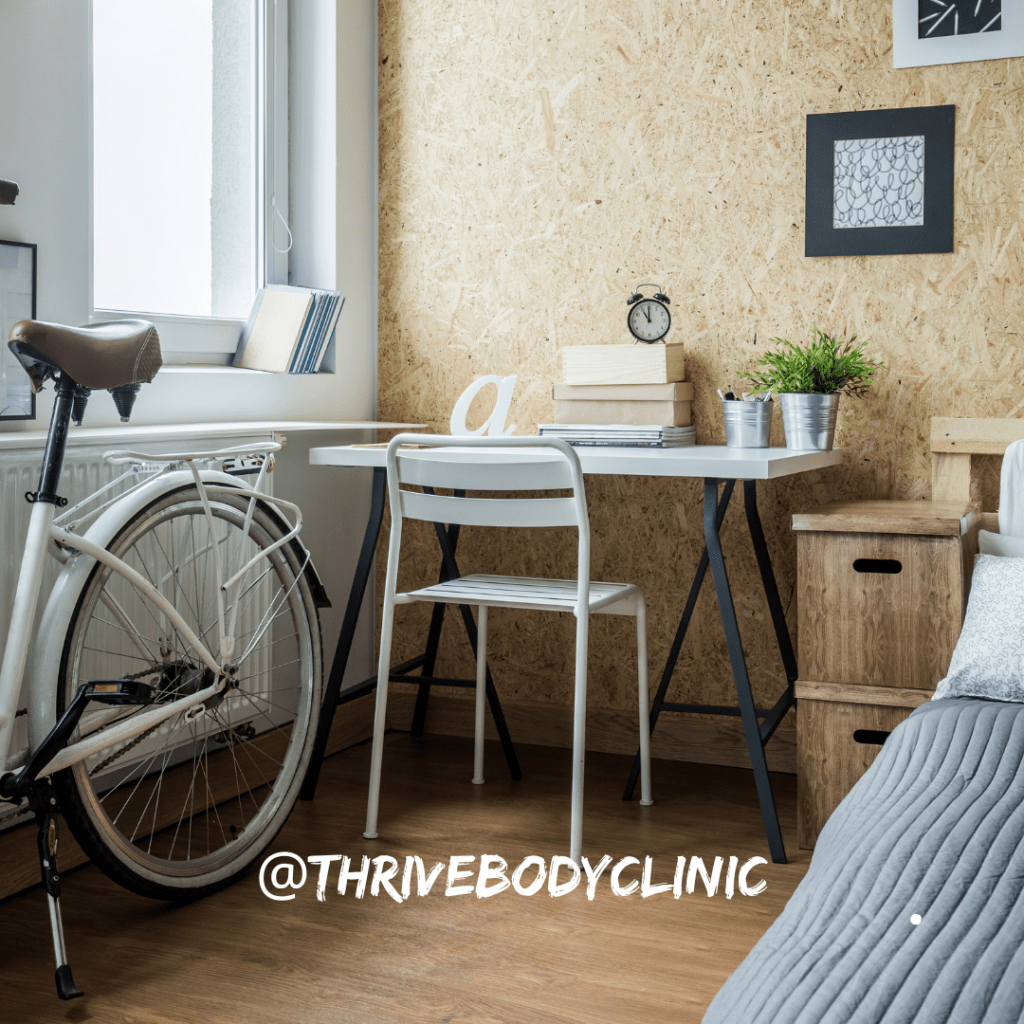
When it comes to working out or maintaining mobility, many people are under the impression that you need a fully equipped gym or a vast amount of space to make real progress. But what if we told you that you can achieve effective, sustainable workouts and mobility routines with just the space you have in your living room, bedroom, or even a small office? At Thrive Body Clinic, we believe that optimizing your fitness shouldn’t require a massive overhaul of your home or lifestyle. In this blog post, we’ll break down exactly how much space you really need and how you can make the most of limited areas to prioritize your health.
1. The Myth of Needing Large Spaces for Effective Exercise
The idea that you need a large, dedicated gym space to exercise is one that has been perpetuated by fitness influencers, commercial gyms, and social media. We’re bombarded with images of pristine gyms with rows of machines and acres of space. This can make working out at home feel inadequate, especially if you have limited space.
But the truth is, your body doesn’t need vast spaces to benefit from exercise. In fact, many forms of exercise and mobility training can be done effectively in an area no larger than a yoga mat. With the right approach, you can achieve strength, flexibility, and overall fitness using just a few square feet of space.
2. Making the Most of Small Spaces for Mobility Work
One of the key focuses of osteopathy is improving and maintaining mobility, which is essential for overall well-being. The great news? Mobility exercises don’t require much space at all. You can do effective stretches, muscle activation exercises, and mobility drills in areas as small as 4×6 feet—roughly the size of a yoga mat.
For example:
- Hip Mobility: Simple drills like hip flexor stretches, glute bridges, and leg swings can be done standing or lying down on a mat.
- Shoulder Mobility: Rotational movements, wall slides, and stretches like child’s pose can all be performed in a confined space.
- Spinal Mobility: Exercises like cat-cow stretches, thoracic rotations, and seated twists are ideal for limited areas and help keep your spine flexible and healthy.
If you can extend your arms out to your sides without hitting anything, you’ve got more than enough space to perform a wide range of mobility drills that can enhance your joint function and reduce the risk of injury.
3. Full-Body Workouts in Tight Spaces
When it comes to general fitness, you can build a well-rounded workout routine without needing a massive gym setup. Exercises that rely on body weight can be performed in the smallest of spaces. Here’s how you can maximize what you already have:
- Bodyweight Exercises: Push-ups, squats, lunges, and planks can all be done in tight spaces. You can even modify them to increase intensity (think single-leg squats or decline push-ups).
- Core Work: Crunches, Russian twists, mountain climbers, and side planks can be performed within the space of a mat. These exercises are great for strengthening your core, which supports better posture and reduces the risk of lower back pain.
- Cardio Options: Burpees, high knees, jumping jacks, and shadow boxing require very little space and can get your heart rate up quickly.
Pro Tip: If you’re worried about disturbing neighbours with high-impact exercises, focus on low-impact moves like step-ups, squats, or resistance band training to avoid loud thuds on the floor.
4. Using Simple Equipment for Extra Variety
While you can get a lot done with just your body weight, a few small pieces of equipment can expand your range of exercises even in a compact area. Consider investing in:
- Resistance Bands: These are perfect for adding resistance to your workouts without taking up much space. You can use them for strengthening your glutes, legs, arms, and core.
- Dumbbells or Kettlebells: A pair of dumbbells or a single kettlebell can be used for weighted squats, lunges, overhead presses, and other strength exercises. Plus, they can easily be stored away when not in use.
- Foam Roller: Great for mobility work and releasing muscle tension, foam rollers are compact and versatile.
You don’t need a lot of equipment or space to make significant improvements in strength and mobility. Sometimes, the best results come from simplicity and consistency.
5. Embracing Minimalism in Fitness
At Thrive Body Clinic, we often see clients who feel overwhelmed by the idea of starting a fitness routine because they think they lack the space, equipment, or time. The reality is, the most effective exercise routines are often the simplest. By focusing on functional movements that mimic everyday activities, you can build strength, flexibility, and balance—all in the comfort of your own home.
One of the key benefits of minimal-space workouts is that they can easily become a regular part of your lifestyle. You don’t have to commute to a gym or carve out large blocks of time. Instead, you can incorporate short, effective routines that fit into your daily schedule, whether it’s a quick morning mobility session, a 15-minute bodyweight workout before lunch, or some gentle stretching in the evening.
6. Key Takeaways for Getting Started
- Assess Your Space: Find a small, clear area in your home where you can stretch your arms out to the sides without obstruction. This is enough space for most exercises.
- Start Simple: Focus on bodyweight exercises and mobility drills that can be performed with minimal space.
- Consistency Over Perfection: A small space and minimal equipment can go a long way if you’re consistent. Prioritize regular movement and you’ll see improvements in your strength, flexibility, and overall health.
Final Thoughts
The space you have should never be a barrier to getting started on your fitness journey. At Thrive Body Clinic, we’re here to help you embrace a healthy, active lifestyle with practical, sustainable strategies that fit into your everyday life. Whether it’s advice on mobility exercises or support for pain management, our osteopathy services are designed to help you feel your best—no matter how much room you have to work with.
Ready to start moving? Book a session with us at Thrive Body Clinic today and let’s find ways to optimize your health, mobility, and fitness—right where you are.
 Thrive Body Clinic Osteopathy & Sports Massage
Leave a comment