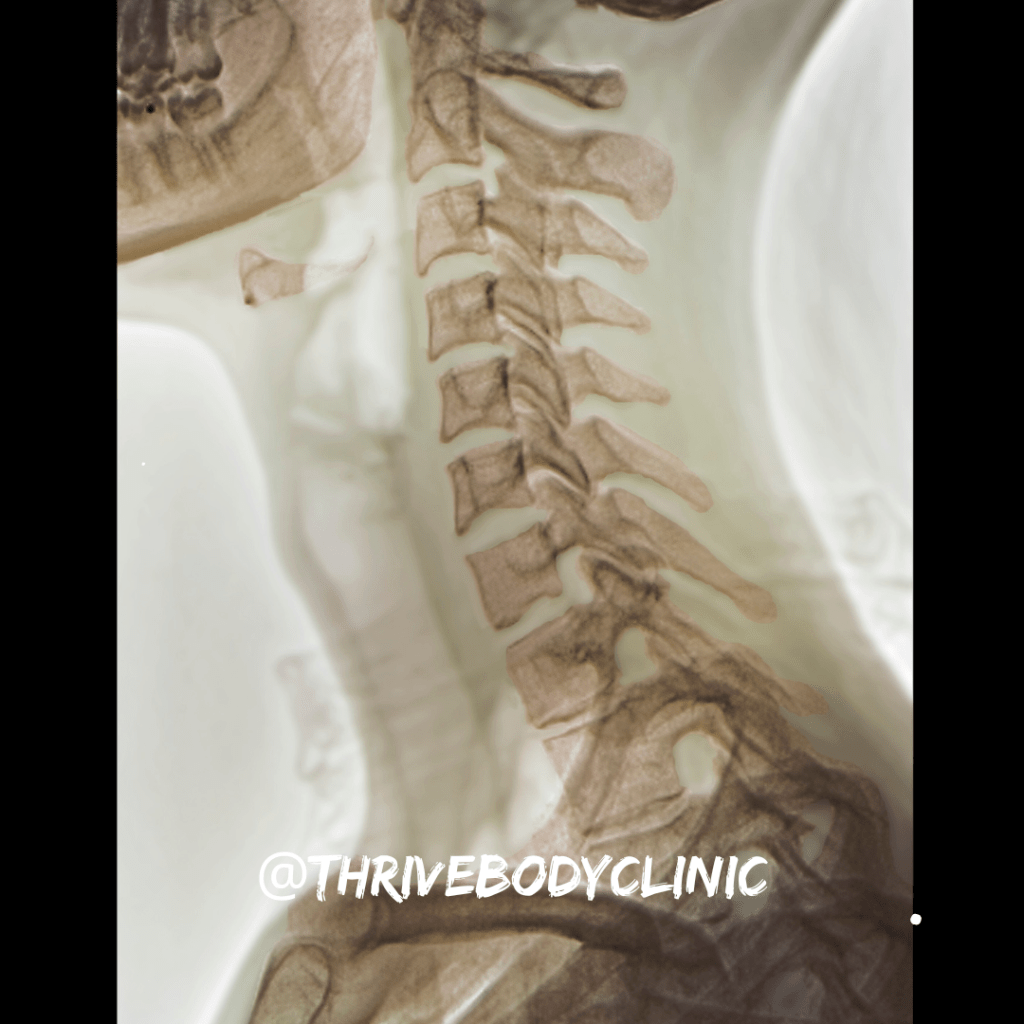
At Thrive Body Clinic, we often see patients dealing with persistent back or neck pain. One common source of this discomfort lies in the facet joints—an often-overlooked but crucial part of the spine. Understanding how these joints function and what can go wrong is essential for managing and relieving pain effectively.
What Are Facet Joints?
Your spine is a marvel of engineering, designed to provide strength, stability, and flexibility. Running down the back of your body, the spine is made up of 24 vertebrae that interlock like a chain. Between each of these vertebrae are facet joints, which allow the spine to move smoothly in various directions.
Facet joints are small, bony projections at the back of each vertebra. They’re covered with cartilage, a smooth tissue that reduces friction and enables easy movement. Surrounding each facet joint is a capsule filled with synovial fluid, which lubricates the joint and helps maintain its range of motion. These joints play a critical role in supporting and guiding the movement of your spine, allowing you to bend, twist, and extend your back and neck.
Why Do Facet Joints Hurt?
Pain in the facet joints can arise from several factors, often linked to age, injury, or overuse. Here are some common causes:
1. Degenerative Changes
As we age, the cartilage that covers the facet joints can begin to wear down—a condition known as osteoarthritis. This degeneration can lead to inflammation, stiffness, and pain as bones start to rub against each other.
2. Facet Joint Syndrome
Facet joint syndrome occurs when the facet joints become inflamed or irritated, often due to repetitive stress or a traumatic injury. The pain may be sharp and localized or dull and aching, and it can radiate to surrounding areas like the buttocks or shoulders.
3. Injury or Trauma
A sudden impact, like a car accident or a fall, can damage the facet joints. Whiplash, for example, often causes inflammation in the cervical (neck) facet joints, leading to pain and restricted movement.
4. Postural Strain
Poor posture can put excessive pressure on the facet joints. If you spend long periods slouched over a desk or hunched forward looking at a phone, you might irritate these joints, especially in the lower back or neck regions.
5. Facet Joint Hypertrophy
In response to ongoing stress or degenerative changes, the facet joints can become enlarged, a condition known as hypertrophy. This enlargement can compress nearby nerves, leading to pain, numbness, or weakness.
Symptoms of Facet Joint Pain
Facet joint pain can present differently depending on the location of the affected joint. Here are some signs to watch out for:
- Lower Back (Lumbar Region): Pain is typically felt in the lower back and may radiate to the buttocks or thighs. You might experience increased pain when leaning backward or twisting your spine.
- Mid-Back (Thoracic Region): While less common, pain in this area may feel like a band wrapping around the chest or upper abdomen.
- Neck (Cervical Region): Neck pain can radiate to the shoulders or upper back and may be accompanied by headaches or stiffness, especially after sleep.
Pain from facet joints often increases with specific movements, such as arching your back or rotating your head. It can also worsen after long periods of inactivity, like sitting or sleeping, and improve with gentle movement or stretching.
What Can You Do to Relieve Facet Joint Pain?
The good news is that there are many ways to manage and relieve facet joint pain. Here are some effective strategies:
1. Stay Active and Stretch
Movement is vital for maintaining spinal health and reducing stiffness. Gentle stretching and low-impact exercises, such as swimming, yoga, or walking, can keep the facet joints mobile and reduce inflammation. Activities that strengthen your core can also help support the spine and relieve pressure on the facet joints.
Example Stretches:
- Cat-Cow Stretch: This yoga pose helps to mobilize the spine, reducing stiffness and promoting flexibility.
- Knee-to-Chest Stretch: Gently pulling your knees toward your chest can help to relieve tension in the lower back.
2. Improve Your Posture
Maintaining good posture can significantly reduce strain on the facet joints. When sitting, ensure your back is well-supported, and take regular breaks to move around. When using your phone, try to keep it at eye level to avoid hunching your neck forward. Investing in an ergonomic chair or desk setup can also make a big difference.
3. Apply Heat or Cold Therapy
Heat can relax tense muscles and improve blood flow to the area, while cold therapy can numb sharp pain and reduce inflammation. Applying a heating pad or an ice pack to the affected area for 15-20 minutes at a time can provide temporary relief.
4. Mind Your Sleeping Position
If you experience lower back pain, try sleeping on your side with a pillow between your knees to keep your spine aligned. For neck pain, use a pillow that supports the natural curve of your neck. Avoid sleeping on your stomach, as this can strain the facet joints in your neck and lower back.
5. Manual Therapy and Osteopathy
Osteopathy can be particularly effective in managing facet joint pain. At Thrive Body Clinic, we use hands-on techniques to improve joint mobility, reduce muscle tension, and enhance circulation. By addressing restrictions in the spine, osteopathy can relieve pain and support overall spinal health. We also offer tailored advice on exercises and posture to prevent future flare-ups.
6. Anti-Inflammatory Diet
Chronic inflammation can exacerbate facet joint pain, so consider adopting an anti-inflammatory diet rich in fruits, vegetables, omega-3 fatty acids, and lean protein. Foods like leafy greens, berries, and salmon can help reduce inflammation naturally.
When to Seek Professional Help
While at-home remedies can be effective, persistent or severe pain may require professional treatment. If your symptoms don’t improve with self-care, interfere with daily activities, or are accompanied by other issues like numbness or weakness, it’s essential to seek medical advice.
At Thrive Body Clinic, we specialize in holistic approaches to managing musculoskeletal pain. Our osteopaths can assess your symptoms, create a personalized treatment plan, and work with you to get back to feeling your best.
Final Thoughts
Facet joint pain can be debilitating, but it doesn’t have to take over your life. Understanding the causes and symptoms is the first step toward effective pain management. By combining self-care strategies with professional osteopathic treatment, you can regain mobility, reduce discomfort, and improve your quality of life.
Ready to find relief? Book an appointment with us at Thrive Body Clinic, and let’s get you moving comfortably again!
 Thrive Body Clinic Osteopathy & Sports Massage
Leave a comment