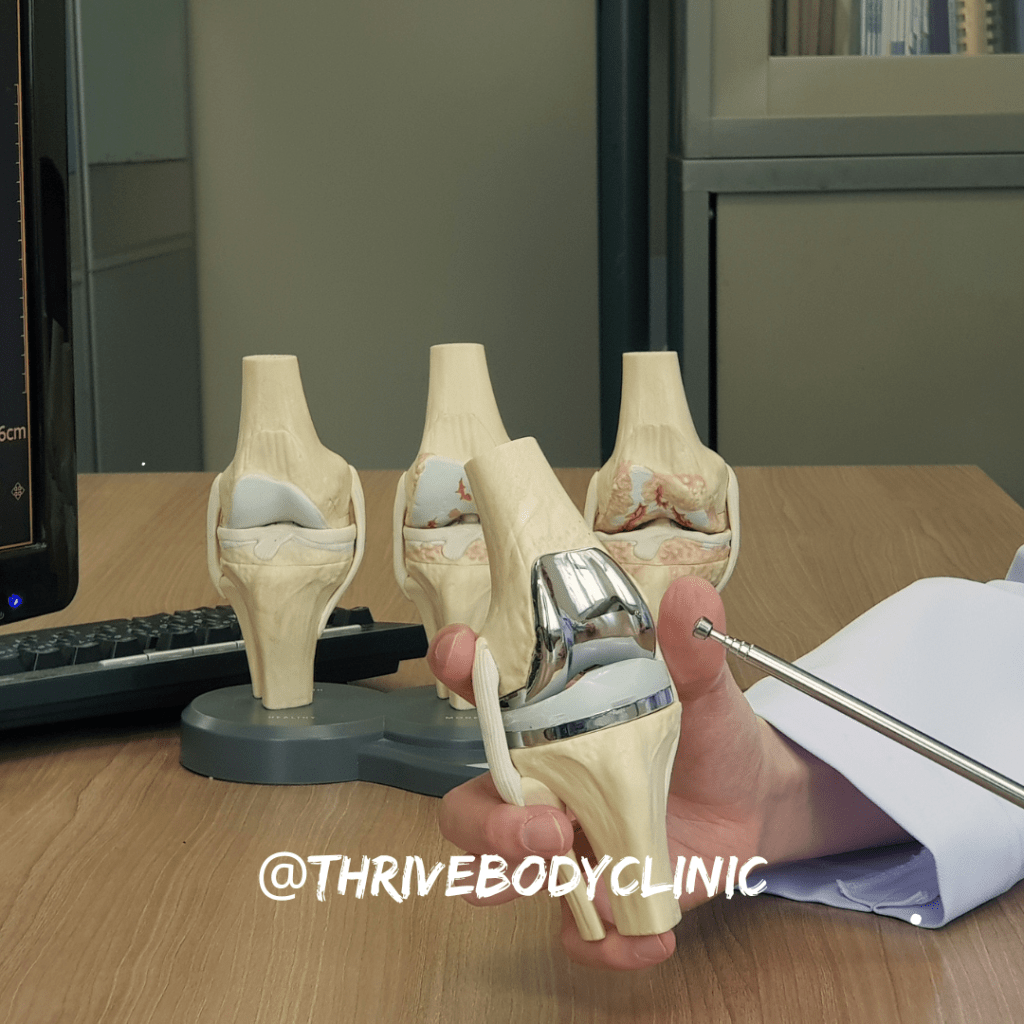
Knee replacement surgery is one of the most common orthopaedic procedures, offering relief to millions of people who suffer from chronic knee pain and reduced mobility. For many, the decision to undergo knee replacement comes after years of discomfort, joint degeneration, or injury. At Thrive Body Clinic, we see many patients who either have had knee replacements or are preparing for the surgery, and we know that effective recovery is key to regaining mobility and function. In this blog post, we’ll explore the reasons people get knee replacements and how osteopathy can play a significant role in post-surgical recovery, supporting better outcomes and long-term health.
Why Do People Get Knee Replacements?
Knee replacement surgery is typically recommended when other treatments for knee pain, such as physical therapy, medication, or injections, have failed to provide sufficient relief. The main reasons people undergo knee replacement include:
1. Osteoarthritis
The most common reason for knee replacements is osteoarthritis. This degenerative joint disease occurs when the protective cartilage in the knee wears away, leaving the bones to rub against each other. This causes pain, swelling, and stiffness, which can make it difficult to walk, climb stairs, or even stand for extended periods. For many, the pain becomes so severe that a knee replacement is the best option to restore mobility and improve their quality of life.
2. Rheumatoid Arthritis
Rheumatoid arthritis is an autoimmune disease that leads to chronic inflammation in the joints, including the knees. Over time, this inflammation damages the joint tissue, leading to pain, swelling, and loss of function. Knee replacement surgery can help alleviate the debilitating pain and restore function for patients with severe rheumatoid arthritis.
3. Trauma or Injury
Some individuals require knee replacements due to previous trauma or injury. Fractures, ligament tears, or meniscus damage from sports or accidents can lead to long-term joint issues. In some cases, these injuries result in joint deterioration over time, eventually requiring a knee replacement to restore full mobility and reduce pain.
4. Avascular Necrosis
Avascular necrosis is a condition in which the blood supply to the knee joint is disrupted, leading to the death of bone tissue. This can cause the bone to collapse and lead to severe joint damage, making knee replacement surgery necessary to restore normal joint function.
5. Post-Traumatic Arthritis
Arthritis that develops after a serious knee injury is known as post-traumatic arthritis. Over time, the joint damage caused by the injury worsens, leading to pain, swelling, and stiffness. Knee replacement is often the best solution when post-traumatic arthritis causes significant discomfort and limits daily activities.
The Knee Replacement Procedure
A knee replacement, also known as knee arthroplasty, involves removing the damaged or diseased parts of the knee joint and replacing them with artificial components, typically made of metal, plastic, or ceramic. These artificial joints mimic the function of a healthy knee, allowing for improved mobility and pain relief.
The surgery can be partial or total:
- Partial knee replacement involves replacing only the damaged part of the knee, preserving as much of the natural knee structure as possible.
- Total knee replacement involves replacing the entire knee joint, providing relief for patients with extensive joint damage.
While knee replacement surgery has a high success rate, the recovery process can be challenging. This is where osteopathy can play a pivotal role in supporting a smooth and effective recovery.
How Osteopathy Can Help with Knee Replacement Recovery
Recovering from knee replacement surgery is a gradual process, typically requiring months of rehabilitation and physical therapy to regain full mobility and strength. Osteopathy can complement this recovery by addressing the body as a whole, promoting faster healing, reducing pain, and restoring balance to the musculoskeletal system.
1. Improving Circulation and Reducing Swelling
After knee replacement surgery, swelling around the joint is common. Osteopathic techniques such as gentle soft tissue manipulation and lymphatic drainage can help improve circulation, reduce swelling, and promote healing. By encouraging better blood flow to the affected area, osteopathy can support the body’s natural recovery processes, allowing the knee to heal more efficiently.
2. Restoring Mobility and Range of Motion
One of the main goals of post-surgical rehabilitation is to restore the knee’s range of motion. Stiffness and limited movement are common after surgery, and they can hinder recovery if not addressed early. Osteopathic treatments can help improve joint mobility by gently stretching and mobilizing the surrounding muscles and tissues. This can alleviate stiffness, enhance flexibility, and promote smoother, more natural movement in the knee joint.
3. Balancing the Body and Preventing Compensatory Issues
After a knee replacement, patients often unknowingly alter their gait or posture to protect the healing knee. These compensatory movements can lead to problems in other areas of the body, such as the hips, lower back, or opposite knee. Osteopaths are trained to assess the entire musculoskeletal system and address imbalances caused by these changes in movement. By ensuring that the body is functioning as a whole, osteopathy can help prevent secondary issues and support a more balanced, healthy recovery.
4. Pain Management
Post-surgical pain is a major concern for knee replacement patients. While pain medication is often prescribed, many patients prefer to explore natural ways to manage pain as they heal. Osteopathy offers a non-invasive, drug-free approach to pain management, using techniques such as gentle manipulation and soft tissue work to relieve tension and reduce discomfort. By targeting areas of the body that may be under strain due to the knee surgery, osteopathic treatments can help alleviate pain and promote a sense of relaxation and well-being.
5. Supporting Long-Term Recovery and Function
Osteopathy is not just about short-term relief; it focuses on long-term health and function. By addressing the root causes of musculoskeletal issues and promoting better alignment, osteopathy can help patients recover from knee replacement surgery with greater success. Regular osteopathic treatments can support ongoing recovery, improve overall movement patterns, and prevent future joint issues.
Conclusion
Knee replacement surgery can be life-changing for those suffering from chronic knee pain and limited mobility. However, a successful recovery requires more than just surgery—it requires a holistic approach that supports the body’s natural healing processes. At Thrive Body Clinic, we offer osteopathic treatments tailored to support patients through their recovery, helping them regain mobility, reduce pain, and restore balance to their bodies. If you’re preparing for or recovering from knee replacement surgery, contact us today to learn how we can support your journey to full recovery and long-term well-being.
 Thrive Body Clinic Osteopathy & Sports Massage
Leave a comment