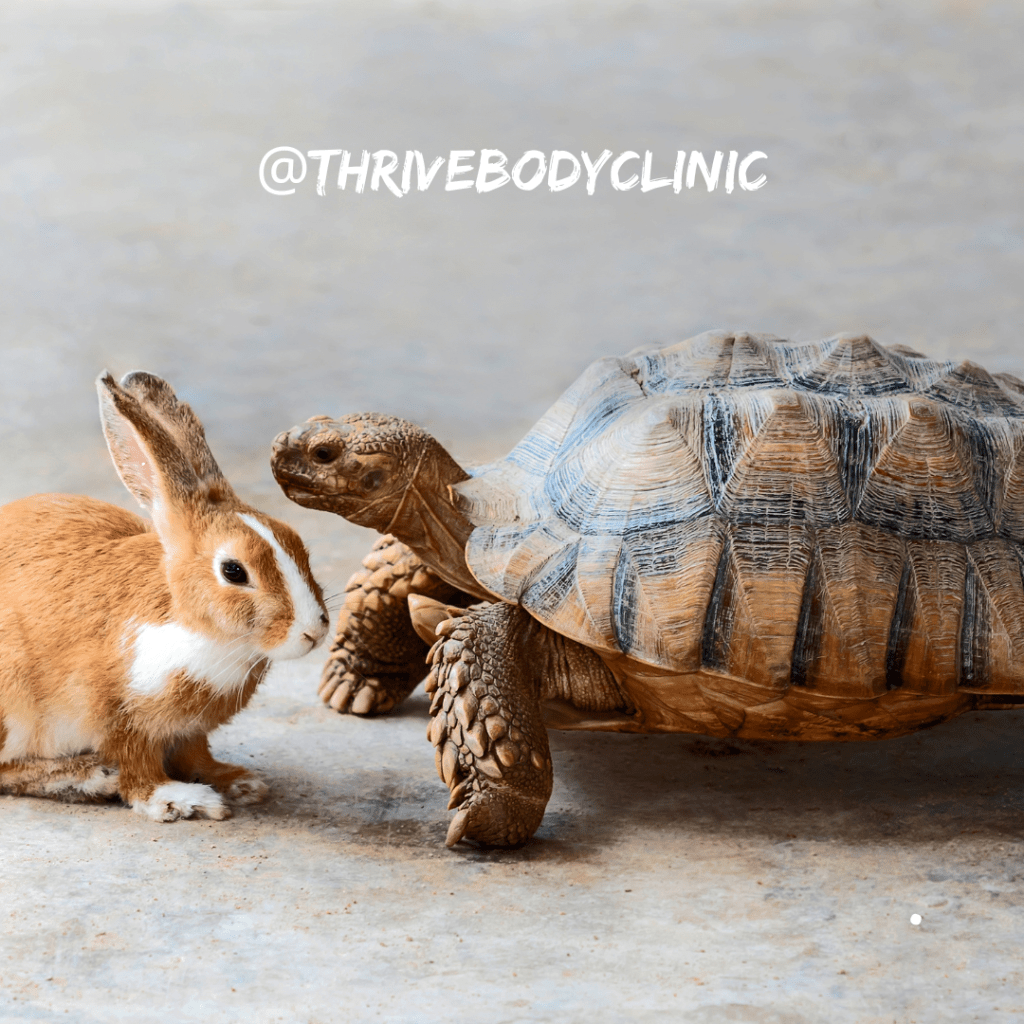
In today’s fast-paced world, the desire for quick results is understandable, especially when it comes to fitness. Many people aim for fast transformations, pushing their bodies hard in the hopes of seeing immediate gains. While this approach may deliver short-term results, it often comes at the cost of long-term health and increased risk of injury. At Thrive Body Clinic, we advocate for a more balanced, sustainable path to fitness—one that emphasizes gradual progress and supports overall well-being.
This blog will explore the differences between fast and slow approaches to fitness, why quick results can be risky, and how a slow, sustainable approach promotes long-term health and injury prevention.
The Appeal of Quick Fitness Results
Many fitness programs and social media influencers promise rapid transformations—whether it’s shedding pounds in weeks, bulking up quickly, or mastering a skill in a short time. These promises can be enticing, particularly for those new to fitness or those who feel they need fast results to stay motivated.
Quick fitness approaches often focus on high-intensity workouts, restrictive diets, and aggressive timelines. The appeal is clear: in a world where instant gratification is the norm, seeing results fast feels rewarding. And, to be fair, these methods can indeed produce visible changes in a short period. You may lose weight, build muscle, or see improved endurance within weeks. However, these rapid results come with significant drawbacks that can compromise your long-term health and fitness.
The Downside of Fast Fitness
- Increased Risk of Injury
One of the biggest dangers of rapid fitness approaches is the heightened risk of injury. When you push your body too hard, too quickly, without allowing it time to adapt, you expose yourself to strains, sprains, and overuse injuries. High-intensity training programs often put excessive stress on joints, muscles, and tendons, which can lead to conditions like tendonitis, stress fractures, or even ligament tears.
At Thrive Body Clinic, we see many patients who come in with injuries sustained from fast-tracked fitness programs. The body needs time to build the necessary strength, flexibility, and endurance to handle increased workloads. Without this gradual build-up, your body is likely to break down under the strain.
- Unsustainable Progress
Quick-fix fitness approaches often lead to burnout. Many of these programs are intense and difficult to maintain long-term. While you might see rapid improvements initially, the likelihood of plateauing or losing motivation is high. Fast approaches can also lead to imbalances in muscle development, as they tend to focus on certain areas without considering the body’s need for overall balance and recovery.
Rapid weight loss or muscle gain might also be temporary if it’s achieved through extreme dieting or over-exercising. Once the program ends or your body can no longer sustain the high intensity, you may quickly revert to your previous fitness level—or worse, experience setbacks due to injury or fatigue.
- Neglecting Recovery
Recovery is an essential part of any fitness journey, and fast fitness programs often overlook this critical element. Your muscles, joints, and connective tissues need time to repair and grow stronger after strenuous activity. Without adequate recovery, you’re more prone to injuries and slower to build real strength or endurance.
At Thrive Body Clinic, we emphasize the importance of recovery in all fitness journeys. A good fitness plan includes rest days and gentle stretching or low-impact activities that allow your body to recuperate and rebuild.
The Benefits of a Slow, Sustainable Fitness Approach
In contrast to fast fitness, a slow and steady approach prioritizes long-term health, gradual improvement, and injury prevention. While you might not see dramatic changes in just a few weeks, the results are far more sustainable, and your overall health will improve in ways that fast fitness can’t match.
- Injury Prevention
Slow and gradual progression allows your body to adapt to increasing physical demands. By focusing on form, flexibility, and proper technique, you minimize the risk of injury. Whether you’re lifting weights, running, or engaging in yoga, giving your body the time to adjust ensures that your muscles, tendons, and joints can handle the load.
At Thrive Body Clinic, we often work with patients recovering from injuries that stem from pushing themselves too hard, too fast. Our osteopathic treatments help restore balance and alignment, but we also encourage slow and steady exercise regimens to support long-term recovery and health.
- Building a Strong Foundation
Fitness is not just about what you achieve in a few weeks or months—it’s about building a foundation for lifelong health. A slow approach allows you to build core strength, improve cardiovascular fitness, and enhance flexibility, all of which are critical for overall wellness. As your body strengthens, you will be better equipped to take on more challenging workouts without risk of injury.
This method also enables you to focus on areas that are often neglected in fast fitness programs, such as balance and mobility. These elements are essential for long-term health, especially as you age.
- Sustainable Progress
Unlike fast fitness approaches, where progress is often short-lived, slow and steady progress is more sustainable. Small, incremental improvements lead to lasting changes in strength, endurance, and muscle tone. You’ll also find it easier to maintain these improvements over time, as your body adapts naturally to the increasing demands you place on it.
At Thrive Body Clinic, we encourage our clients to set realistic fitness goals and track their progress over time. The sense of achievement from consistent, sustainable growth is far more fulfilling than chasing after rapid, unsustainable results.
- Better Mind-Body Connection
A slow fitness approach encourages mindfulness and awareness of your body’s signals. You’ll become more in tune with how your body feels during exercise, learning to recognize when to push and when to rest. This heightened awareness helps prevent injury and promotes a deeper connection between your physical and mental health.
We often see patients at Thrive Body Clinic who come to us not just for physical pain but also for stress and tension related to their fitness routines. A slower, more mindful approach to exercise can alleviate these mental strains and lead to greater overall well-being.
- Balanced Health
Fitness is about more than just looking good; it’s about achieving balance in your body and mind. A slower approach promotes balanced muscle development, cardiovascular health, flexibility, and mental well-being. You’ll also be more likely to incorporate recovery and self-care into your routine, creating a more holistic approach to health.
Osteopathic treatments at Thrive Body Clinic can complement a slow and steady fitness approach by ensuring that your body remains in alignment and functions optimally as you work toward your goals.
Conclusion: Slow and Steady Wins the Fitness Race
While fast fitness results might be tempting, they often come at a cost to your health and well-being. A slower, more sustainable approach to fitness not only reduces the risk of injury but also promotes long-term physical and mental health. At Thrive Body Clinic, we believe in the power of gradual, balanced fitness routines that build lasting strength and resilience.
If you’re looking to improve your fitness in a way that supports your overall health, consider taking a slower, more mindful path. Our osteopathic treatments can support your journey by helping you maintain alignment, prevent injury, and stay on track for long-term success.
Book an appointment with us today and discover how a slow, steady approach to fitness can lead to sustainable health and well-being.
 Thrive Body Clinic Osteopathy & Sports Massage
Leave a comment