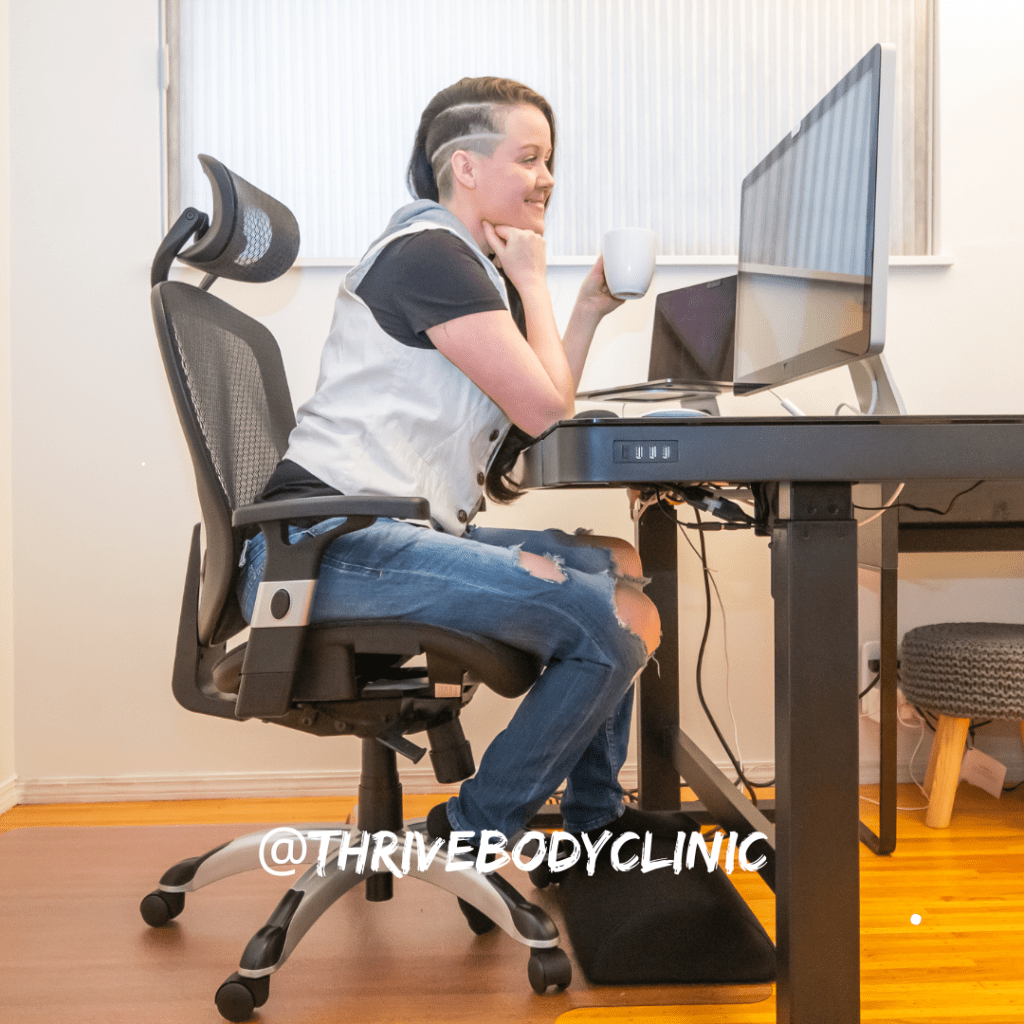
In the modern world, many of us spend a significant portion of our day sitting, whether at work, home, or during commutes. The phrase “sitting is the new smoking” has gained traction as more research highlights the detrimental effects of prolonged sitting on our health. While sitting itself isn’t inherently bad, how we sit, the equipment we use, and the length of time we remain seated can have profound effects on our physical well-being. At Thrive Body Clinic, we see the consequences of poor sitting habits every day. Let’s explore the three main factors that contribute to these issues and how you can make changes to reduce the impact.
1. Unsuitable Equipment: The Chair, Desk, and Computer Setup
The first area to consider is the equipment we use. Not all chairs, desks, and computers are created equal, and using the wrong setup can lead to a host of problems, including back pain, neck strain, and even repetitive strain injuries.
The Chair
A suitable chair should support the natural curve of your spine, allow your feet to rest flat on the ground, and be adjustable in height and backrest angle. Unfortunately, many people use chairs that are either too high or too low, with armrests that force their shoulders into awkward positions. Without proper lumbar support, the lower back is left to bear the brunt of poor posture, leading to pain and stiffness.
The Desk
Desks that are too high or too low can cause similar issues. If your desk is too high, you may find yourself hunching your shoulders, straining your neck and upper back. If it’s too low, you might end up slumping forward, putting pressure on your lower back and reducing circulation to your legs.
The Computer/Laptop
Screen position is another critical factor. When your monitor is too low, it encourages a forward head posture, which can lead to neck pain and headaches. If it’s too high, you might tilt your head back, causing tension in your neck and upper back. Laptop users are particularly at risk because the screen and keyboard are connected, making it difficult to find an ergonomically friendly position.
Tips for Improvement:
- Invest in an ergonomic chair with adjustable features.
- Use a desk that allows your arms to rest comfortably at a 90-degree angle.
- Position your monitor so the top of the screen is at or slightly below eye level. For laptop users, consider using an external keyboard and mouse with a laptop stand.
2. Positioning of the Equipment: Finding the Right Alignment
Even with the right equipment, incorrect positioning can lead to problems. It’s not just about having the best chair and desk, but how they are set up in relation to your body. The goal is to create a workspace that supports your body’s natural posture and reduces the strain on your muscles and joints.
Screen Position
Your screen should be directly in front of you, about an arm’s length away. If you work with multiple screens, place the primary one directly in front of you and the secondary one to the side, at an angle that doesn’t require excessive neck rotation.
Keyboard and Mouse
Your keyboard and mouse should be positioned so that your wrists remain straight and your elbows stay close to your body. A common mistake is placing the keyboard too far away, forcing you to reach and extend your arms, which can strain your shoulders and upper back.
Desk Height
Your desk height should allow your arms to rest comfortably with your forearms parallel to the ground. If your desk is too high or low, consider using a footrest or raising your chair to achieve the correct position.
Tips for Improvement:
- Use an adjustable monitor stand to position your screen correctly.
- Keep your keyboard and mouse close enough to avoid reaching.
- Adjust your chair and desk height to ensure your arms and wrists are in a neutral position.
3. How You Sit and How Long You Stay There: Posture and Prolonged Sitting
Even with the perfect setup, your posture and the duration you spend sitting are crucial factors that affect your health. Poor posture can lead to muscle imbalances, reduced circulation, and increased pressure on the spine. Sitting for long periods can exacerbate these issues, contributing to conditions like obesity, cardiovascular disease, and even mental health problems.
Posture Matters
Good posture means sitting with your back straight, shoulders relaxed, and feet flat on the floor. Your knees should be at a 90-degree angle, and your lower back should be supported. However, many of us find ourselves slouching, leaning forward, or crossing our legs, all of which can lead to discomfort and injury over time.
The Dangers of Prolonged Sitting
Sitting for extended periods slows down your metabolism, affects your circulation, and can lead to stiffness and pain in your back, hips, and legs. It also puts pressure on your intervertebral discs, increasing the risk of herniation or degeneration. Additionally, prolonged sitting is linked to an increased risk of chronic conditions like diabetes, heart disease, and certain cancers.
Tips for Improvement:
- Take regular breaks. Aim to stand up, stretch, and move around every 30 minutes.
- Practice active sitting by using a stability ball or an ergonomic stool that encourages small movements and engages your core muscles.
- Incorporate exercises like walking or stretching into your daily routine to counteract the effects of sitting.
The Role of Osteopathy in Managing the Impact of Sitting
Osteopathy can play a significant role in alleviating the physical consequences of prolonged sitting. Through a combination of hands-on techniques, such as joint manipulation, soft tissue massage, and stretching, an osteopath can help restore mobility, reduce pain, and improve posture. At Thrive Body Clinic, we also focus on educating our patients about posture, ergonomics, and exercises they can do to support their health outside of the clinic.
Conclusion: Small Changes, Big Impact
While sitting may be an unavoidable part of modern life, being aware of its impact and making adjustments to your workspace and habits can significantly reduce the risk of pain and injury. At Thrive Body Clinic, we’re here to support you in making these changes and to help you recover from any issues that arise from prolonged sitting.
Remember, the key is not to avoid sitting altogether but to be mindful of how, where, and how long you’re sitting. With the right setup and habits, you can protect your body and keep it functioning at its best. If you’re struggling with pain or discomfort related to sitting, book an appointment with us, and let’s work together to get you back on track.
 Thrive Body Clinic Osteopathy & Sports Massage
Leave a comment