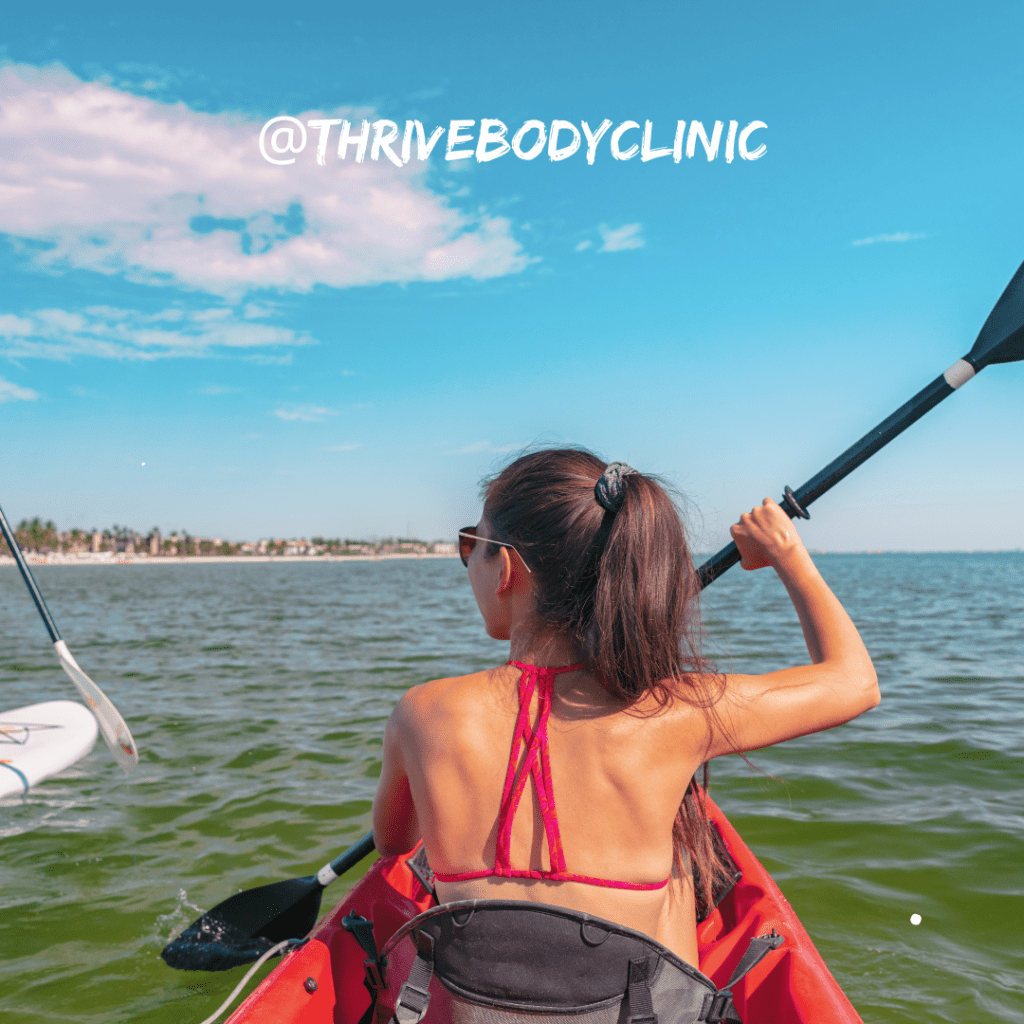
Water sports, such as sailing, kayaking, canoeing, paddleboarding, sea swimming, and kite surfing, offer a unique combination of adventure, physical exertion, and relaxation. These activities engage the body in diverse ways, promoting cardiovascular fitness, muscular endurance, and mental well-being. However, they also present their own sets of physical challenges that can lead to strain or injury if not properly managed. This is where osteopathy plays a vital role, both in enhancing performance and in preventing and addressing injuries. At Thrive Body Clinic, we emphasize the importance of keeping the body in optimal condition to fully enjoy the benefits of these water-based activities.
The Demands of Water Sports on the Body
Water sports engage multiple muscle groups and require balance, coordination, flexibility, and strength. Each sport has its own set of physical demands:
- Sailing: Requires constant adjustments and maneuvering, which involve upper body strength and core stability, particularly when managing sails and steering in challenging wind conditions.
- Kayaking and Canoeing: Engage the upper body, particularly the shoulders, arms, and back, as well as the core to maintain stability and control.
- Paddleboarding: Challenges your balance, with a focus on core strength, leg stability, and upper body endurance as you paddle.
- Sea Swimming: Demands full-body coordination and cardiovascular endurance, with a primary focus on the shoulders, arms, and core.
- Kite Surfing: Requires a combination of upper body strength, leg power, and balance, as well as quick reflexes to handle the kite and the board simultaneously.
Given these physical requirements, it’s no surprise that regular participation in water sports can lead to muscle strain, joint discomfort, and overuse injuries. Osteopathy can help individuals stay in peak condition, preventing these injuries while improving flexibility, strength, and balance.
Common Injuries in Water Sports
Several common injuries can occur across different water sports, primarily due to repetitive motions, poor technique, or accidents. Some of the most frequently encountered injuries include:
- Shoulder Injuries: Due to the repetitive overhead motions in kayaking, canoeing, sea swimming, and kite surfing, rotator cuff injuries and shoulder impingement are common. Overuse and improper movement patterns can lead to inflammation of the tendons or bursae, causing pain and limited range of motion.
- Lower Back Pain: Maintaining stability in many water sports, especially sailing, paddleboarding, and kite surfing, relies heavily on core strength. Weakness or imbalances in this area can contribute to lower back strain or discomfort, especially when subjected to twisting or rapid movements.
- Wrist and Forearm Strain: Sports like kayaking and canoeing can cause overuse injuries in the wrists and forearms due to the repetitive paddling motions. This may result in tendonitis or carpal tunnel syndrome if left unchecked.
- Knee and Ankle Strain: Kite surfing and paddleboarding require strong lower body muscles for balance, and poor technique or sudden movements can lead to sprains or strains in the knees and ankles.
- Neck Pain: Strain in the neck is common in sports like sailing, where prolonged periods of looking up at the sails or maintaining certain positions can lead to stiffness or discomfort.
How Osteopathy Helps Water Sport Enthusiasts
Osteopathy is a holistic approach to health that focuses on the body’s musculoskeletal system, improving mobility, reducing pain, and enhancing overall function. For individuals involved in water sports, regular osteopathic treatment can offer several key benefits:
1. Injury Prevention
Prevention is always better than cure. Osteopathy can identify and address muscle imbalances, joint restrictions, or postural issues that may predispose you to injury. For example, if a kayaker presents with tightness in their shoulders or imbalance in their core muscles, an osteopath can provide manual therapy techniques, such as joint articulation or soft tissue manipulation, to improve flexibility and strength. This reduces the risk of strain or overuse injuries down the line.
2. Enhancing Mobility and Flexibility
Water sports require a high degree of mobility, particularly in the shoulders, hips, and spine. Osteopathic techniques can help maintain or restore the range of motion in these areas, ensuring that you move with ease and fluidity. Techniques like stretching, articulation, and myofascial release help to improve flexibility and reduce stiffness, allowing your body to perform better on the water.
3. Improving Core Stability and Balance
The core is central to many water sports, providing the stability needed for balance and control. Whether you’re standing on a paddleboard, swimming through waves, or controlling a sail, your core muscles play a critical role. Osteopathy can help strengthen and stabilize the core, ensuring that you have the necessary strength and endurance to perform well. Osteopaths may provide exercises that target the deep stabilizing muscles of the spine, improving your posture and balance on the water.
4. Recovering from Injury
If you do suffer an injury while participating in water sports, osteopathy can support your recovery. Using a combination of manual techniques, such as joint mobilization, soft tissue massage, and stretching, osteopaths can help reduce inflammation, relieve pain, and promote healing. By addressing the underlying cause of the injury, osteopathy can also help prevent recurrence.
5. Optimizing Posture and Alignment
Poor posture can contribute to inefficiencies in movement, increasing your risk of injury. In water sports, posture plays a crucial role in performance—whether it’s the way you hold your body while paddling or the alignment needed to balance on a surfboard. Osteopaths can assess and correct postural imbalances, ensuring that your body is aligned correctly for each sport’s specific movements.
The Role of Osteopathy in Mental and Physical Recovery
Water sports offer immense physical and mental benefits. However, the combination of physical exertion and exposure to natural elements can be demanding on the body. Osteopathy not only helps with physical recovery but also aids in mental relaxation. Manual therapy techniques improve circulation and reduce muscle tension, promoting relaxation and relieving stress, which can be especially helpful after a long day of intense activity on the water.
Moreover, the holistic nature of osteopathy means that it takes into account the interconnectedness of the body and mind. Osteopathic treatment can alleviate physical discomforts that may contribute to mental stress, enhancing your overall sense of well-being.
Conclusion
Whether you’re a seasoned sailor, an enthusiastic kayaker, or someone who enjoys the thrill of kite surfing, maintaining your body’s health and performance is essential to enjoying these water sports to the fullest. At Thrive Body Clinic, our osteopathic treatments are designed to help you prevent injury, improve your performance, and recover quickly from the physical demands of water sports. By addressing both the physical and mental aspects of health, osteopathy ensures that you can enjoy the water with confidence and vitality.
If you’re passionate about water sports and want to keep your body in top condition, book an appointment with us today at Thrive Body Clinic. Let us help you stay active, pain-free, and ready for your next aquatic adventure!
 Thrive Body Clinic Osteopathy & Sports Massage
Leave a comment