Let’s be honest:
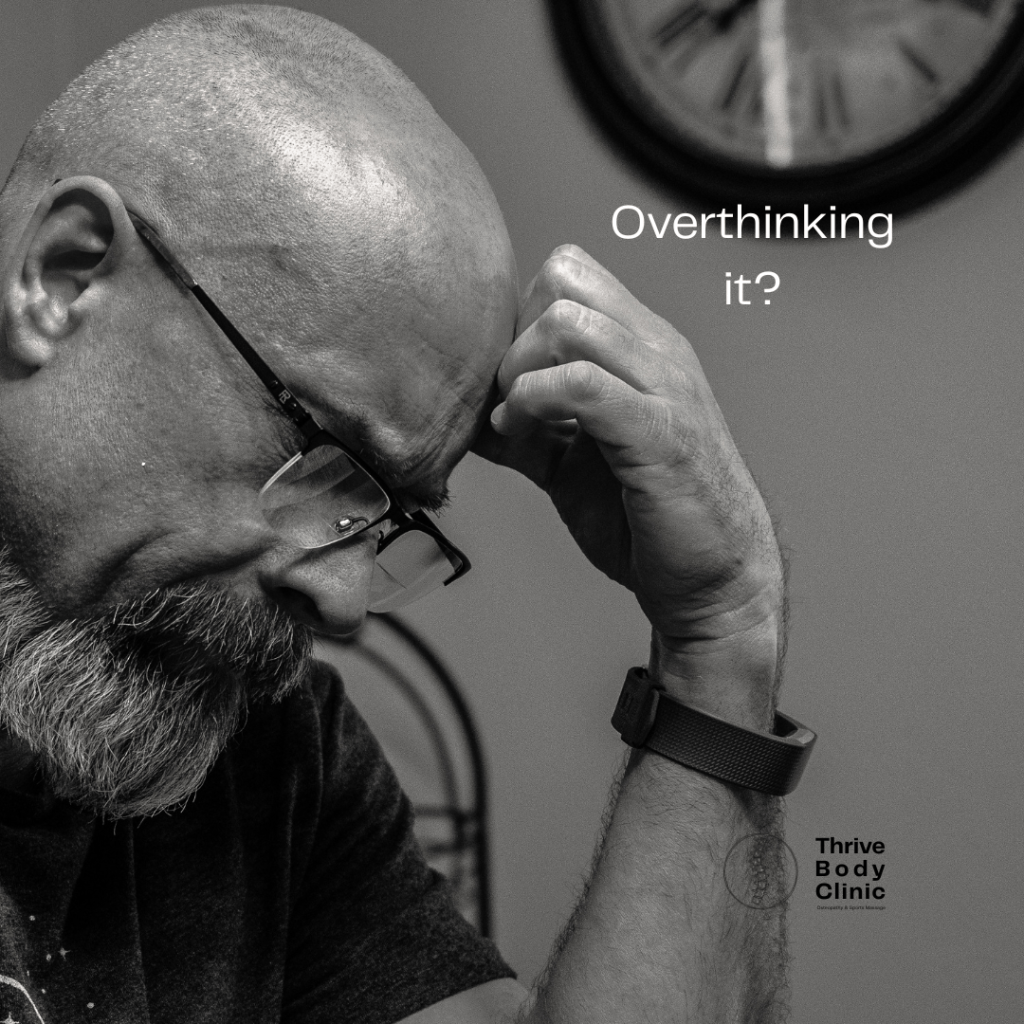
Overthinking isn’t intelligence.
It’s hesitation wearing a smart jacket.
If you’re a chronic second-guesser, you already know the pattern. You think things through. Then you think them through again. You play out every possible outcome, imagine what could go wrong, tweak the plan, doubt the plan, and by the time you’re “ready”… the moment’s gone.
You tell yourself you’re being careful.
Measured.
Responsible.
But if we strip the story back, what’s really happening is this:
You’re stuck in your head while your life waits on pause.
And the longer this goes on, the more frustrating it becomes. Not because you don’t know what to do — but because you do know, and you’re not doing it.
Let’s break why this happens — and how to finally turn mental noise into clear, confident movement.
Why Overthinking Feels So Hard to Stop
Overthinking isn’t a flaw. It’s a coping strategy.
At some point, thinking things through helped you. It kept you safe. It helped you avoid mistakes, embarrassment, criticism, or failure. Your brain learned that analysis equals protection.
The problem is, that strategy has outlived its usefulness.
Here’s what’s really going on under the surface:
1. Overthinking is your brain trying to reduce uncertainty
Your mind hates not knowing. So it loops. It plans. It runs scenarios. Not to help you move — but to avoid discomfort.
The irony?
The attempt to feel more certain keeps you stuck.
2. You’re confusing thinking with progress
Thinking feels productive. Action feels risky.
So your brain chooses the thing that gives a dopamine hit without exposure: more thinking. More planning. More “just one more check.”
But clarity doesn’t come from thinking harder.
It comes from feedback, and feedback only comes from action.
3. Perfectionism is hiding underneath
Most chronic overthinkers aren’t indecisive — they’re afraid of getting it wrong.
If you don’t decide, you can’t fail.
If you don’t act, you can’t be judged.
Overthinking becomes a way of staying safe while telling yourself you’re being sensible.
The Cost of Living in Your Head
Overthinking doesn’t just delay action — it erodes self-trust.
Every time you:
- hesitate
- delay
- change your mind
- talk yourself out of something
…your brain collects evidence that you can’t rely on yourself.
That’s why overthinking often comes with:
- low confidence
- frustration
- mental fatigue
- a sense of being “behind”
The issue isn’t that you lack ability.
It’s that you’ve trained yourself to stall at the moment action is required.
And habits don’t change with insight alone.
They change with interruptions and structure.
Three Reframes to Break the Overthinking Loop
These aren’t motivational slogans. They’re practical shifts that help you move — even when your head is noisy.
1. Stop trying to make the right decision — make a directional one
Overthinkers want certainty before committing. That’s a trap.
Most decisions aren’t permanent.
They’re directional.
Ask yourself:
“Does this move me roughly in the right direction?”
If yes — it’s good enough.
Progress doesn’t require perfect decisions.
It requires reversible ones made quickly.
Reframe:
“I’m not deciding my future. I’m choosing my next step.”
That alone reduces pressure — and pressure fuels overthinking.
2. Replace thinking time with action windows
Overthinkers give themselves unlimited time to decide. That guarantees paralysis.
Instead, constrain the process:
- “I’ll think about this for 10 minutes.”
- “I’ll decide by lunchtime.”
- “I’ll take one action before the end of today.”
Action windows force your brain out of loops and into movement.
Clarity improves after you move — not before.
Reframe:
“Thinking time is limited. Action is required.”
3. Treat action as data, not a verdict on you
Most people hesitate because they think action proves something about them.
If it works — “I’m capable.”
If it doesn’t — “I’m a failure.”
That’s too heavy.
Action isn’t a verdict.
It’s information.
You’re not proving your worth — you’re gathering feedback.
Reframe:
“This isn’t success or failure. It’s a test.”
Tests reduce emotional weight.
Reduced weight makes action easier.
What Decisive Action Actually Looks Like
Decisive people aren’t fearless.
They’re faster at moving from thought to action.
They don’t wait for confidence.
They don’t wait for certainty.
They don’t wait for silence in their head.
They move with noise present.
And here’s the part people miss:
Action quiets the mind.
Thinking creates tension.
Doing releases it.
Thinking doesn’t stop
You will still overthink sometimes.
That doesn’t make you broken.
It makes you human.
But you don’t have to live there.
You can:
- notice the loop
- set a time limit
- choose a direction
- take one imperfect step
Momentum doesn’t come from confidence.
Confidence comes from movement.
Stop waiting for your mind to calm down.
Move first — and let action do the quieting.
That’s how you break the addiction to overthinking.
One decision at a time.
 Thrive Body Clinic Osteopathy & Sports Massage
Leave a comment