Let’s get straight to it:
Most adults aren’t overwhelmed because life is objectively “too much.”
They’re overwhelmed because everything feels equally important and equally urgent.
Work deadlines.
Kids.
A partner who needs you.
Your inbox.
Your health.
Your future plans.
Bills.
Your brain doesn’t know what to prioritise first, so it panics.
And when your brain panics, you stop thinking strategically and start reacting emotionally.
That’s the real issue.
Not the workload — the mental load.
And when life starts piling up, you don’t rise to the occasion.
You drop into survival mode.
That’s when you:
- procrastinate
- jump between tasks
- numb out with your phone
- forget important things
- do busywork instead of the real work
- feel mentally cloudy even when rested
Welcome to chaos — not the external kind, but the internal kind.
The good news?
Chaos is a mindset.
And clarity is a skill.
Let’s break it down properly.
Why Overwhelm Happens (and why you keep repeating the cycle)
There are three main psychological drivers behind overwhelm:
1. Your brain hates ambiguity.
When you don’t know the next step, your mind throws the whole situation into the “danger” folder.
Ambiguity = threat.
Threat = stress response.
Stress response = zero logical thinking.
No wonder you shut down, doom scroll, or start cleaning the kitchen instead of doing what actually matters.
2. You’re carrying invisible expectations.
Not just tasks — identities.
- The reliable one
- The provider
- The fixer
- The good parent
- The hard worker
- The one who doesn’t drop the ball
You’re not just juggling tasks — you’re juggling the pressure of being all of these versions of yourself at once.
It’s exhausting.
No structure can save you from expectations you don’t question.
3. You confuse activity with progress.
When overwhelmed, people default to comfort tasks:
- Emails
- Tidying
- Quick wins
- Admin
These feel productive… but do nothing to reduce the overwhelm.
It’s like sweeping around the mess instead of cleaning it.
This is why overwhelm becomes a loop:
You’re so busy surviving the day that you never step back to look at the bigger picture.
Clarity requires stepping out of the chaos — not trying to organise it from the inside.
3 Shifts to Turn Chaos Into Strategic Clarity
Here’s where we get practical.
None of this is fluffy “just breathe and journal” nonsense.
These are strategic mindset shifts that actually work in real life — even with kids, a job, and a brain that’s running on fumes.
1. Stop trying to manage everything. Decide what actually matters.
This is the brutal honesty bit:
If everything is a priority, nothing is.
Overwhelm comes from refusing to choose.
Here’s the fix:
Ask yourself the one question that cuts through drama instantly:
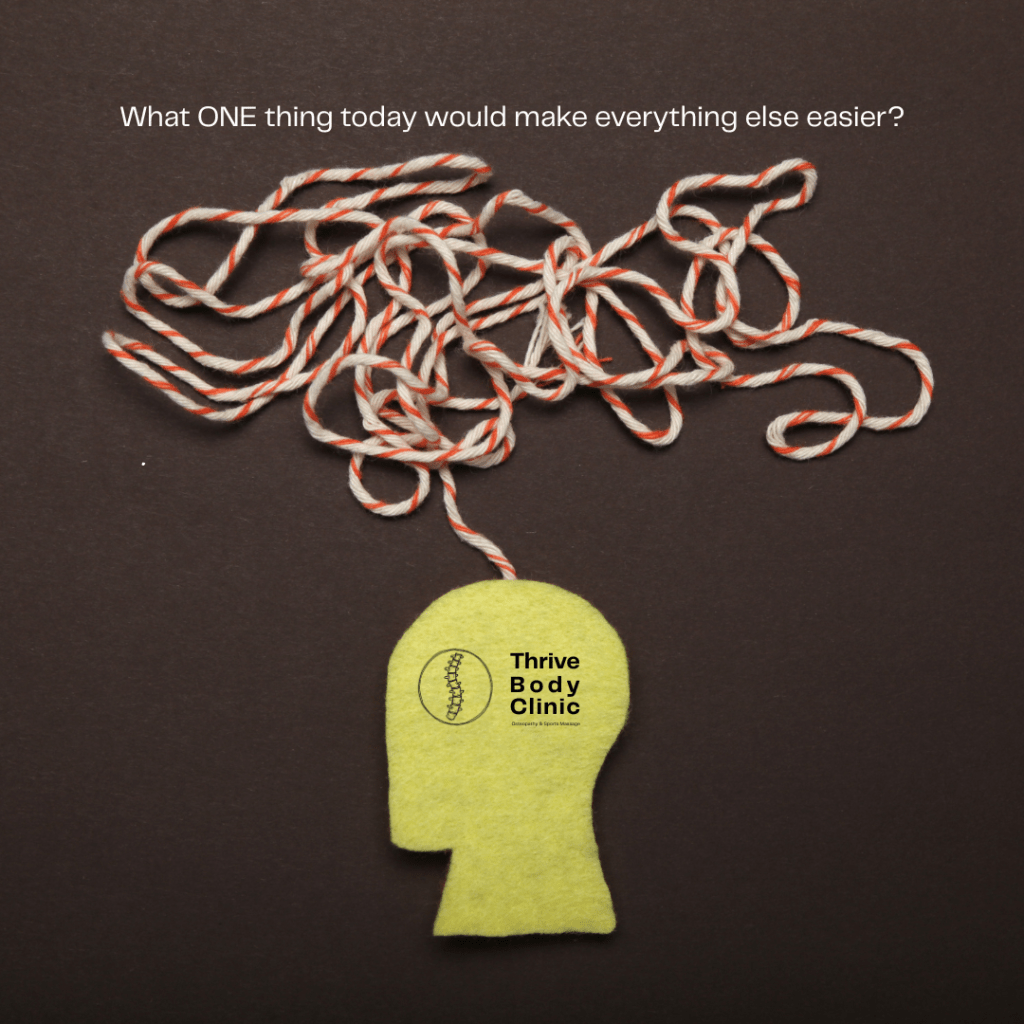
“If I could only get ONE thing done today that would make the rest easier, what would it be?”
That’s your strategic task.
Everything else becomes optional — not urgent.
Your brain needs hierarchy.
No hierarchy = chaos.
Clear hierarchy = calm.
2. Reduce mental load by externalising everything.
Your brain is not a storage device.
It’s a decision-making system.
When you use it as a filing cabinet, it burns out.
Get everything out:
- tasks
- reminders
- ideas
- worries
- deadlines
- conversations you need to have
Dump it onto paper or notes.
Your brain instantly relaxes because it’s no longer holding the weight.
Clarity doesn’t come from thinking.
It comes from designing an environment where thinking is easier.
3. Move from emotional decision-making to strategic decision-making.
When overwhelmed, you choose what feels easiest in the moment.
That’s emotional decision-making.
And it keeps you stuck.
Strategic decision-making asks:
“What moves the needle?”
Not “what’s easiest?”
Not “what feels urgent?”
Not “what will stop people nagging me?”
Strategic = long-term gain.
Emotional = short-term relief.
If you want clarity, you need a bias for strategy — not comfort.
A simple way to start:
At the start of the day, decide your top 1–3 strategic tasks, and commit to doing those before the reactive tasks.
This alone can reduce 80% of your overwhelm.
You Don’t Need More Time — You Need Better Thinking
This is the part most people miss:
Overwhelm isn’t solved by doing more.
It’s solved by thinking better.
Thinking clearly when stressed is a skill — just like lifting weights or learning a language.
You build it through reps.
Here’s the realistic truth:
- You won’t always feel calm.
- You won’t always love doing the important tasks.
- You won’t always get everything right.
But clarity isn’t perfection.
Clarity is choosing the next right move — even if it’s uncomfortable.
Stop trying to outrun chaos.
Start leading yourself through it.
Clarity comes from structure.
Structure comes from choices.
And choices come from a calm, strategic mind — not a frantic, overwhelmed one.
You’re capable of far more than you give yourself credit for.
You just need to build the mental habits that support the life you’re trying to create.
One priority.
One plan.
One clear step at a time.
That’s how you shift from chaos to clarity.
Every. Single. Day.
 Thrive Body Clinic Osteopathy & Sports Massage
Leave a comment