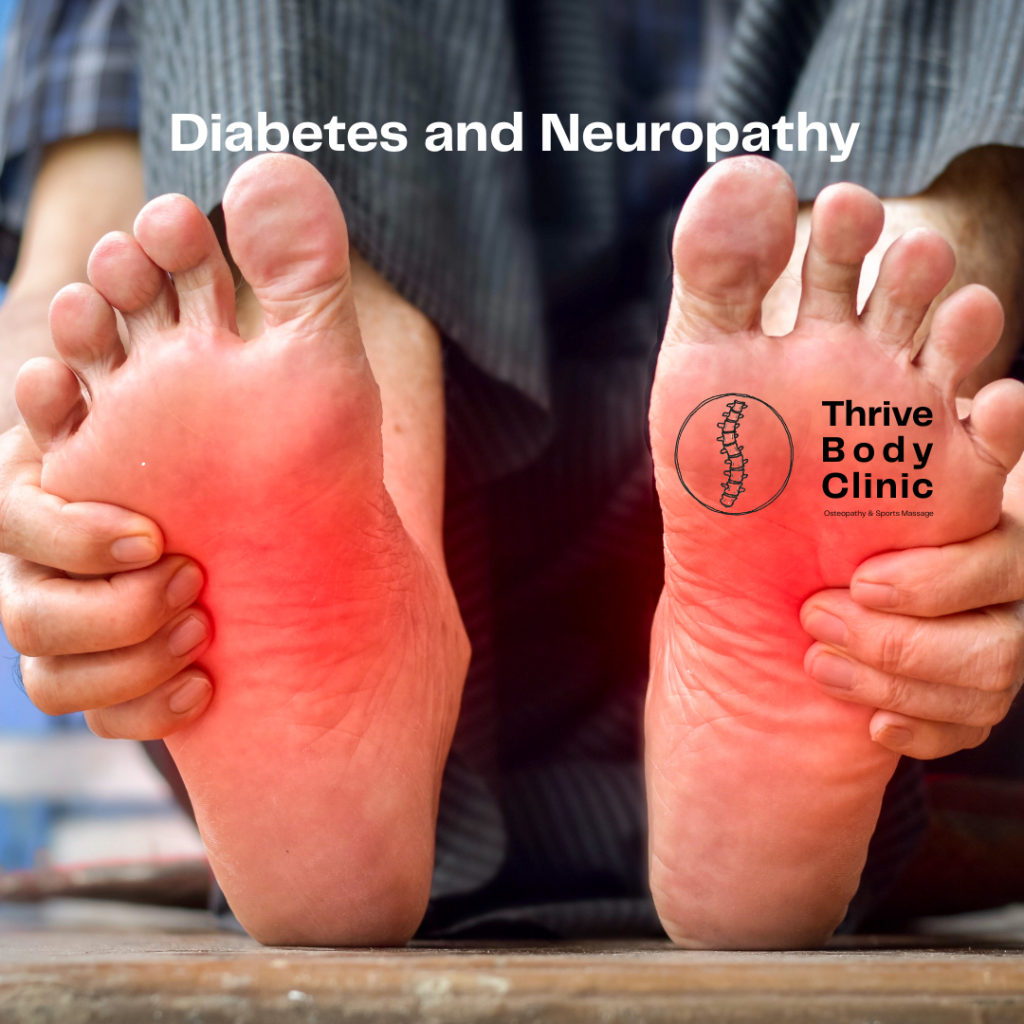
If you live with diabetes and have ever felt tingling, numbness, burning, or weakness in your feet or hands, you’re not alone. These sensations may be signs of diabetic neuropathy, one of the most common — and frustrating — complications of diabetes.
At Thrive Body Clinic, we regularly support people dealing with nerve-related symptoms that affect movement, balance, and quality of life. In this blog, we’ll explain what diabetic neuropathy is, why it happens, what the different types look like, and how osteopathy may offer gentle, practical support as part of your wider care.
What Is Diabetic Neuropathy?
Neuropathy simply means damage to the nerves. In diabetes, long-term high blood sugar levels can damage the small blood vessels that supply nerves, leading to reduced oxygen and nutrient delivery. This can affect how nerves work — causing unusual sensations, weakness, or even problems with the body’s automatic functions (like digestion or sweating).
It’s estimated that up to 1 in 2 people with diabetes will develop some form of neuropathy in their lifetime — often beginning in the feet and legs, but sometimes affecting the hands, arms, or other systems too.
Types of Diabetic Neuropathy
There are several types of diabetic neuropathy. The three most common are:
1. Peripheral Neuropathy (Sensory & Motor)
- Symptoms: Tingling, numbness, burning or stabbing pain (especially in the feet or hands), muscle weakness, and sensitivity to touch.
- Pattern: Often starts in the toes and works upward — a pattern sometimes described as “stocking and glove”.
- Risks: Reduced sensation increases the chance of unnoticed injuries, ulcers, and infections.
2. Autonomic Neuropathy
- Symptoms: Affects the automatic functions of the body — e.g., digestion, bladder control, blood pressure, sweating, or sexual function.
- Signs might include dizziness when standing up, bloating, changes in sweating, or urinary difficulties.
3. Proximal or Focal Neuropathies
- Symptoms: Sudden weakness or pain in specific nerves — often in the thigh, hip, or shoulder.
- Less common but can be quite severe and debilitating.
What Causes Diabetic Neuropathy?
The biggest risk factor is prolonged high blood glucose levels, which damage nerve fibres over time. Other contributors include:
- Poor circulation
- High blood pressure and cholesterol
- Smoking
- Excess alcohol
- Being over the age of 50 or having had diabetes for many years
The good news? Keeping your blood sugar in your target range — with help from your GP or diabetes team — can reduce the risk and slow progression.
Symptoms to Watch Out For
Don’t ignore:
- A persistent “pins and needles” feeling in your feet or hands
- Burning or shooting pain in the legs
- Numbness, especially in the toes or soles
- Balance issues or muscle weakness
- Cuts, sores, or blisters you didn’t notice happening
- Changes in bladder, digestion, or sweating patterns
These are all reasons to speak to your GP or diabetes nurse — early action makes a big difference.
Practical Tips for Managing Diabetic Neuropathy
While nerve damage can’t always be reversed, there’s a lot you can do to improve comfort, reduce progression, and stay active:
👣 Take Good Care of Your Feet
- Inspect your feet daily for cuts, blisters, or signs of infection.
- Wear well-fitting, cushioned shoes — avoid going barefoot.
- See a podiatrist regularly, especially if you’ve lost sensation.
🍽️ Keep Blood Sugar in Range
- Follow your care plan and take medications as prescribed.
- Monitor your levels consistently — your diabetes nurse can help tailor this.
- Keep an eye on blood pressure and cholesterol too.
🧘♀️ Move Gently, But Regularly
- Movement improves circulation, which helps nourish the nerves.
- Focus on low-impact exercises like walking, yoga, tai chi, or swimming.
- A gentle stretch routine can help reduce stiffness and cramping.
🧦 Choose the Right Socks
- Seamless, padded diabetic socks can reduce friction and help regulate temperature.
🚭 Stop Smoking
- Smoking further restricts blood flow to the extremities and speeds up nerve damage.
How Can Osteopathy Help?
While osteopathy can’t repair damaged nerves, it can help you feel more mobile, more balanced, and more confident in your body again.
At Thrive Body Clinic, we offer:
✅ Gentle Mobilisation
We use safe, hands-on techniques to reduce stiffness in joints and muscles — especially in areas where you’re overcompensating due to pain or weakness.
✅ Circulation Support
By improving how your body moves and functions, we aim to support better blood flow to the limbs — vital in slowing further nerve damage.
✅ Pain Management
Techniques to ease tension, reduce muscle guarding, and calm the nervous system can help manage persistent discomfort or burning pain.
✅ Balance and Postural Advice
If neuropathy is affecting your balance or gait, we can help identify compensatory patterns and suggest ways to move more safely.
✅ Emotional and Nervous System Support
Long-term pain can cause anxiety and fatigue. Our sessions provide a calming, restorative space where you’re treated as a whole person — not just a diagnosis.
Working Alongside Your Medical Team
We always encourage you to stay in touch with your NHS diabetes care team. Osteopathy is designed to complement their work — not replace it.
We may also suggest referrals to podiatry, physiotherapy, or pain clinics if needed.
Final Thoughts
Diabetic neuropathy can feel overwhelming — but understanding it is the first step to managing it. With the right support, small changes, and gentle treatment options like osteopathy, you can improve your comfort and quality of life.
At Thrive Body Clinic, we’re here to help you feel more confident in your movement, manage your pain, and reconnect with your body — safely and gently.
💬 Got questions? Ready to book in? Contact us today and let’s talk about how we can support you.
📆 Next week’s post in our “Diabetes & Your Body” series:
“Foot Health and Diabetes: Why It Matters (And How to Protect Your Feet)”
 Thrive Body Clinic Osteopathy & Sports Massage
Leave a comment